World on 'red alert' over the misery and mayhem wreaked by climate change
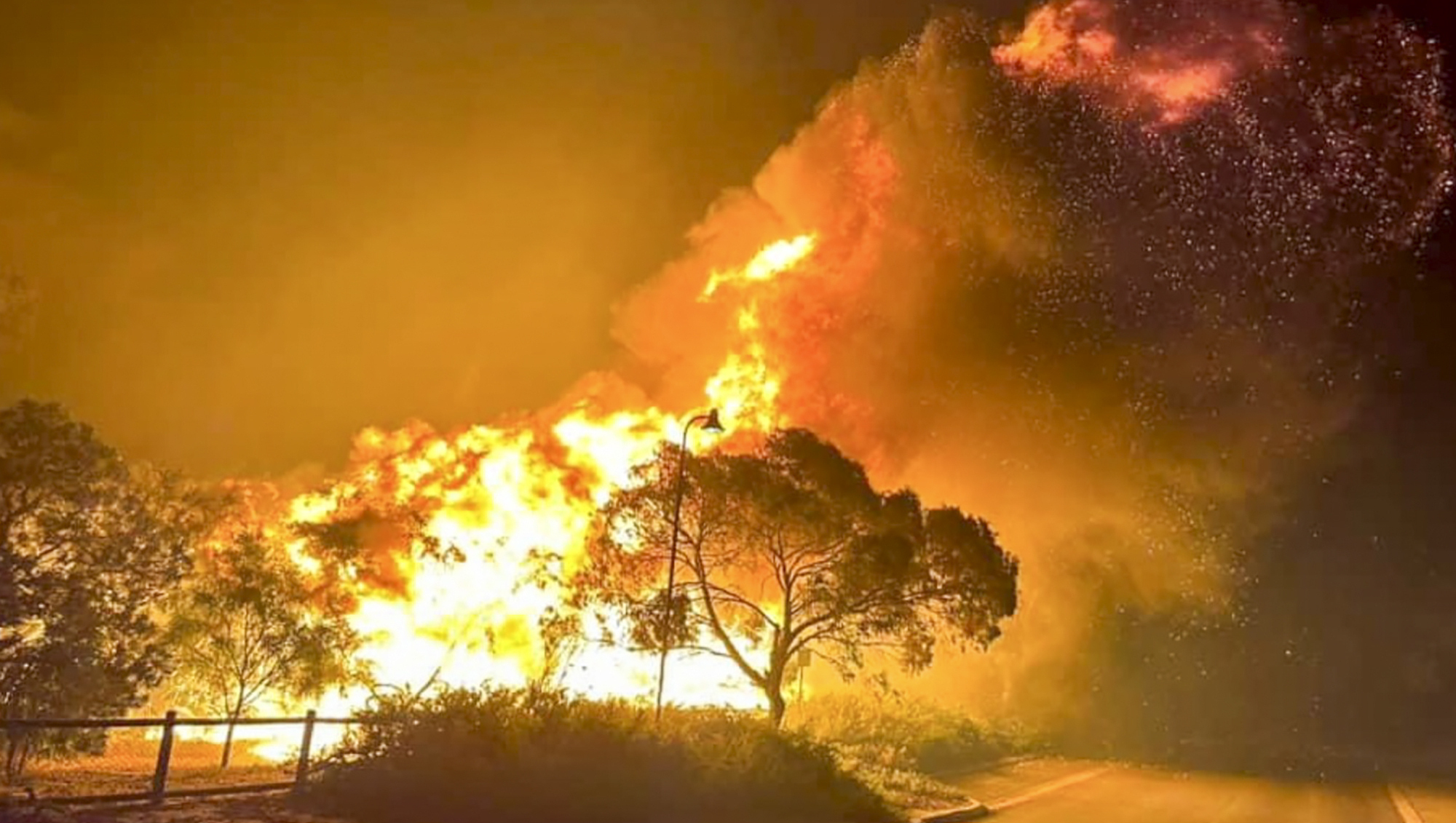
A fire rages in bushland near the West Australian city of Wannaroo north of Perth in November 2023. Photo: DFES via AP
The world has been put on “red alert” over the misery and mayhem wreaked by climate change, as a new report warned that 2023 “gave ominous new significance to the phrase ‘off the charts’”.
The World Meteorological Organization (WMO) said last year they saw multiple records broken — and in some cases smashed — as wildfires, droughts, heatwaves, floods and cyclones upended the daily lives of millions of people and cost billions of euro worth of damage.
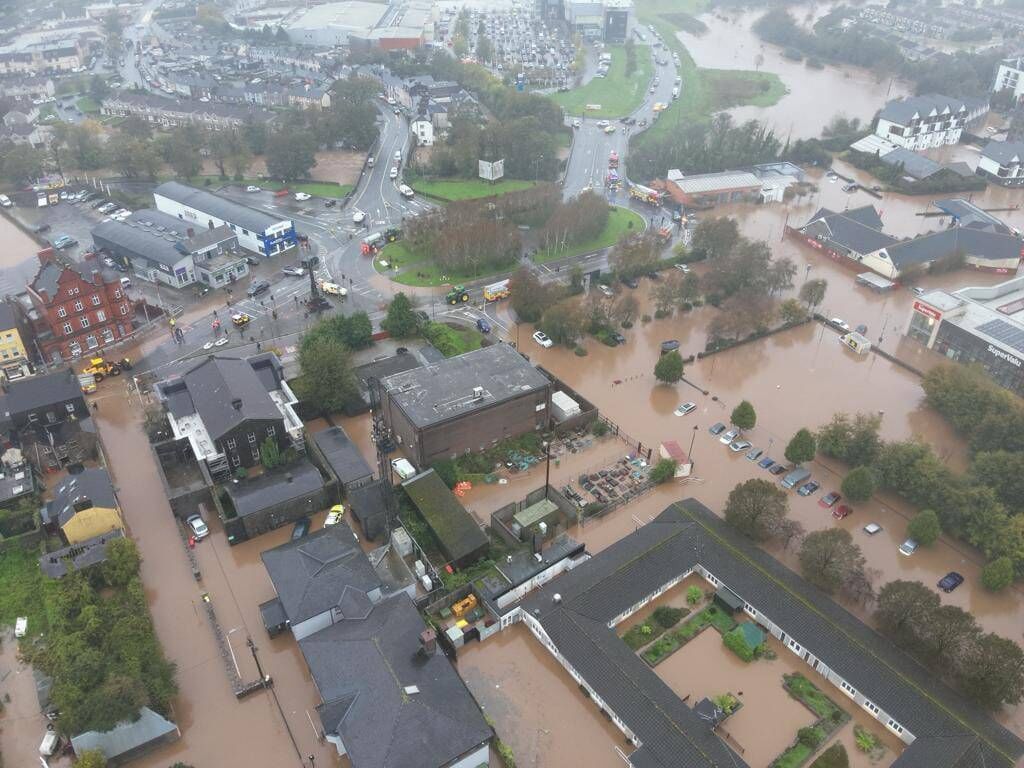
Records went tumbling for greenhouse gas levels, surface temperatures, ocean heat, sea level rise and Antarctic sea cover according to the State of the Global Climate 2023 report.
The year of 2023 was the warmest year ever recorded, shattering the previous warmest of 2016, with global average temperatures of 1.45 +/- 0.12C above the pre-industrial average.
CLIMATE & SUSTAINABILITY HUB
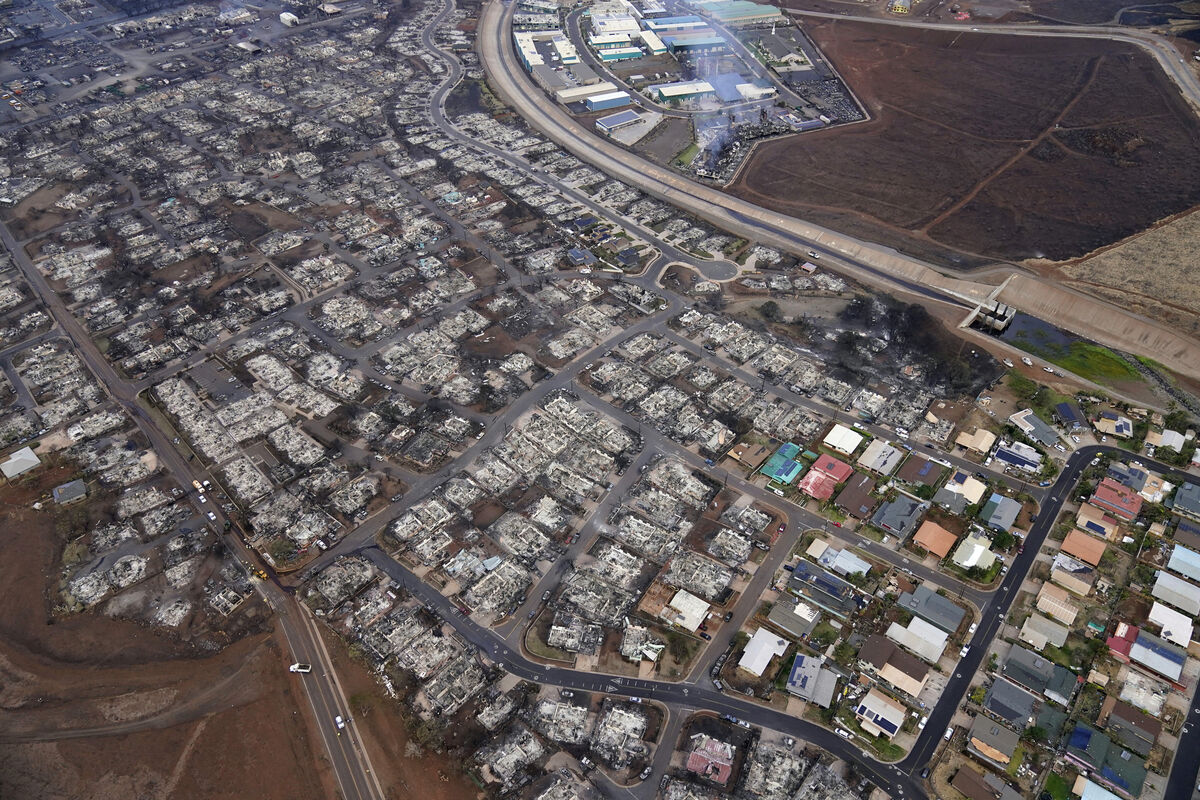
The past nine years have been the nine warmest years ever recorded, with extreme weather events having severe socio-economic impacts such as wildfires in Hawaii, Canada and Europe and catastrophic flooding in Libya.
WMO Secretary-General Celeste Saulo said: “Never have we been so close — albeit on a temporary basis at the moment — to the 1.5C lower limit of the Paris Agreement on climate change.
“The climate crisis is the defining challenge that humanity faces. Heatwaves, floods, droughts, wildfires and intense tropical cyclones wreaked havoc on every continent and caused huge socio-economic losses.
“There were particularly devastating consequences for vulnerable populations who suffer disproportionate impacts.”

On a typical day last year, nearly one-third of the global ocean was gripped by a marine heatwave, which the WMO said harms vital ecosystems and food systems. Towards the end of the year, over 90% of the world’s oceans had experienced heatwave conditions at some point in 2023.
The real-world impacts are manifesting in the growing number of people worldwide who are acutely food insecure, which is defined as those not having access to enough food to meet their daily needs.
The number of people who are acutely food insecure worldwide has more than doubled, from 149 million people before the covid-19 pandemic to 333 million people in 2023, the WMO said. While weather and climate change may not be the root cause of this food insecurity, they are aggravating factors, the organisation said.
Furthermore, the cost of taking action far outweighs the potential cost of not taking action, according to the WMO. It said the total cost of inaction is estimated at $1,266 trillion but said this could be a “dramatic underestimate of the true cost of inaction”.
The WMO did add, however, that there is a glimmer of hope in the form of renewable energy generation which it says has surged to the forefront of climate action. Last year saw renewable capacity increase by almost 50% on the previous year.
The report came ahead of the Copenhagen Climate Ministerial later this week. It will see countries gather for the first time since Cop28 in Dubai to push for climate actions.
“Climate Action is currently being hampered by a lack of capacity to deliver and use climate services to inform national mitigation and adaptation plans, especially in developing countries,” Ms Saulo said, adding that further resources should be pumped into such efforts.
At home, the Government has faced scrutiny from the European Commission and NGOs over projections that Ireland will not meet its emissions reduction or renewable energy targets in the coming years.

Last month, the European Commission said there is a 31.8% gap between what Ireland must cut in greenhouse gas emissions in relevant sectors by 2030 under EU targets and what it will actually achieve.
Separately, a study from the Environmental Protection Agency found more people are worried now about climate change and how it might affect them through instances of severe storms and extreme heat, while four in five people (79%) say climate change should be a “high” or “very high” priority for Government.
However, that same study found that almost 40% of people wrongly believe that climate change is in part caused by a natural occurrence, despite overwhelming scientific consensus it is down to human activity.

CLIMATE & SUSTAINABILITY HUB
CONNECT WITH US TODAY



Be the first to know the latest news and updates