Research shows carbon emitting peat extraction figures vastly unreported
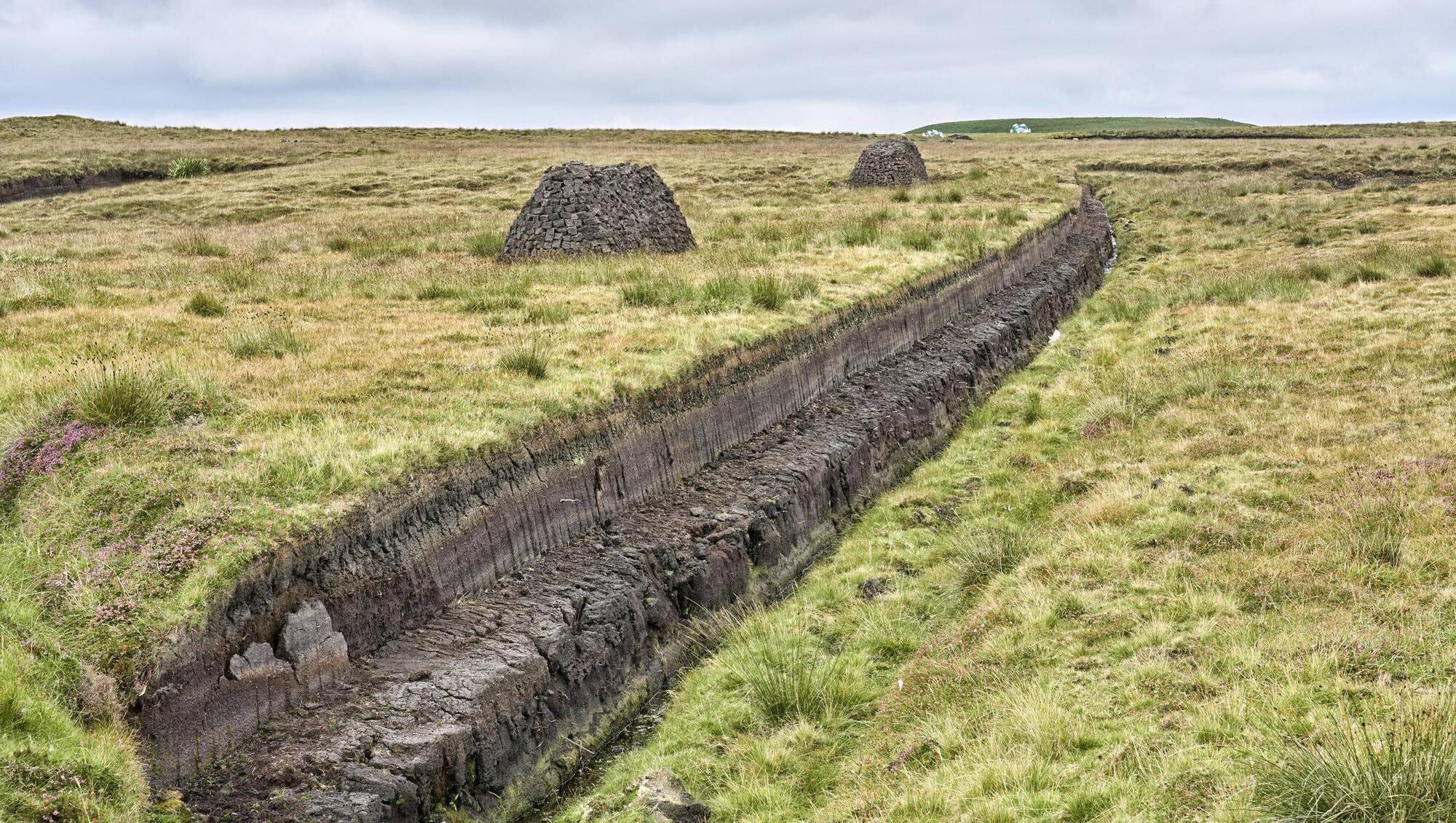
Turf-cutting releases harmful carbon and other greenhouse gases into the air.
The level of carbon-emitting peat extraction carried out on Irish bogs for domestic use has been vastly underreported, a new study has found.
Fresh evidence from Environmental Protection Agency-funded research reveals just under 65,000 hectares of raised bog across Ireland has been cut up for domestic use, nearly 162 times more than the 400 hectares reported in Ireland’s official report on annual greenhouse gas use to the United Nations.
Using images from space, Google Earth Engine, and an AI algorithm, the research methods give a bird’s eye view of Ireland’s bog use, the subject of ongoing major controversy. Turf-cutting releases harmful carbon and other greenhouse gases into the air.
The new study, which authors claim is the ‘first high-resolution wall-to-wall’ research of its kind here, focused on the land use of raised bogs, which accounts for 36% of peatland, while blanket bogs make up the remainder.
“Given their significant role in climate mitigation, it is essential to quantify the emissions resulting from land use degradation of these ecosystems,” they said.
Scientists say peat is the least carbon-efficient fossil fuel producing more CO2 emissions per energy unit than oil, natural gas, or coal.
Previously, cloudy Irish weather conditions made it difficult to get a clear picture of bog use but scientist, Wahaj Habib — a PhD student at Trinity College Dublin — explained that using tools like Google Earth Engine has proved to be a gamechanger as it contains a massive library of satellite imagery to carry out the research.
They found agricultural grassland made up 43% of the land use on raised bogs, forestry accounted for 21%, domestic cutover was 11% and industrial cutaway was 10% while remnant peatlands accounted for 13% of land use and waterbodies and built-up areas made up 1% each.
The study also revealed that previous reports on bog use have been way off the mark.
In Ireland's National Inventory Report 2023 — an annual register of greenhouse gas emissions required by the United Nations Framework Convention on Climate Change (UNFCCC) — the figure for domestic harvesting of all bogs is listed as 400 hectares.
The EPA admits in the 2023 report that the extent of domestic harvesting “is poorly quantified”.
Overall, it states that managed wetlands — defined as bogs commercially exploited for public and private extraction of peats and areas used for domestic harvesting of peat” — are 82,984 hectares for both raised and blanket bogs.
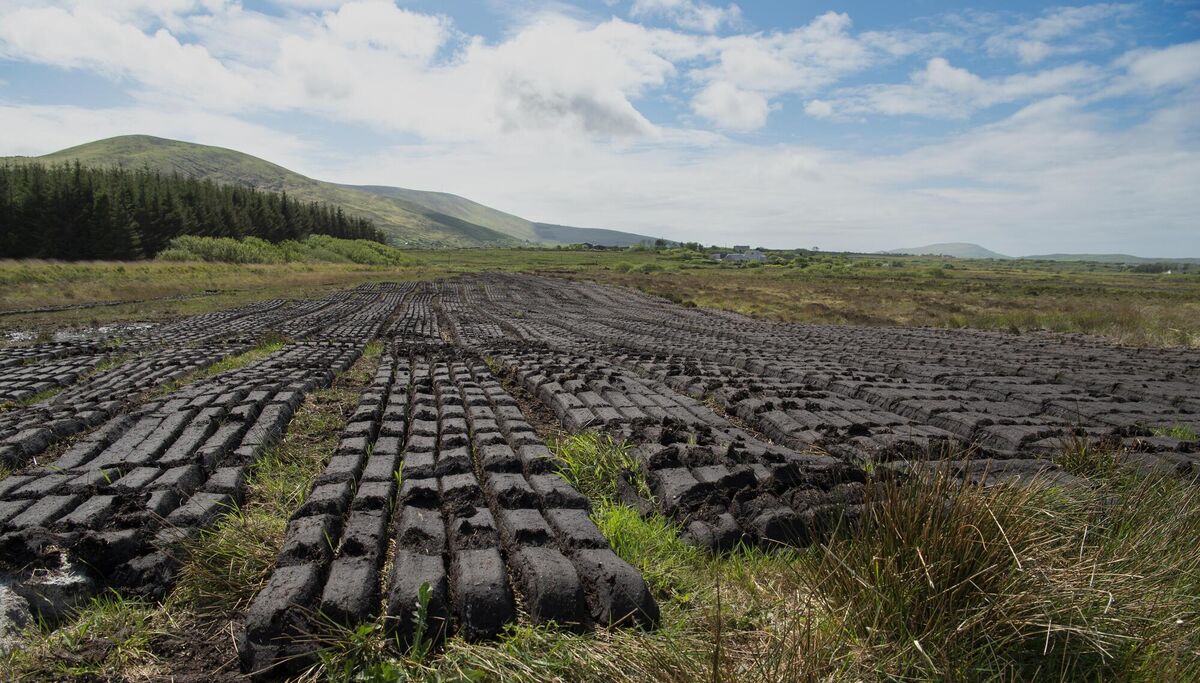
But the findings in the new satellite study say it extends "to approximately 119,000 hectares which is 70% higher than the managed wetland area figures for all peatlands — both oceanic-raised and blanket bog — reported in Ireland’s National Inventory Report”.
"The results have revealed widespread degradation of these globally rare habitats, making them net emitters of CO2."
The study — published in the journal — said the overall accuracy of the map was 89%.
Peatlands cover around 1.46m hectares which makes up 21% of Ireland with blanket bogs covering 900,000 hectares and the globally rare Oceanic raised bog covering 530,000 hectares.
"It is estimated that they store between 60% and 75% of the national Soil Organic Carbon (SOC) stock but land use practices have led to the degradation of about 95% of these peatlands," said the study.
Wahaj Habib said peat extraction emits greenhouse gas emissions in many ways: “Primarily it is because the process involves draining and exposing the peatland to air,” he said while adding subsequent burning adds to greenhouse gas emissions.
He said that the study's findings show emissions are at least twice what has been previously reported.
“The numbers don't align, even for raised bogs, which represent only one-third of the total peatlands," he explained.
“The degradation is visibly evident and can be seen all over the Midlands. What our study does is essentially put this degradation 'on the map', and quantify it using scientifically robust methods.
“We hope that the refined numbers obtained should now serve as valuable data for reporting, offering a clearer understanding of the current situation.
“These methods can prove instrumental for the continued monitoring and sustainable management of these ecosystems.”

CLIMATE & SUSTAINABILITY HUB
CONNECT WITH US TODAY



Be the first to know the latest news and updates