Bakhurst accuses politicians of asking him to 'break the law' in relation to exit payments
Bakhurst accuses politicians of asking him to 'break the law' in relation to exit payments

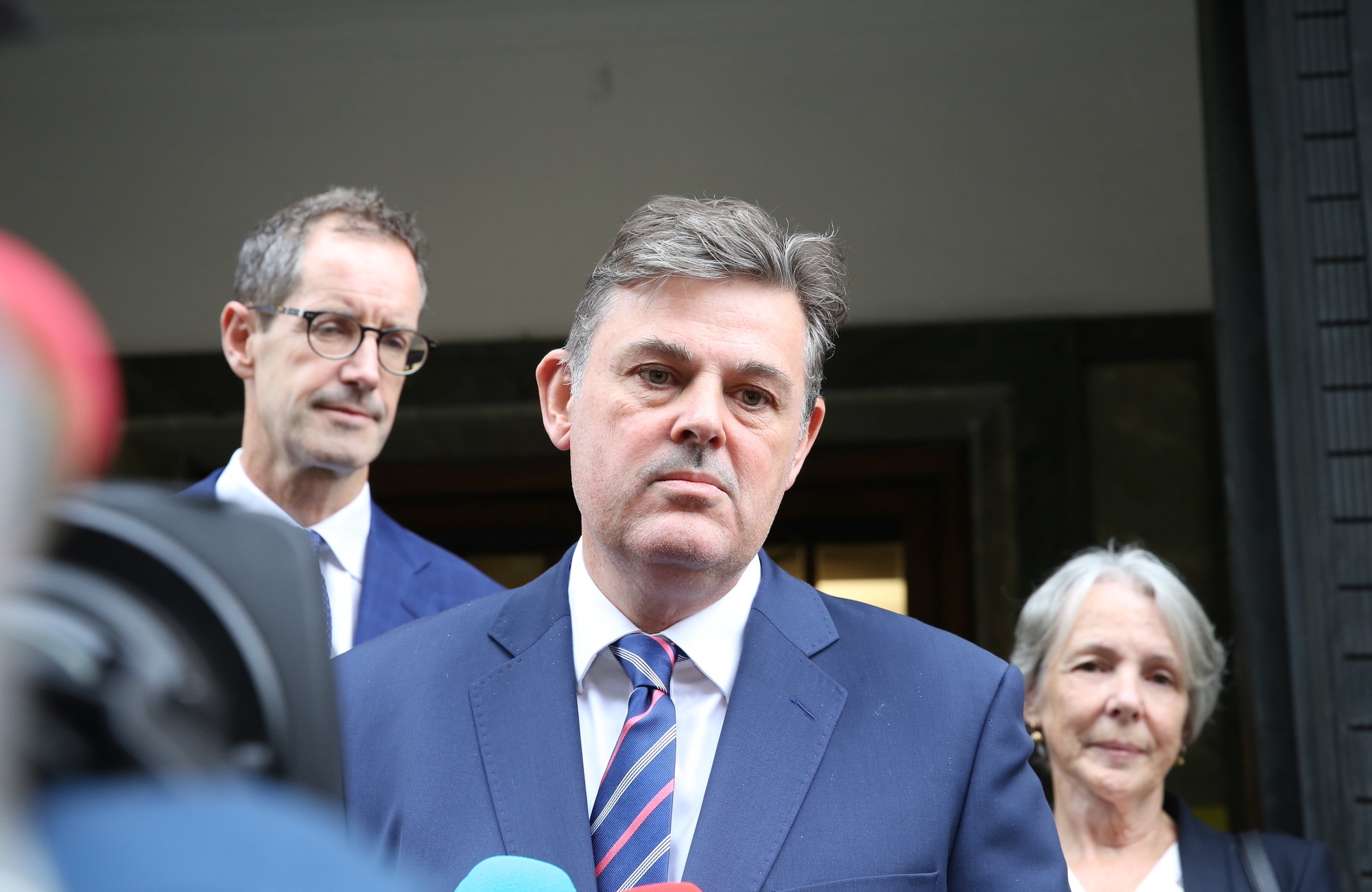
RTÉ Director General Kevin Bakhurst said the broadcaster is receiving legal advice.

RTÉ’s Director General Kevin Bakhurst has accused TDs and Senators of asking him to break the law by revealing the exit payments issued to senior staff.

Mr Bakhurst said that while he is receiving legal advice on how much information he can provide on exit payments to former executives Rory Coveney and Richard Collins, there are elected officials asking him to break the law.

“We’re taking legal advice on what we can do to drive maximum transparency. I’ve had a career for more than 30 years, the law is pretty clear at the moment about not revealing some of this stuff,” Mr Bakhurst said, speaking on RTÉ’s Drivetime.

“It is quite unusual for me to be put in a position where I’m actually being asked by elected officials to break the law.” 

During the interview, Mr Bakhurst said that, when he began his term as Director General last July, he informed reporters that Mr Coveney was due to receive an exit package.

“We did disclose that at the time, but people seem to have forgotten about that,” Mr Bakhurst said.

However, a transcript was put to him showing that he said: “No he [Mr Coveney] didn't get a payment going out the door but he is entitled, as other people are, to statutory level payments when they leave an organisation."

Asked about this, Mr Bakhurst said: “I said statutory at the time, I mean, I think what I meant is the amount that is appropriate for the length of time he was here. Statutory probably is a technical term, but he got less than the amount he would be entitled to if he went to the WRC [Workplace Relations Commission].” 

On Mr Coveney’s exit package, Mr Bakhurst said that he was unable to sack the former director of strategy for the broadcaster, but that the two agreed that he should leave the organisation.

“It was then a question of on what terms he would leave. Now Rory had been here as I say for 16 years, so there were absolutely no grounds to sack Rory on. So there’s a question of, you know, can we agree terms on which he would leave the organisation.

“There was always the option for Rory to go to the WRC to take the case if he wanted to for wrongful dismissal. If we ended up there, where he would have ended up rather typically, if it went through mediated settlement, with around two years pay.

“However, I took legal advice and I took advice from HR and Rory also took legal advice and we agreed on the sum which was way less than that and avoided any legal costs quite quickly.

“I’d say Rory never pushed for any more money beyond that. I thought it was a fair settlement.” 

On Mr Collins, Mr Bakhurst said that he was unable to disclose the exit payment provided, but that there was a mediated settlement between the broadcaster and the former Chief Financial Officer.

However, he said that a confidentiality clause within the package was a “standard” in any mediation process.

“It’s not something that RTÉ has dreamt up,” Mr Bakhurst said.

Mr Bakhurst said that he understands staff anger, but that he can only work “with the tools I have”.

“There was an absolute need to change the senior team at this organisation when I came in. I used every tool I could, I tried to use the most cost-effective tools that I could to change personnel on that team and bring in a new leadership team so that we could bring in a new era for RTÉ.

“Now that wasn’t always possible at zero cost.”

In a statement at the weekend, Mr Bakhurst also said he and Mr Coveney “agreed that it was best that he stand down from his role as Director of Strategy.” and that Mr Coveney’s role became redundant and “an exit payment was offered by RTÉ and accepted by Rory.” 

However, in his statement in July last year, when he decided to leave the organisation, Mr Coveney said he “tendered his resignation”. Questions now have emerged over why Mr Coveney received in the region of a €200,000 payment if he resigned from RTÉ.

It comes as Media minister Catherine Martin met with Mr Bakhurst and Chair of the RTÉ Board, Siún Ni Raghallaigh following further damaging revelations by Mr Bakhurst over the weekend regarding two exit packages and a confidentiality clause.

She said she expressed to both that in the context of any possible future severance arrangements, confidentiality agreements should be avoided if at all possible, and that a cap on the levels of settlements made should be introduced.

Mr Bakhurst’s statement at the weekend said RTÉ's former Chief Financial Officer, Richard Collins departed RTÉ with a binding confidentiality clause that was agreed to by both sides and that “in the interest of fairness and respect cannot be breached".

However serious questions have been raised about the confidentiality clause with Ms Smyth adding: “Another real concern to me is how a new Director General and a Board approved an exit package with a clause of confidentiality.” 

Ms Martin said Mr Bakhurst confirmed to her that he has sought further legal advice as to the levels of disclosure which can be made.

She said: “While I am conscious of the need to respect legal advice, as well as individual employment and privacy rights, I reminded the DG of the important public interest at play which must also be a factor in considering this matter.

“I also asked that he consider all possible options to bring further clarity and transparency to these matters."

Ms Martin also said Siún Ní Raghallaigh was informed of exit packages paid to senior executive staff, but she did not have a role in approving any payments made to former RTÉ staff.

“The chair certainly did not approve any of these nor should she approve that. In future, these sorts of agreements, if they happen, will have to go before the board," she said. 

Ms Martin said that she sought clarification from Ms Ní Raghallaigh during the meeting earlier today on the matter.

The Green Party minister said that any future exit payments must be “the exception and not the norm”, but she declined to put a figure on a cap.

“That’s what I said to the DG [Director General] today and he’s committed to looking at that. It’s not for me to state a number now, I’m not going to do that.

“I just want him to look at it so we don’t see extraordinary figures.” 

Asked if excess payments made to former RTÉ executives should be paid back, Ms Martin said that she could not interfere in “operational matters”.

“I know this is frustrating, but I as Minister for Media cannot interfere in these operational matters or comment. It would be highly inappropriate… I’m certainly not going to stray over into what could be termed as political interference.”

'Full and clear account'

Cabinet ministers are demanding Mr Bakhurst give a full and clear account of the details of exit packages granted to two former staff members.

Public Expenditure Minister Paschal Donohoe said it had been another “extremely coercive” number of days for RTÉ at a time when the government is working towards giving potentially €40m in taxpayers money to bail out the broadcaster before a decision is made on the long-term funding model.

Higher Education Minister Simon Harris said it has been a “bad weekend” for RTÉ management in terms of cultural change that had been promised by Mr Bakhurst. He said “unfortunately” this has not been the case in recent days following the revelations of exit packages and a confidentiality clause.

He said RTÉ management need to show to the public that they “get this” regarding transparency and that he does not think the actions of this weekend, referring to Mr Bakhurst’s statement, show that.

RTÉ Director General Kevin Bakhurst said the broadcaster is receiving legal advice.

Regarding Mr Collins' confidentiality clause, Mr Harris said: “I don’t wish to comment on any individual either or any individual contractual arrangements but I would like to hear from RTÉ management as to how they square their commitment to transparency.

“I mean they’re at Oireachtas committees, they’ve heard from the people of Ireland. Transparency is key to cultural change. And I’d like to hear how they in their minds they have squared that commitment to transparency with the negotiation of a confidentiality clause,” he said.

Mr Harris said when new information comes into the public domain, he thinks it is legitimate that the government on behalf of its citizen and taxpayers want to have a proper full understanding of it.

Mr Donohoe said at the “heart of all” of the matter is corporate governance. He said transparency is needed regarding any arrangements or decisions that have made regarding exit packages.

Both ministers back Mr Bakhurst to remain in his position as Director General but still want him to explain the logic behind some of the exit packages which the minister said have “cause real concern”.

Transparency

Earlier, Mr Bakhurst said RTÉ will examine a cap on future golden handshake payments to senior staff

Following a meeting with Ms Martin, Mr Bakhurst told reporters that RTÉ is receiving legal advice on how transparent it can be around exit payments.

He described the meeting with the minister as “constructive” and said that he reassured her of RTÉ’s commitment to transparency.

“We spoke to external lawyers this morning about how far we can push transparency and what we can and what we can’t say,” Mr Bakhurst said, adding that the advice will be provided in the coming days.

“Off the back of that advice, we’ll be seeing how far we can push transparency about some of the questions that have been raised, mindful that we have to respect the law as an organisation and also mindful of all employees' rights in RTÉ, which is always maximum consideration for us.” 

At the weekend, RTÉ released a statement to clarify the exit packages of senior staff but did not say how much each had received, infuriating staff and causing a number of Government ministers to comment.

Among the details released was confirmation that Mr Coveney, former director of strategy, was given an exit payment upon leaving last summer — understood to be in the region of €200,000.

Last week, Mr Bakhurst told the Oireachtas media committee that former chief financial officer Breda O’Keeffe’s redundancy package amounted to €450,000 despite the role not being made redundant.

Asked today if he would resign due to the controversy surrounding exit payments, Mr Bakhurst said he would not and said he is working to “move the organisation forward with a new leadership team”.

He confirmed to the Irish Examiner that a cap on future exit payments is “something we’ll look at”.

x

More in this section

Lunchtime News

Newsletter

Keep up with stories of the day with our lunchtime news wrap and important breaking news alerts.

Cookie Policy Privacy Policy Brand Safety FAQ Help Contact Us Terms and Conditions

© Examiner Echo Group Limited