Increase in firefighters and fire stations 'direct result' of Stardust blaze, inquest hears
Increase in firefighters and fire stations 'direct result' of Stardust blaze, inquest hears

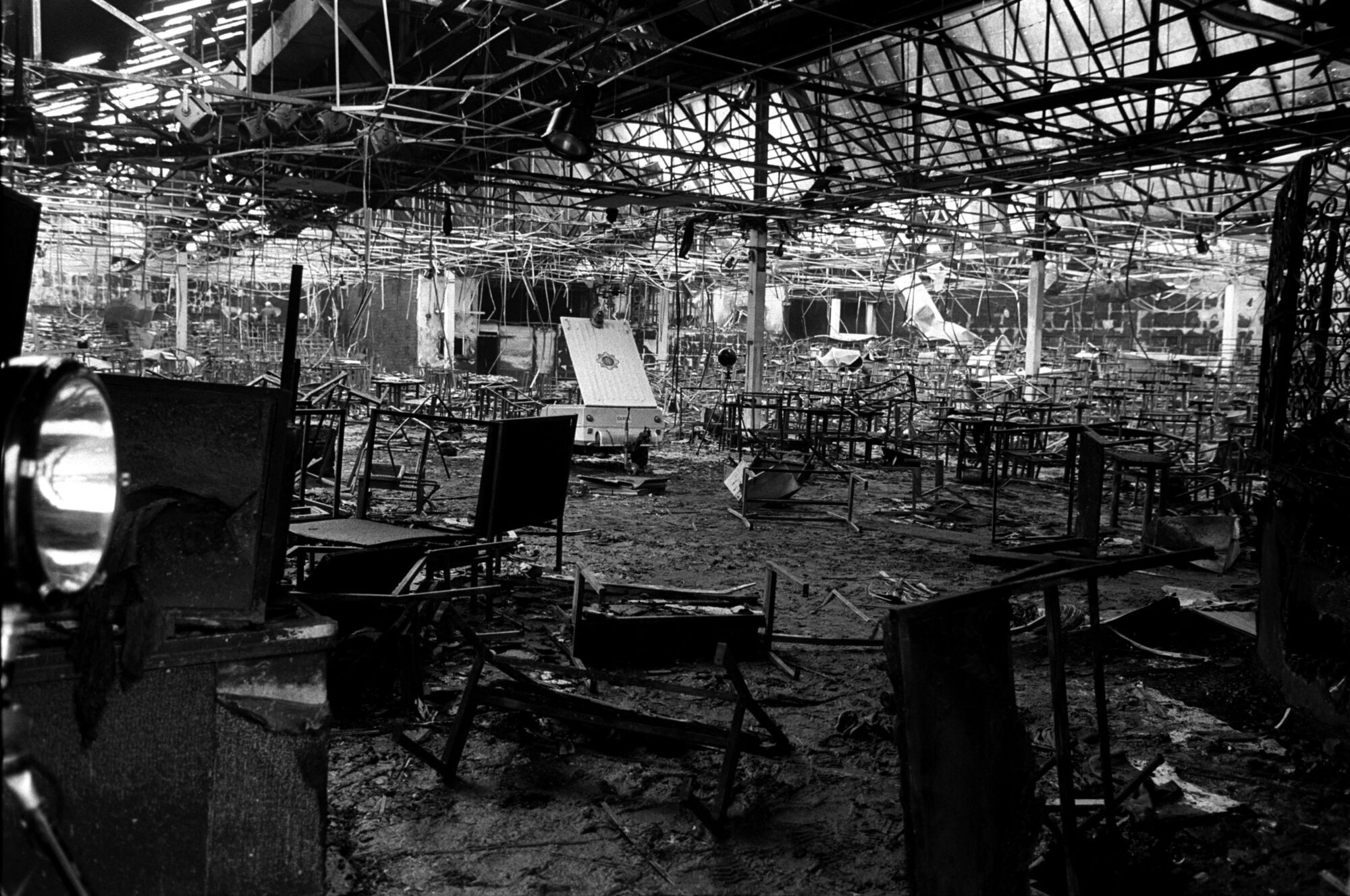
A photo taken on Valentine's Day, February 14, 1981, of the burnt-out Stardust in Artane, Dublin, where 48 young people perished in the disastrous fire. Picture: Tony Harris/PA

The chief fire officer of Dublin Fire Brigade, the final witness to be called at the Stardust inquests, has told the jury he believes an increase in the number of fire stations and firefighters in Dublin since 1981 was a direct result of the fire.

Dennis Keeley also told the jury in the Dublin District Coroner’s Court it was “hard to disagree” that it would be better for a third party to sign off on building plans rather than for builders or architects to self-certify.

Mr Keeley was asked to present factual evidence about the current preparedness of the emergency services, during the inquest into the fire that killed 48 people when it swept through the Stardust nightclub in the early hours of Valentine’s Day, 1981.

Mr Keeley told Mark Tottenham, a member of the coroner’s legal team, that the process of pre-incident planning has been in existence for nearly 20 years, and it deals with the gathering of intelligence should an incident happen.

He explained that the fire brigade seeks information from the owner-occupier of a building such as maps of the building, access and egress points, the location of hydrants or water sources, and any high-risk facilities that may be on site.

Dublin Fire Brigade chief fire officer Dennis Keeley said he started with the brigade in  1986 'probably as a direct result of the Stardust and the decision to increase the numbers within Dublin Fire Brigade'. Picture: Gareth Chaney/Collins

He confirmed this information is available to fire crews while on route to an incident, explaining this shortens the “get to work phase”. 

He said that, for large venues, the brigade would have floor plans, which are maintained on laptops and are available to crews on route.

“Plans and drawings are generally followed up where possible by visits from local crews where they test that the hydrant is working, and they try to identify any anomalies or difficulties that could occur if they were to arrive,” Mr Keeley said.

He said that, on an annual basis, the brigade manages to inspect around 70% of a total of around 1,200 licence applications each year, and the brigade strives to visit every premises at least once every two years. He said: 

We visit at capacity, when it’s functioning, whether that’s going to be a weekend or a football match, we have our officers inspecting all the time. 

"It is during the performance of the building, as there is little value in arriving when it is closed to the public,” he said, going on to say that 80% to 90% are unannounced inspections.

Mr Tottenham asked how often the Dublin major emergency plan has been put into effect, in which an emergency response agency decides that the situation is “beyond the normal capabilities of the principal emergency services”. 

Mr Keeley said a specific declaration of that is very rare, and in a Dublin context he said he could not recall the last time it happened, perhaps the Raglan House explosion in 1987.

Fire service response times

Mr Tottenham asked him about the recent public disturbance in O’Connell St in Dublin, to which Mr Keeley replied that while there were a number of fires, at no stage did the local authority feel that they could not cope.

Mr Tottenham said that evidence had been heard at this inquest of it taking three minutes from the first telephone call to emergency services on the night of the Stardust fire to the first fire engine being on the road, and he asked was this still the case. Mr Keeley said: 

We strive for from the bell going in the station to the actual wheels turning at the gate being between 60 and 90 seconds. 

Mr Tottenham asked the witness if he had any comments to make about the Building Control Act Regulations (BCAR) and the issue of self-certification in relation to the building regulations.

“Since 2014 and the introduction of the BCAR, there has been significant improvement in building standards, and self-certification forms part of that process. We’re seeing a dramatic increase in building standards, so the competency of individuals for signing-off is functioning,” he said.

Lessons from the Stardust fire

Mr Tottenham asked the witness to what extent has the practice within the Dublin Fire Brigade and Ireland been informed by the Stardust fire. Mr Keeley replied that legislation has not been directly produced as a result of it, but updates of regulations would have been informed by it.

“Personally, I was employed in Dublin Fire Brigade in ‘86, and that’s probably as a direct result of the Stardust and the decision to increase the numbers within Dublin Fire Brigade and the need for additional stations,” he said, adding that increased staff training and the use of the best equipment was also a direct result of the Stardust fire.

Place of Public Assembly process

Seán Guerin, representing a number of the families of the deceased, referenced the Place of Public Assembly process and asked whether the fire brigade have no part to play between the approval of the initial design of a building and any review after the building is completed.

Mr Keeley confirmed that it was not considered a routine part of the process for Dublin Fire Brigade to conduct an inspection during the construction process. 

He agreed with Mr Guerin that it was “hard to disagree” with the evidence of fire engineer Martin Davidson, who had told the inquest that it would be better for a third party to sign off on the plans rather than self-certification.

At the conclusion of Mr Keeley’s evidence, coroner Myra Cullinane said that this concluded the hearing of witness evidence in the inquest. She told the jury to return tomorrow for a review of their documents and an opportunity to review photographic or video evidence, and she also informed all interested parties to make any submissions.

x

More in this section

Lunchtime News

Newsletter

Keep up with stories of the day with our lunchtime news wrap and important breaking news alerts.

Cookie Policy Privacy Policy Brand Safety FAQ Help Contact Us Terms and Conditions

© Examiner Echo Group Limited