Only half of people surveyed believe RTÉ is serious about transforming
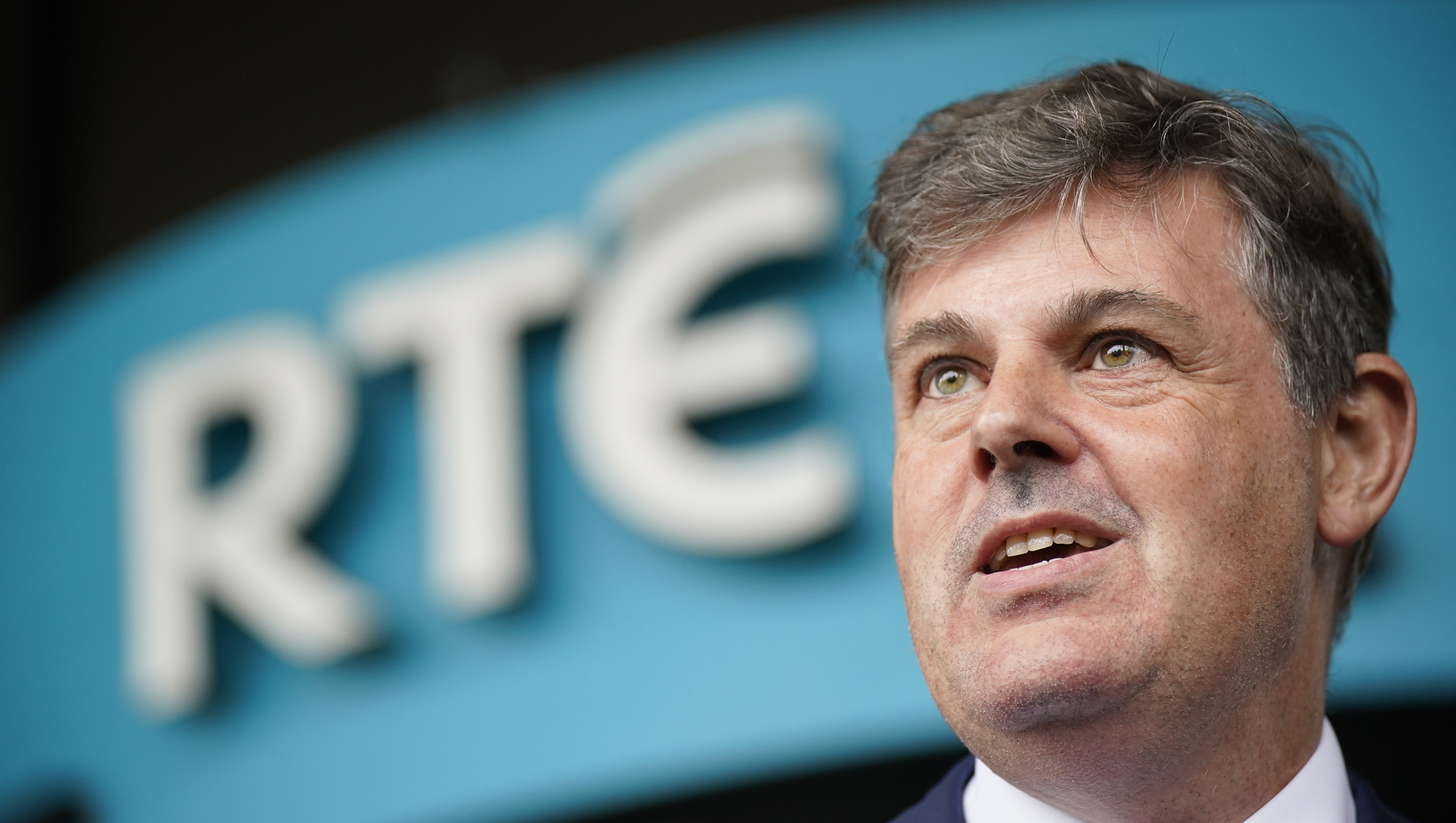
RTÉ director general Kevin Bakhurst said the results show RTÉ has 'a compelling mandate' that will 'make the best use of the monies available to fund our national media service'.
Just 50% of people believe that RTÉ is serious about transforming into a better-run organisation, a national survey has found.
The survey, carried out for RTÉ iby Ipsos B&A as part of a broader public consultation on the future of the broadcaster, found that 13% of 1,000 people strongly agreed that RTÉ is serious about transforming, with a further 37% agreeing.
By contrast, 32% of the representative sample said they either disagreed or disagreed strongly that RTÉ was serious about changing, while the remaining 18% neither agreed nor disagreed or said they did not know.
A marginally better response was received from the 2,827 members of the public who gave their views online regarding RTÉ’s future strategy document, which was published last November, with 57% agreeing that RTÉ is attempting to transform into a better-run organisation.
RTÉ staff were more inclined to think that the broadcaster, which has been beset by multiple scandals, wants to become a more well-run entity, with 66% agreeing with the question.
Of the stakeholders in the organisation who were polled, 71% thought that RTÉ is trying to change.
In terms of the suggestion that RTÉ should become a smaller organisation in pursuit of longer-term stability, most respondents agreed.
Some 64% of RTÉ staff agreed that the broadcaster should become a smaller entity, which may reflect on the future strategy’s proposal that RTÉ cut 400 jobs, or more than 25% of its staff, by 2028.
Regarding whether or not RTÉ should commission more of its programmes from the independent sector, the public and national survey were in broad agreement at roughly 65% of those asked being of that opinion, while stakeholders were 75% in agreement.
RTÉ staff did not, however, with just 43% agreeing with the question.
An average of 70% of people across the board agreed that RTÉ should make fewer programmes in Dublin, although sentiment from that point of view was heavily dependent upon whether or not the respondents were based in the capital or not, with those living outside Dublin being more heavily in favour of the proposal.
Responding to the results of the consultation, director general Kevin Bakhurst said they show that “there is wide-ranging support for this new direction” and that RTÉ now has “a compelling mandate” that will “make the best use of the monies available to fund our national media service”.
Separately, RTÉ has published a tender for a €435,000, three-year contract for a provider of printing services.
A spokesperson for the broadcaster said the tender reflects the fact that RTÉ has “a range of day-to-day printing requirements" including a reliance on things like paper scripts and other printed documents.
CONNECT WITH US TODAY



Be the first to know the latest news and updates