Further overdoses linked to synthetic opiates reported in Dublin
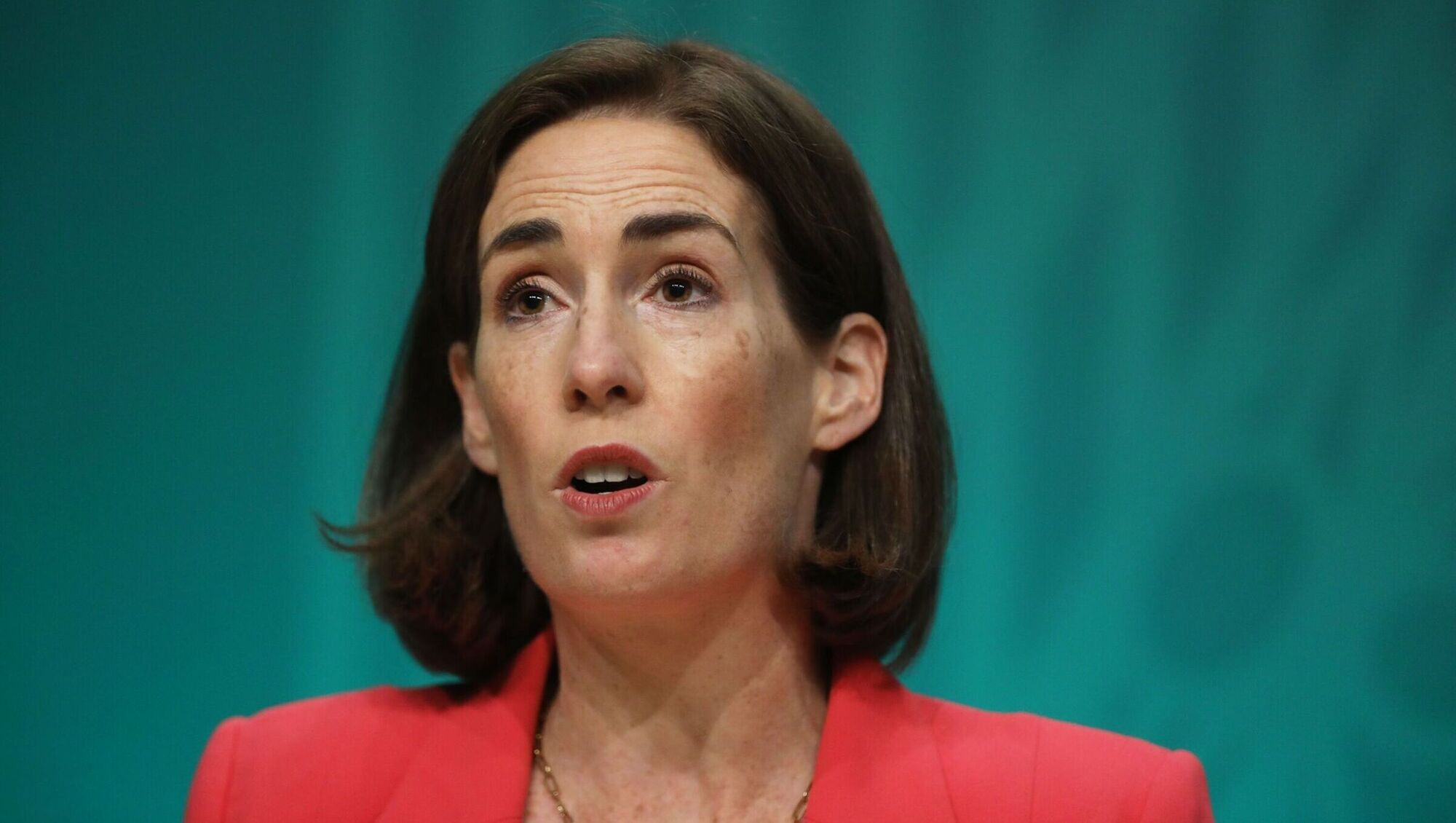
Minister for Public Health, Wellbeing and the National Drugs Strategy, Hildegarde Naughton has reaffirmed her commitment to expanding naloxone services citing the medication's vital role in saving the lives of those who suffered overdoses in recent weeks. Picture: Leah Farrell/RollingNews.ie
A dangerous synthetic opiate that led to numerous overdoses last month is still in circulation in Ireland, it has been warned.
Nitazene, a heroin alternative, was linked to over 74 overdoses in Cork and Dublin late last year — 57 of which occurred over a two-week period in Dublin.
Merchant's Quay Ireland chief executive Eddie Mullins has said that the opioids being sold as heroin are still circulating.
Speaking on RTÉ's , Mr Mullins said they are still seeing nitazene overdoses.
"Last Friday, we had a spate of overdoses in Merchant's Quay. We had five in very quick succession," he said.
"We obtained some of the drugs and they were analysed and it is still nitazene. So that batch that became prevalent in November is still there."
Some of the tests carried out on substances showed no traces of heroin at all.
In these instances, nitazene had been mixed with paracetamol and caffeine and then sold as new heroin or strong heroin, national clinical lead for addiction services with the HSE, Professor Eamon Keenan said.
The emergence of the substance in Irish cities led the HSE to issue an "extreme risk" warning over social media and on posters and digital road traffic signs.
Those who intravenously inject or who use opioids need to remain on alert and be aware that the particular product is still circulating.
Nitazene comes in two forms: powder and tablets. The overdoses in Ireland have been linked to the powder variant.
Minister for Public Health, Wellbeing and the National Drugs Strategy, Hildegarde Naughton has reaffirmed her commitment to expanding naloxone services citing the medication's vital role in saving the lives of those who suffered overdoses in recent weeks.
The prescription-only medication temporarily reverses the effects of opioid drugs like nitazene, heroin, morphine and methadone.
"We saw the lifesaving effects of naloxone during the recent overdose cases in Dublin and Cork. In many cases, it was administered before emergency services arrived on the scene, and this reinforces the need to make it more readily available," said Ms Naughton.
People have been urged to access the naloxone antidote which is available from addiction services.