A tipping point arrives in Gaza, when there's nowhere else to go
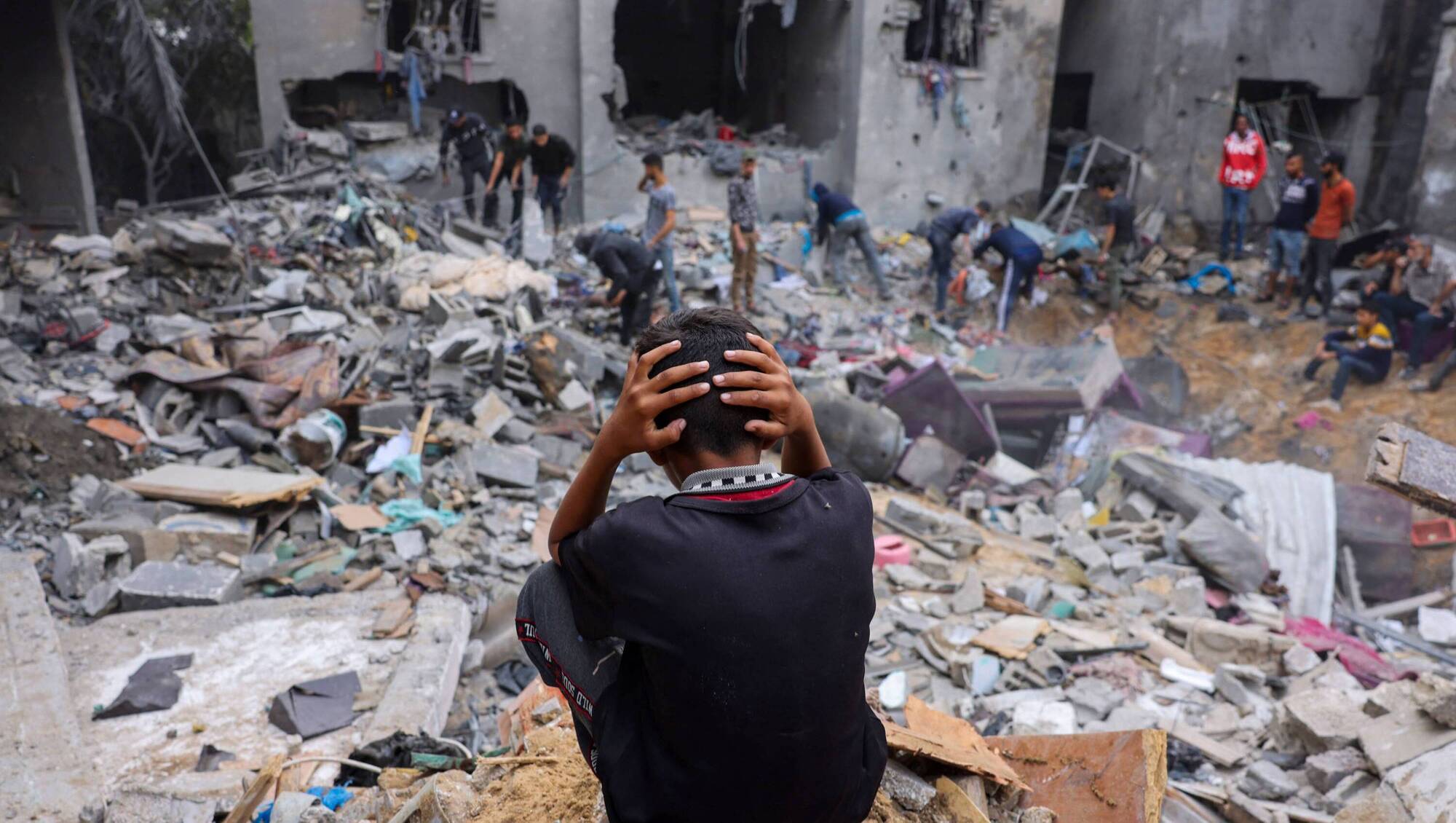
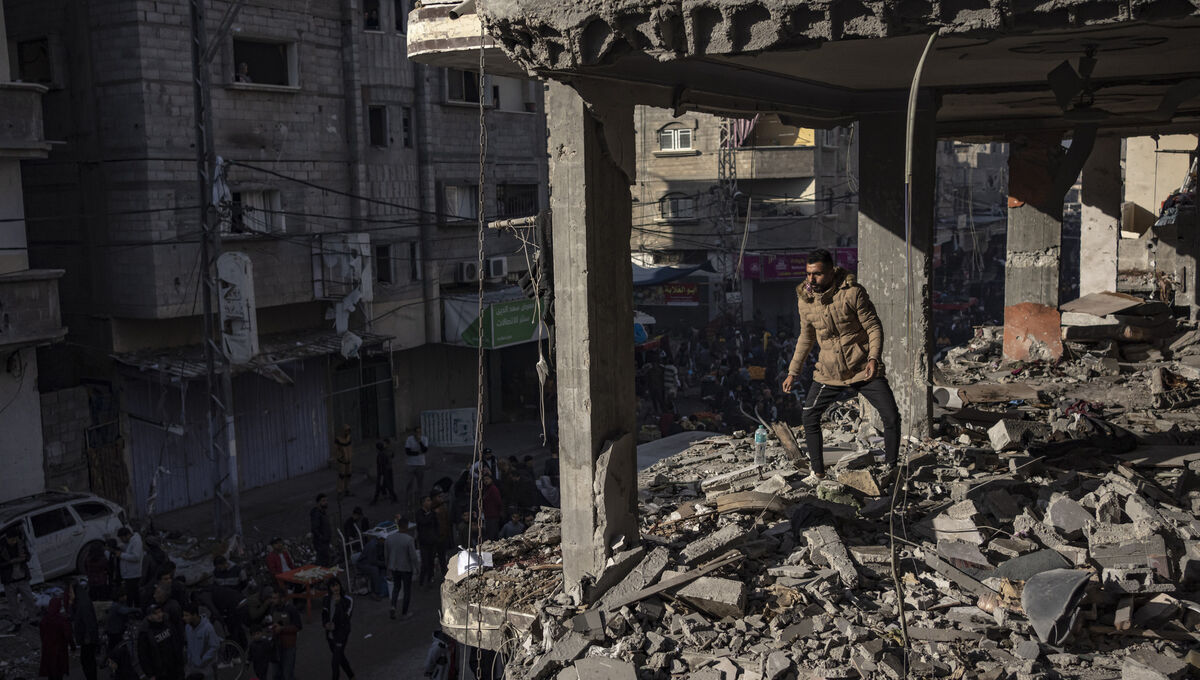
A child reacts as people salvage belongings amid the rubble of a damaged building following strikes on Rafah in the southern Gaza Strip. Picture: Mohammed Abed/AFP via Getty Images
It is almost two weeks since the tentative ceasefire between Israel and Hamas ended, and with every passing day Israel's Defence Forces has intensified its campaign of air and ground assault on Gaza with devastating and dehumanising effect.
In the last 48 hours, Palestinians have suffered the most brutal days of violence in the south, the very area the IDF urged besieged Gazans to flee to in order to be spared their unrelenting campaign of indiscriminate bombing in the north.
Under particularly brutal focus was the city of Khan Younis, where residents reported a town under siege from tank shelling throughout the day and night.
It's a similar tale in Rafah, the southern Gazan city which borders Egypt, where Hamas health officials said 22 people, including children, were killed in an Israeli air strike on Monday night.
Reports of emergency workers searching for victims and survivors under the rubble continued throughout yesterday.
Tens of thousands of Gazans, most of them women and children, evacuated from North Gaza to south in recent weeks under the “encouragement” of the IDF.
Most did so on foot, and after weeks of relentless bombardment during the initial phase of the Israeli retaliation following the October 7 Hamas terror attacks.
These people did so in silence, with their hands raised, moving through Israeli controlled checkpoints where many of the men were detained and denied progress.
Rafah represented a place of hope for all those forced to flee, especially with Egypt within sight. All that the onslaught of the last 48 hours will have proven to them is that there is no escape from the horrors of their reality, regardless of what Israel, and its supporting actors in the west tell them.
In Jenin in the occupied West Bank, the Palestinian health ministry reported that six people were killed, including five in an air strike.
On Monday in South Lebanon the IDF targeted the towns of Bint Jbeil and Yaroun with airstrikes, both close to the Irish UNIFIL base where 319 peacekeepers are based.
In Washington, the Biden Administration continued to urge restraint, just as it did on October 11, 16, 29, November 3, 10, 29, and December 6, 10, and 12.
US president Joe Biden had reiterated that his commitment to Israel remains “unshakeable”, and that Israeli prime minister Benjamin Netanyahu was in a “tough spot”.
There was little or no mention from Mr Biden of the “spot” the over 1.4m Palestinians displaced in Gaza find themselves in because of the actions of Mr Netanyahu’s military strategy, not to mention the over 18,000 reported to be killed.
However, in a rare sign of discontent, the US president warned yesterday that Israel was losing the world's support following Mr Netanyahu's assertion that he wouldn't allow the Palestinian Authority to take control of post-war Gaza.
It may be the first signs of wariness from within the Oval Office that it is no longer supporting an ally to "defend itself", and is instead propping up a despotic government, with women and children paying the price.
Still, Israel has only just secured its 14,000 tank shells from the Biden administration so don't expect a dramatic shift in policy just yet.
Meanwhile, as the emptiness of Washington's words rings loud around the world, Vladimir Putin continues to be reintegrated into the Mid and Far East, and Donald Trump continues to gain in the polls.
All the while, the UN — through its agencies on the ground and its diplomats in New York —
continues to scream for the slaughter to stop.
Writing in the , Tánaiste Micheál Martin calls the situation "utterly dire and inhumane" with the humanitarian system at severe risk of collapse.
Taoiseach Leo Varadkar says there is no military solution to the conflict. "We have seen 75 years now of war, terrorism, dispossession. This cannot be allowed to continue," he adds.
The World Health Organization has said the health system in Gaza has gone from 36 working hospitals to 11.
With Rafah getting hammered, incoming aid has again slowed to a trickle.
The UN, too, would have taken Israel’s word that the south was safe — or at least safer —
than the embattled north, and facilitated passage of civilians with that in mind.
To the citizens of Gaza, the UN may well represent the only hope. Events of the last two days tell that even they have been misled (betrayed).
Every other day has felt like a tipping point. We may now finally be there, only because, finally, there is literally nowhere else to go.

CONNECT WITH US TODAY



Be the first to know the latest news and updates