Families battle to save their loved ones from eating disorder ARFID
Families battle to save their loved ones from eating disorder ARFID

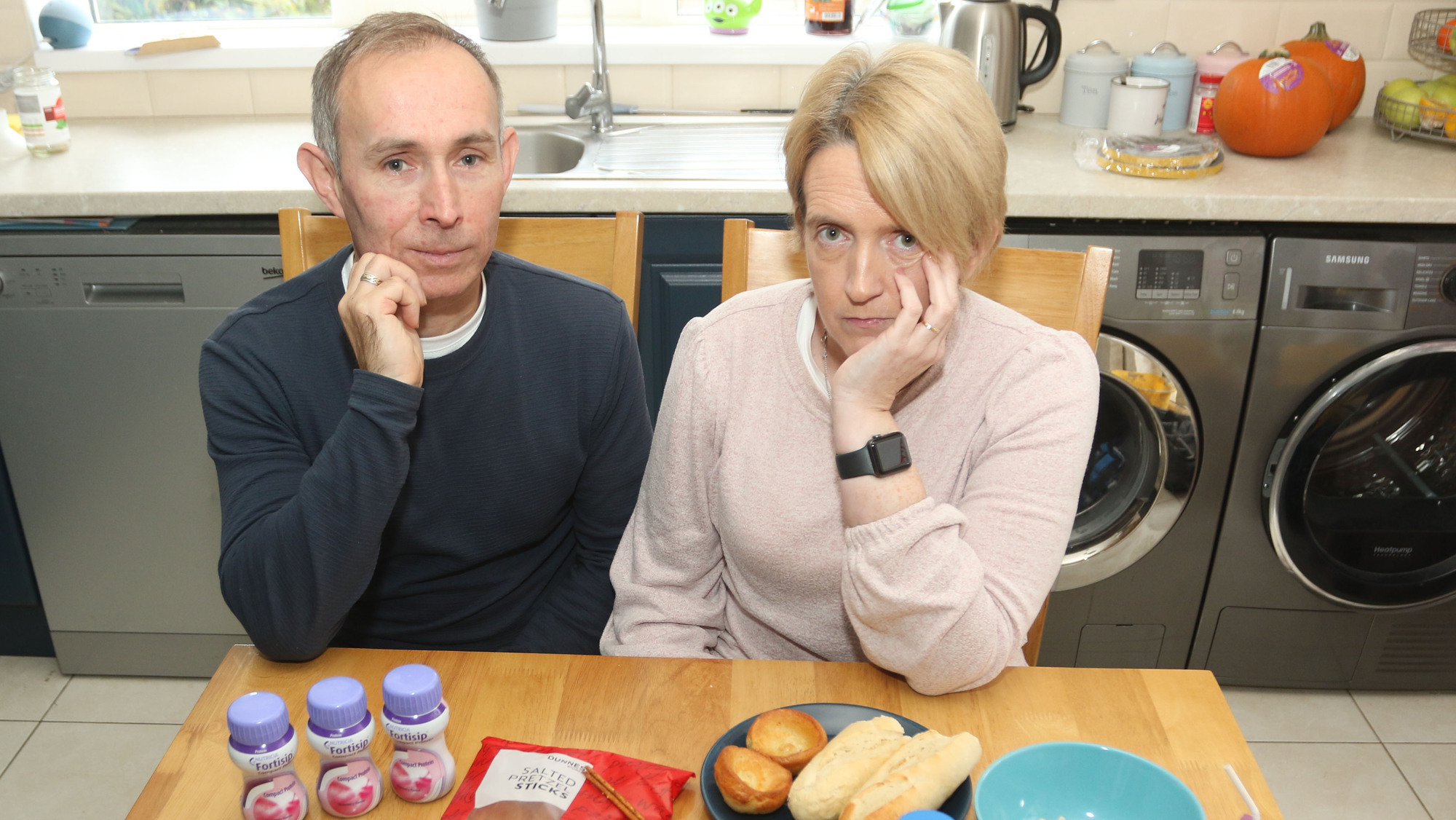
Rafal and Caitriona Pliszka's son Riain suffers from ARFID, which limits what he eats on a daily basis. Picture: Brendan Gleeson

Hiding vitamins in chicken nuggets, grinding nuts into powder to conceal in yoghurt, driving long distances to large food retailers for a certain type of waffle or chicken nugget.

These are just some of the steps desperate parents have to take to ensure their child gets at least a bit of food into them.

It is the typical routine of parents of children with a condition known as Avoidant Restrictive Food Intake Disorder (ARFID), a diagnosis first used in 2013, by the American Psychiatric Association.

However, Dr Veronica Kelly, a consultant in paediatric neurodisability at the Central Remedial Clinic (CRC), says that ARFID has been around for much longer than people realise.

It is characterised by the person avoiding certain foods or types of food, restricting their food intake, or both.

“We have a long-standing feeding clinic at the CRC for children with dysphagia, a neurological-based feeding disorder," says Dr Kelly. 

It is very well-established. What is not as well-established are children who have feeding disorders that are not based in physicality or based in a physical disability. What is very well recognised are eating disorders like anorexia and bulimia.

“ARFID is technically a psychiatric diagnosis. The reality is that it is our issue, because we are the ones who see it – public health, GPs, schools, pre-schools, healthcare workers.” 

She stresses the importance of ruling out other medical conditions or neurological disorders as being the cause of feeding difficulties.

According to Bodywhys, there are three key components to the condition:

- Avoidance due to the sensory characteristics of food (sensory food aversions, extreme picky eating) 

- A lack of interest in eating or food (food avoidance, low food responsivity) 

- Worries about the consequences of eating (phobia affecting food intake, fear of choking) 

Dr Kelly says one of the telltale signs of ARFID is a narrowing of the foods which a person will eat.

Dr Veronica Kelly, a consultant in paediatric neurodisability.

She adds that becoming increasingly distressed by foods and becoming more rigid around the location of where they will eat are among the signifiers.

“What happens with these kids is that they might have less than five foods that they might eat.” 

She points out that while some children may appear to be thriving despite their limited diet, their nutritional intake may be suffering.

And while ARFID is typically associated with children, there are a growing number of adults who now also recognise in themselves a need to address why they find it impossible to eat a vast number of foods.

Kildare mother Naomi Mallin is now in recovery not just from ARFID but also from anorexia.

She says that while she was diagnosed with anorexia at around the age of 15, she always had difficulties with food. Her mother used to say to her that she was born with anorexia but now Naomi believes her difficulties around food were linked to ARFID, even before she developed anorexia.

Now, her eight-year-old son is also suspected of having the condition.

Of her own relationship with food, Naomi says: “I would have attended many psychiatric hospitals and outpatient services and the ARFID was never picked up. It just wasn’t known about then. 

I always had issues around food. But now I know it was a sensory issue and the weight thing came in when I was about 14 or 15. Not until I was about 35 did I know that it was ARFID.

She says that the sensory issues she had around food were not the only sensory issues she had. 

“I had light sensitivity as well – I would have a sensory profile.” 

While that was picked up early, she only became cognisant of the sensory issues she had with food when in recovery from anorexia.

She recalls: “I was still finding it difficult and I couldn’t understand how I was supposed to be recovered and I was doing everything right. Psychologically I was recovered but I still had huge issues around food. I recovered about the age of 34 or 35 from anorexia.” 

But even though delighted to be in recovery, Naomi realised her relationship with food was still difficult.

“I had difficulties choosing food. Food just still seemed to be a problem and I should have been a lot better than I was. I would have had difficulties with large intakes of fluids, unknown to myself. Sauces for example. Even now, I have never been able to get to the point of eating a stew.” 

She recalls never liking meal times but believed that was due to her anorexia. However, she realised when she was in recovery from anorexia that her eating pattern was different to others.

She says: “Lunch would be fifty shades of beige. So I would have a dry bread roll, I might have ham sometimes, and it just came to where I realised I had a problem.” 

Naomi sought advice and did an outpatient programme at an eating disorder clinic and was then diagnosed with ARID shortly before the Covid pandemic.

Desensitising food

She undertook a lot of research herself and also attended a dietician “to work on desensitising the food”. She also embarked on a year of psychotherapy and feels that her situation has greatly improved.

She is not naive though. She says: “It is still an issue. I wouldn’t say it went away but understanding what it is, is a big thing.” 

Naomi remembers: “I would have been eating the same thing all the time. So it would have been cornflakes in the morning, toast. It would always be a bread roll and ham for my lunch. I would really struggle in restaurants. I am at the point now where I could eat a takeaway now. When you look at adults, you can see how fixable it is if it is treated right. Getting brushed off as being part of the autistic profile is not the way to treat it.” 

She adds: “I would have a good diet for someone with ARFID at the moment but it has taken a long time. It is easier as an adult. An adult desensitises quicker. A programme can be put in place by a dietician for an adult but that is not possible with a child.” 

She is now concerned about her young son. He has autism and is currently underweight, with some nourishment issues. He is currently undergoing assessment but she says: “There isn’t a direct route in this country for a diagnosis.” 

That is why the parents of 12-year-old Riain Pliszka, 12, from Cashel contemplated taking their son to the UK for treatment for the condition.

Up until now, he has not been able to access a service which will take a holistic approach to his autism, anxiety and ARFID diagnoses.

Plans by his parents Caitriona and Rafal to seek help in the UK have now been put on hold as the HSE has notified the family of a plan for him.

Under the plan, he is to receive four private dietician hours per month, as well as being referred to the Central Remedial Clinic which will also work with his local Children’s Disability Network Team. There will also be collaboration with a senior team from occupational therapy, speech and language therapy, and psychology.

Caitriona says: “If this does work for Riain, which I hope it does, it will change his life and ours for the better and hopefully thousands of other kids going through the scenario. I hope it’s a stepping stone to a new model of care for people to the help they are entitled to here in Ireland.” 

Tipperary boy Riain Pliszka, who has been diagnosed with a rare but emerging eating disorder called ARFID. Although Riain ate well until he was about 18 months, his diet became more restricted and he started to refuse food from about the age of three.

She says it has not been an easy journey, and says she is a little dubious that it will work out for her son.

Over the last 10 years since this started its both mentally and physically draining. Carrying the worry and having sleepless nights crying with nobody to talk to who could understand a parent's pain of seeing their child slowly fading away gave me as a mum strength to fight for his rights as a child. 

Although Riain ate well until he was about 18 months, his diet became more restricted and he started to refuse food from about the age of three.

By the age of six, Riain was in an ASD unit in a mainstream school and had to attend school using a nasogastric tube.

His food intake remains very limited and Caitriona says his condition has deteriorated in recent months.

He has been admitted on several occasions to paediatric wards. At one point, Riain’s weight plummeted and a decision was made by his medical team that the NG tube had to stay in permanently, with tube changes when required.

Caitriona set up a Facebook group for families like hers last year and says it keeps growing. She and Naomi Mallin met through the group, which provides peer support and knowledge for families as they battle to find out more about ARFID.

Naomi says action needs to be taken on how ARFID is dealt with in Ireland because “it’s not going anywhere and the sooner we treat it, the better". 

She adds: “There are so many children with Down Syndrome that have it too, and children who would have been born premature. We don’t understand it here yet.” 

In a recent reply to a parliamentary question, the HSE told Sinn Féin TD Martin Browne: “From a mental health perspective, there are no plans to develop a specific ARFID model of care at this time.” 

However, the HSE said: “The development of care pathways for ARFID will require a collaborative approach with paediatrics, primary care, disability services and CAMHS/youth mental health. Direction will be required from these areas of the health service.” 

Mr Browne said: “The response received from the HSE serves as a depressing outlook, insofar as we appear far from addressing in any meaningful way, certain eating and feeding disorders that families are encountering. Like all feeding and eating disorders, ARFID can be complex in nature with various different elements that can contribute to it, and therefore a multi-disciplinary approach needs to be identified, arranged and put in place.” 

  • Support and helplines:
  • Bodywhys Helpline: 01-2107906 
  • Bodywhys E-mail Support Service: alex@bodywhys.ie 
  • HSE Eating Disorder Self Care App

More in this section

Lunchtime News

Newsletter

Keep up with stories of the day with our lunchtime news wrap and important breaking news alerts.

Cookie Policy Privacy Policy Brand Safety FAQ Help Contact Us Terms and Conditions

© Examiner Echo Group Limited