Ireland seen as 'significant channel' for investment in fossil fuels
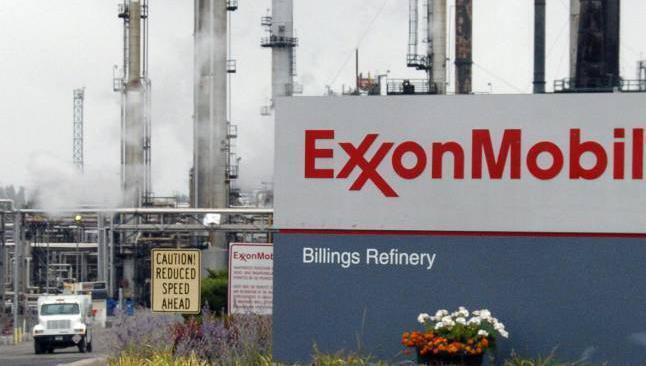
Exxon Mobil refinery in Montana in the USA. Investors based in Ireland have a stake of €1bn in the company.
Ireland is a “significant channel” for global institutions investing in fossil fuels and industrial agriculture, with €5.7bn worth of bonds and shares in climate-harming activities held here alone, a new report claims.
The report, released by international NGO ActionAid, states that as of January this year Irish financial institutions held €12.1m worth of investments in fossil fuels, the vast majority of which, 86%, are held by the State’s own Ireland Strategic Investment Fund (ISIF).
Most of that particular investment is held in bonds issued by the Chinese electric utility company the State Grid Corporation of China, ActionAid said.
The report has been released on Monday to coincide with the publication of an overarching ActionAid study which claims that banks across the globe have provided an estimated €2.98 trillion to fossil fuel industries in poorer nations in the seven years since the Paris Agreement on Climate Change was adopted in 2015.
It further claims that bank financing provided to the largest agriculture companies operating in those developing nations amounted to €320bn across the same period.
ActionAid’s chief executive for Ireland Karol Balfe said the studies’ findings show that “at a time of unprecedented climate crisis” financial institutions around the globe continue to invest “staggering amounts” into fossil fuels and environmentally unfriendly agricultural businesses in the developing world.
The report notes that investment managers registered in Ireland held €5.74bn in bonds and shares attributable to fossil fuels and agribusiness.
Each of the top six investments are in either oil or gas companies including €1bn in Exxon Mobil, €509m in Shell, and €434m in Chevron.
“This is a destructive practice and truly shocking,” Ms Balfe said, adding that the NGO’s research shows that “Ireland plays a role in this through our corporation tax regime which depends on foreign direct investment (FDI)".
She said that more than 1,200 international companies have established themselves in Ireland to date, drawn by Ireland’s guaranteed access to the single market and its English-speaking workforce, and our well-known low corporate tax rate.
“But this comes at a cost for the world’s poor, particularly women, who are disproportionately affected by the climate crisis,” Ms Balfe said, adding that the “negative impact” of Ireland’s corporation tax rate on human rights in the poorer parts of the globe “needs to be questioned”.
Women and children are 14 times more likely to die from climate disasters than men, ActionAid said, due to nearly half of the agricultural workforce in developing countries being women, a proportion which is far greater even than this in sub-Saharan Africa.
ActionAid described Ireland’s role in supporting such climate-unfriendly investments as being “a matter of policy coherence”.
Five years ago in 2018, Ireland became the first country in the world to begin the divestment of public money away from fossil fuel assets via a landmark piece of legislation, the Fossil Fuel Divestment Act.
Ms Balfe said however that legislation now needs to be revisited.
“The (Act) drew important attention to the responsibility the Irish State has in ensuring investment of public monies does not exacerbate the climate crisis,” he said.
“However, this only referred to one investment fund, and as we now understand the scale of harmful financial flows from Ireland, we must review and expand this Act,” he added.
While the Act is primarily concerned with fossil fuel exploration it pays little attention to the use of such fuels themselves, thus allowing for investment in both fossil fuel use and agribusiness.
“The fact is that Irish investment managers over the last five years held billions in bonds and shares attributable to fossil fuels and agribusiness in the global south. This reveals huge flaws in regulation.” said Ms Balfe.
She described as “unbelievable” in the context of the ongoing climate crisis the fact that financial concerns and private pension funds have no legal obligation to “divest from practices that are harmful to the environment”.
“Ireland is on one hand making important commitments on climate financing, poverty reduction and domestic climate targets,” she said.
“But it needs to examine the role it plays in enabling billions to flow to harmful fossil fuel and agribusiness” across the globe, she said.

CONNECT WITH US TODAY



Be the first to know the latest news and updates