‘Flotels’ for asylum seekers to be progressed by Government
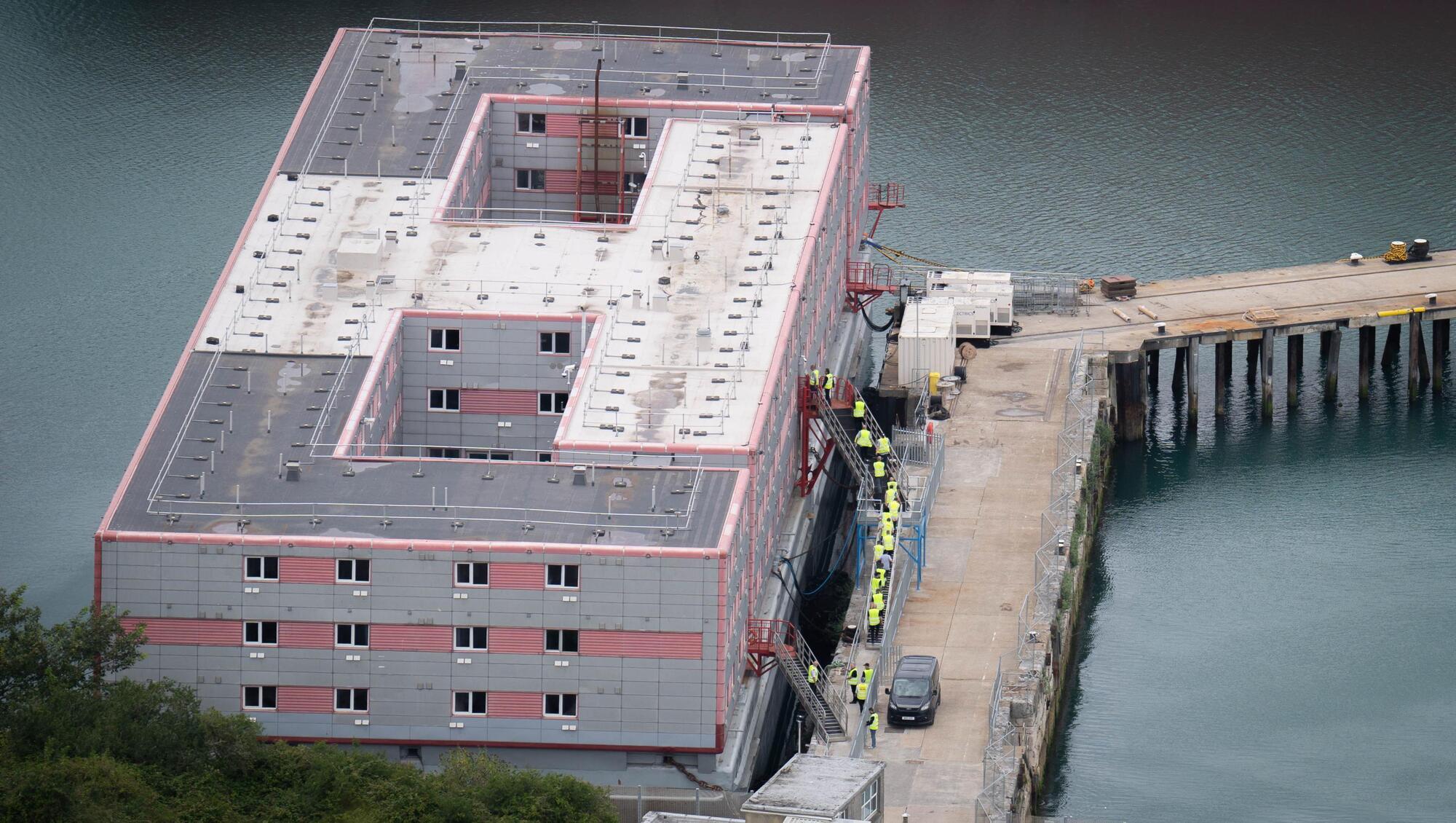
The Bibby Stockholm accommodation barge at Portland Port in Dorset, which will house up to 500 asylum seekers.
‘Flotels’ for asylum seekers are to be progressed by Government with a tendering process now expected.
Controversial floating asylum seeker accommodation recently opened in the UK, with critics comparing it to floating prisons.
The decision to introduce ‘flotels’ was made as the country grapples with an unprecedented accommodation crisis, which has seen hundreds of international protection applicants become homeless, many living on the streets, when they arrived in Ireland this year.
Multiple offers of ‘floating accommodation’ have already been made to Government, the Department of Children, Equality, Disability, Integration and Youth said in a statement.
However, the Ukraine Accommodation Procurement Team is not currently considering floating accommodation for Beneficiaries of Temporary Protection (BOTP) — the category of protection that Ukrainians are granted.
Details of where the flotels are to be berthed are still being finalised.
“Following detailed investigation and analysis of its use, and in consultation with various stakeholders including the Maritime Unit in the Department of Transport, the Department is expected to publish a Request For Tender (RFT) on eTenders, seeking flotel accommodation for international protection applicants (IPAs)," a statement from DCEDIY said.
"There are currently no timelines on any potential publication but, subject to finalising berth(s), the RFT will be expedited.”
The DCEDIY said that the use of tents is now necessary to accommodate a “small percentage” of IPAs.
DCEDIY figures this week show 13 tented structures in use in Knockalisheen, Co Clare with a capacity of eight people per tent and 16 tented structures in Columb Barracks, Co Westmeath, also with a capacity of eight people per tent.
John Lannon, CEO of Doras, a Limerick-based human rights and migrant rights NGO, said that floating accommodation will further isolate asylum seekers and hamper any chance of integration.
"The fact that we’re looking at that now is very worrying. International Protection applicants have already found it very difficult to get access to services and supports in very remote direct provision centres. But excluding people and putting them on floating accommodation centres where they don’t have access to medical care, or services or supports, is very problematic.
"There is an accommodation crisis. And it’s continuing. But we need to look at ways to ensure that we use available accommodation — be that vacant buildings or units that can be refurbished — before we go looking at floating prisons in essence. Because that’s what they are. People will be trapped in them."
He said that there are now "grave worries" about floating accommodation being used to house refugees in the UK.
"They seem to be part of a concerted effort in the UK to deny people the right to access international protection which is very worrying. I would worry that this trend is being echoed to some extent here.
"We’re failing to provide for the basic needs of people seeking asylum. We have people in tents— that’s very worrying as we move into winter. We've had people on the streets, we have failed to provide for what the White Paper on Ending Direct Provision spoke of about ensuring accommodation from Day 1 for international protection applicants.
"We need to build more reception centres and ensure that there are language and orientation supports for people when they arrive.
"And the answer to all this failure to provide accommodation is not to accommodate them in floating ships which effectively isolate them, imprison them and limit their chance of integration."
Government needs to be "working towards other options", he said.
"We have a very poor record here on temporary options. Look at direct provision, we still have that 23 years later and that was supposed to be temporary. Over a year ago we got tents as a ‘temporary’ measure in Knockalisheen and people are still trying to get by in them."
CONNECT WITH US TODAY



Be the first to know the latest news and updates