CSI methods could speed up investigations into wildlife crime, study finds
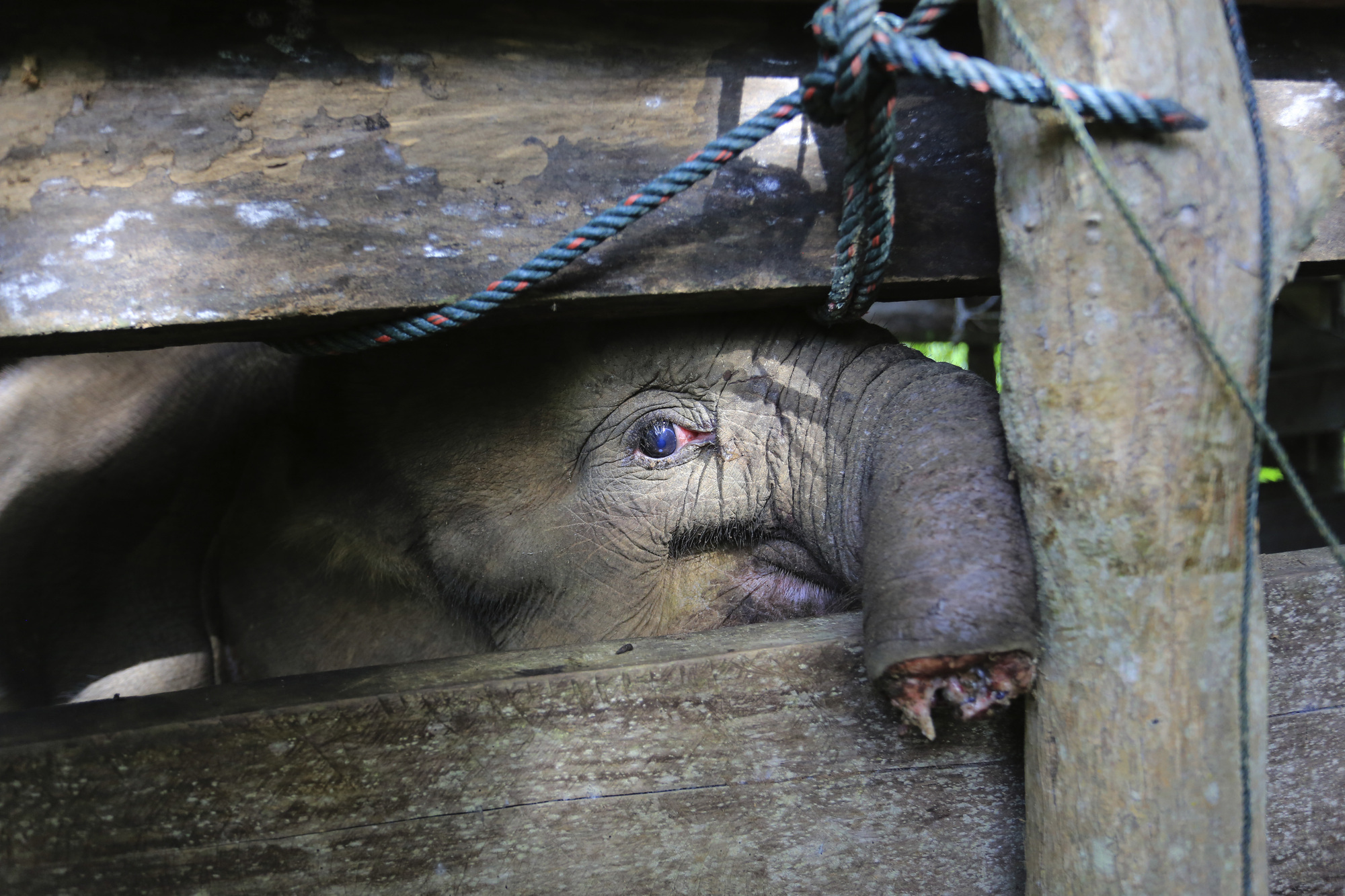
A Sumatran elephant calf that lost half of its trunk, is treated at an elephant conservation center in Indonesia in 2021. Normally, inspectors would need to find suspect parts of animals, which can be a cumbersome, time-consuming, and painstaking process. The new method was able to instead examine dust and scraps on floors to establish where animals had been. File photo: AP/Munandar
Applying crime scene investigation (CSI) techniques to the $20bn (€17.8bn) a year illegal wildlife trade could uncover crimes in a fraction of the usual time, Irish scientists have found.
Scientists from Atlantic Technological University (ATU) in the northwest teamed up with University of Salford and Liverpool John Moores University in order to track the likes of prints, residue, and genetic material from animals killed indiscriminately by poachers and traders, akin to Gil Grissom and his team in the hugely popular CSI television series.
Their study found that applying CSI methods to the increasingly lucrative illegal wildlife trade could have a huge impact in tracing crimes, dramatically reducing the time usually spent tracking the criminals and identifying twice as many species such as sharks and rays.
Normally, inspectors would need to find suspect parts of animals, which can be a cumbersome, time-consuming, and painstaking process. The new method was able to instead examine dust and scraps on floors to establish where animals had been.
Publishing in the Conservation Letters journal, the researchers examined dust and scraps from seven processing plants in Java, Indonesia, which is the world’s biggest shark landing nation. They were able to sequence trace DNA fragments from what they examined.
Professor of marine conservation at Liverpool John Moores University, Stefano Mariani, said: "By adopting crime scene type methods, we uncovered evidence of twice as many species in a fraction of the time and effort it would take to sample fish in the factory."
They metabarcoded the samples identifying 61 shark and ray taxa, and more than 80% were species listed as outlawed by the Convention on International Trade in Endangered Species of Wild Fauna and Flora.
ATU lecturer in marine and freshwater biology, Dr Allan McDevitt, said: "This type of DNA-based monitoring could revolutionise how we track the illegal trade of wildlife worldwide, not just in sharks and rays.
The study's first author from the University of Salford, Dr Andhika Prasetyo, said: "Having the ability to effectively ‘dust’ a warehouse or a boat ‘for fingerprints’ is a major weapon in identifying wrongdoing and turning exploitation on a path to sustainability."
The team said it is now focusing on making the technique fully portable so that results can be generated on-the-spot. According to Interpol and the UN Environment Programme (UNEP), wildlife crime is estimated to be worth up to $20bn a year.
A joint report from the organisations warned in 2016 that "this new area of criminality has diversified and skyrocketed to become the world’s fourth largest crime sector in a few decades, growing at two to three times the pace of the global economy", describing the proliferation as "astonishing".
One of the largest conservation charities in the world, the International Fund for Animal Welfare (IFAW) has warned that "wildlife crime is the fifth largest transnational criminal activity, putting at risk the survival of thousands of species of animals and accelerating the ongoing collapse of biodiversity".

CONNECT WITH US TODAY



Be the first to know the latest news and updates