Stardust key witness says: 'I maybe now believe doors were locked'
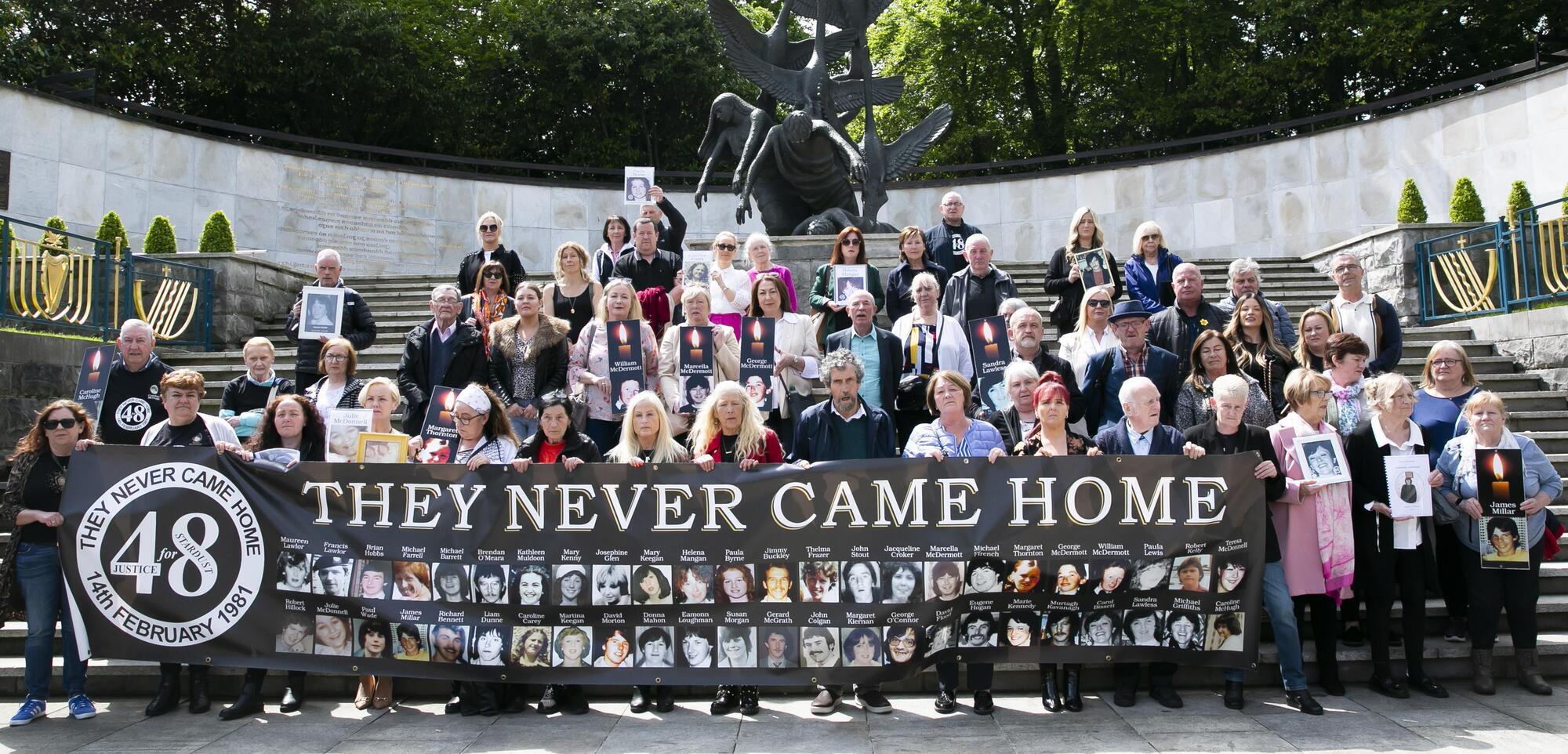
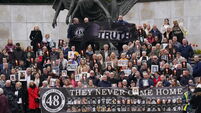
Family and friends involved in the Stardust fire inquests at the Coroners Court inquiry into the tragedy at The Rotunda Pillar Room on Parnell Square, Dublin, in May. File picture: Gareth Chaney/ Collins
“Have you ever heard the phrase ’oh, what a tangled web they weave, when first we practice to deceive?'” asked senior counsel Bernard Condon.
In the witness box at Stardust inquest, Leo Doyle, 75, told him he had not heard the phrase.
“It means that if you’re going to tell lies you have to have a good memory,” the barrister shot back.
“It means that when lies are being told, left, right, and centre, it becomes almost impossible to know the start from the end of them. And that’s the position I’m suggesting you are in today.”
Mr Doyle replied he did not accept Mr Condon’s assertion.
With just a few exceptions, the Stardust staff members the jury has heard from so far have been on the more junior end.
People now in their late 50s and 60s who were young at the time of the 1981 blaze that caused the deaths of 48 people. They were glass washers, lounge boys, and waitresses.
Counsel for the families stressed in their questions about practices at the Stardust nightclub that they would not be putting any blame upon them.
But when it came to Mr Doyle, the deputy head doorman at the Stardust, things were a bit different.
In the sixth week of witness evidence, and last before it breaks for the summer, the tension in court ratcheted up several notches.
Leo Doyle had been working in the Stardust for about five months when a fire ripped through the north Dublin club.
The then-33-year-old was promoted to deputy doorman just a few months into the job. By his own admission this week, “no one else wanted it”.
Other workers from the time have described how “morale was on the floor” among the staff at the club.
Doormen, especially, were not lasting very long.
Manager Eamon Butterly has been described as distinctly unimpressed with patrons getting in for free. Something had to be done about it.
That something appears to have been a new practice brought in several weeks before the fire.
The emergency exits would be kept locked on disco nights until after midnight, in a bid to prevent people from letting their mates in through them for free.
To what extent this was actually a problem in the first place has not been made fully clear at the inquests as of yet.
Des Fahy, representative for the families, went so far as to say this week it was a “false justification” and evidence suggested some doormen were “on the take”, which explained the disparity between the number of people in the venue and the takings at the door.
And then, even after the emergency exits were unlocked, the chain would be draped over the bars to give the appearance that they were locked.
This brings us back to Mr Doyle.
This week, he told the jury on numerous occasions that Michael Kavanagh — a young doorman — passed him the keys to these exits early on in the night and said they had been opened.
Back in 1981, in a statement to gardaí, Mr Doyle said that it was head doorman Thomas Kennan who passed on the keys, saying all doors had been opened, at around 1.30am. This is shortly before the fire is first discovered.
And, in fact, Mr Kavanagh had himself gone on RTÉ on the Monday after the fire to maintain he had opened the doors.
But, just a few days later, Mr Kavanagh recanted this version and gave a new statement to gardaí, admitting he had not unlocked the exits.
For most of the week, however, Mr Doyle maintained it was his recollection that Mr Kavanagh unlocked the doors on the night.
One of the families’ barristers — Mr Condon — suggested at one stage that Mr Doyle had “advanced both of these conspiracies — Kennan opening the doors and Kavanagh opening the doors — at different times”.
Mr Doyle rejected suggestions there was such a “conspiracy” among doormen to advance a narrative that all of the emergency exits were opened before the fire took hold on the night.
Senior counsel Michael O’Higgins, also for the victims' families, put to Mr Doyle there was no “system” in place for unlocking the doors on disco nights, to which Mr Doyle agreed.
Mr O’Higgins then put witness evidence from those who tried to escape through some of these emergency exits to Mr Doyle, as the questions over whether or not the doors were locked rumbled on.
He described Mark Swaine’s account of thick black smoke in the corridor leading to the exit behind the stage of the Stardust.
“They were shouting, get that chain off the door for fuck sake."
At another exit, adjacent to one of the smaller bars at the Stardust, witnesses described chains around the bars and a padlock. They saw men kicking the doors trying to get them open as the place filled up with smoke.
Mr O’Higgins said an expert witness will assert that from the time the fire was first spotted in a small section of the Stardust, there was a “three-minute interval” to get everybody out.
“Every second counts,” he said.
And then it was towards the end of the evidence of Mr Doyle that there was a striking turn. After a brief break, he began by saying he'd like to apologise to the coroner because he thought he made a “boo boo”.
"I maybe now believe that the doors were locked,” he said. “They may have been locked. I just don’t know.”
A dramatic end to a fraught week at the Stardust inquests but, as it rises for the summer, there is still a long way to go and many more questions to be answered before the 14-person jury at Dublin District Coroner’s Court. The inquests will resume in September.
CONNECT WITH US TODAY



Be the first to know the latest news and updates