Former commercial director says politicians are part of the problem at RTÉ
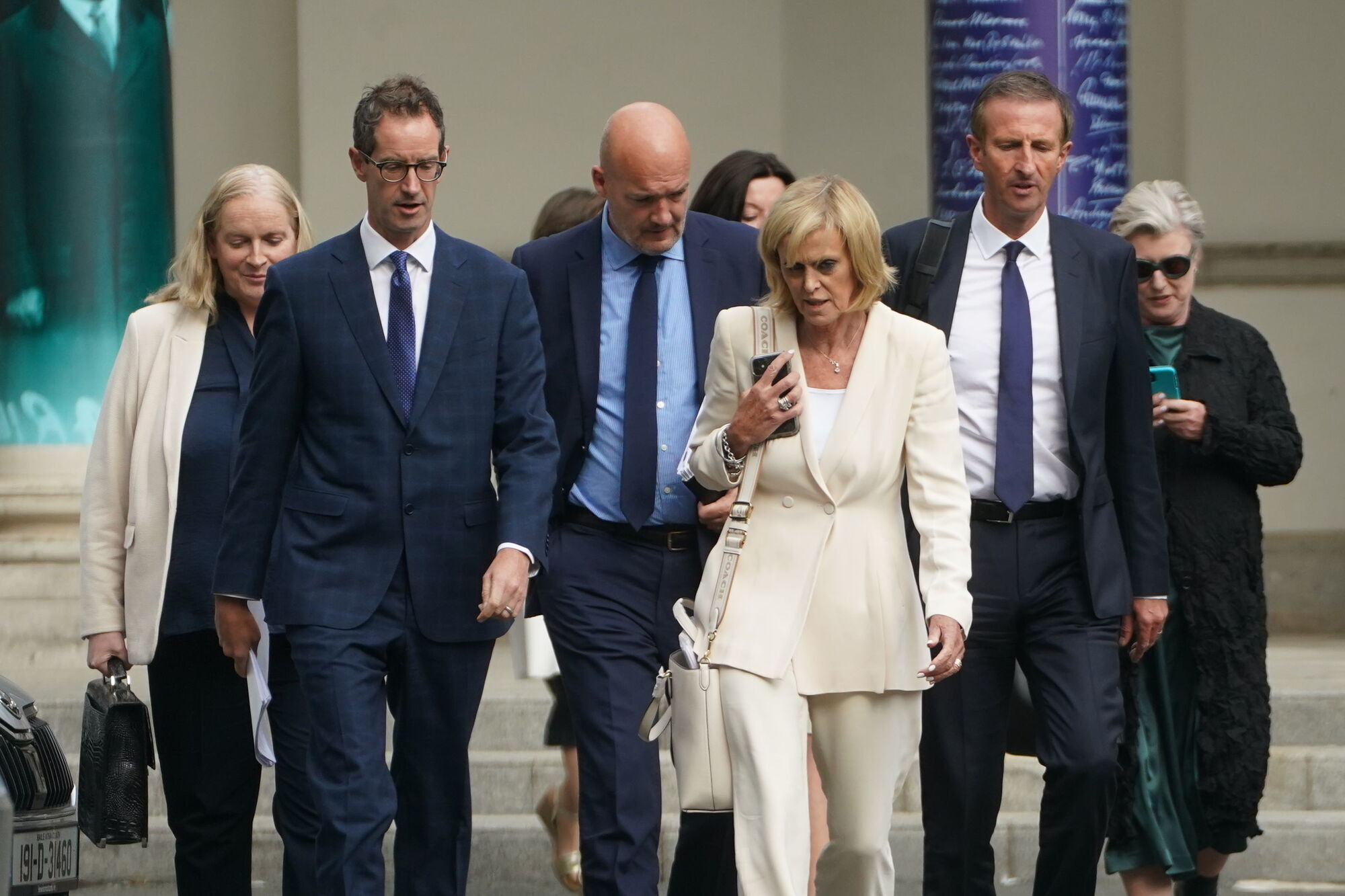
RTE board members and executives leaving the Committee on Tourism, Culture, Arts, Sport and Media at Leinster House, Dublin, on the controversy around Ryan Tubridy's misreported salary payments. Picture: Brian Lawless/PA Wire
Former RTÉ commercial director Willie O'Reilly said politicians are contributing to the challenges faced by the station by failing to address the issue of funding public service broadcasting.
In an interview with , Mr O'Reilly stated that Kevin Bakhurst, the incoming director general of RTÉ, was facing “an appalling vista” as generating funds to finance content was becoming even more difficult.
“If money doesn’t come in, programmes don’t get made,” he said.
During his time at RTÉ, barter transactions were commonly used as an "entirely legitimate part of financial arrangements” as long as they complied with VAT regulations and were accepted by the Revenue Commissioners.
Mr O'Reilly says such transactions were prevalent in the media industry, including his experience in other radio stations. However, he clarified that they were never employed as "top-off payments" during his time as commercial director at RTÉ.
When questioned about so-called "slush funds", Mr O'Reilly said that he acted commercially at all times to meet demanding targets, including bringing journalists to rock concerts and buying them pizzas.
“RTÉ needed €180m every year from the commercial department," he said.
"Our budget each month was in excess of €12m. We did everything in our efforts to meet those targets. They were tough. So did we do entertainment? Absolutely, yes.”
Mr O'Reilly acknowledged that the figures presented during the Public Accounts Committee (PAC) meeting regarding a trip to the Rugby World Cup Japan were “a big step up” and highlighted the acquisition of items such as season tickets, which he believed should be included in the asset register.
During his tenure, Mr O'Reilly said he had to introduce an entirely new trading system as more funding was necessary following criticism of RTÉ after a letter from the Competition Authority saying that the station had been abusing its dominant position in terms of TV sales.
“The first year I was there. There were a lot of problems, he said.
"They were the key things, the key focus. Our team needed more money because, and this is the irony of yesterday's hearings, the Government hadn't sorted out the financial arrangements for RTÉ.
"So it has become increasingly dependent on commercial revenue.”

Mr O'Reilly said that not every deal's details were brought to the attention of the RTÉ Board, but the information was available if requested. There was a financial officer who “looked after all such matters” on the commercial floor.
If details “did not go up the chain” he did not know why, he said.
“But certainly the chief financial officer in my day knew of its existence.”
Mr O'Reilly said that the situation would become even more challenging for RTÉ, with greater dependence on commercial revenue and increased pressure on the staff.
"There's about 100 on the commercial floor who are really good people, by the way, and should be congratulated for a lot of the work they do. But it will be more difficult," he said.
“In my day, I would come to a meeting with the DG and he'd ask me, ‘are we going to meet the commercial targets this year?’ And if my answer was no, he would say to me, ‘well, will you understand the import of what you're saying? It means I'm going to have to cancel a drama series next year.
"That's the conversation you have at the top level. If the money doesn't come in commercially, the programmes don't get made. It's as simple as that.”
Mr O'Reilly expressed concern for Mr Bakhurst, the incoming director general, saying "he's going to find problems with the commercial people who are saying their budgets are declining. He's going to have problems with the license fee collection because people won’t be paying their license, all of which will mean an impact on our programming.
"It's really an appalling vista."
He criticised both RTÉ and political parties for failing to devise a forward plan.
"You know, the license fee has stayed at €160 for more than a decade. The BBC was able to negotiate incremental increases, which kind of took the heat out of the situation over a number of years," he said.
Mr O'Reilly questioned why the Government, despite speaking highly of RTÉ and its work, had not addressed the question of how to fund it sustainably for the future and provide it with security.
"They need to address that question. The politicians, yes, they are part of the problem. They ask good questions. I understand the heat in the room. But they are also part of that problem,” Mr O'Reilly concluded.