Successive governments have left people with disabilities stranded
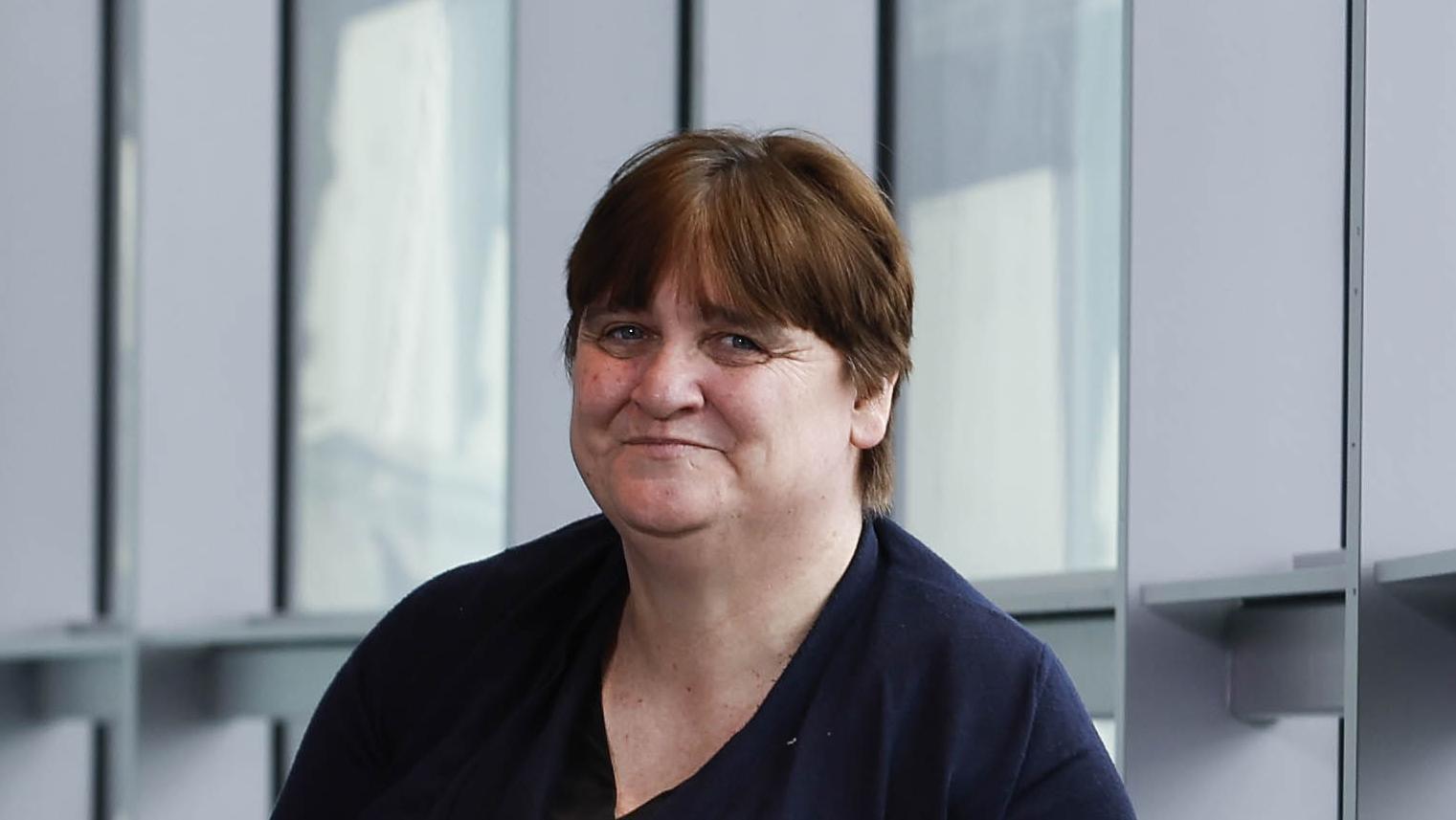
Irish Wheelchair Association national advocacy manager Joan Carthy said there is a history with consecutive governments leaving people with disabilities behind in many situations. Picture: Conor McCabe Photography
“There is a history with consecutive Governments leaving people with disabilities behind."
Out of the five Irish Wheelchair Association (IWA) action groups, just two could make it to Leinster House in Dublin for a pre-budget submission on Wednesday.
The reason for approximately 100 people with disabilities not being able to attend — despite wanting to — is down to a lack of access to transport, an issue that has been neglected since the scrapping of two vital schemes during a period of austerity.
The two schemes were both scrapped in 2013 after then Ombudsman Emily O’Reilly found they discriminated against older people, with the Government saying it “had no choice” but to cease them.
IWA advocacy manager Joan Carthy said when the schemes ceased abruptly, it was understood at the time that they would be replaced with new, improved and more equal schemes and despite the decade-long wait, “that didn’t happen”.
“We didn't think it was going to go on this long but unfortunately, there is a history with consecutive governments leaving people with disabilities behind in many situations,” Ms Carthy said.
The mobility allowance was a monthly payment which was to enable people with disabilities to travel either by supplementing travel expenses or to help with fuel costs.
The Motorised Transport grant was operated as a means-tested grant to assist people with severe disabilities purchase or adapt a car.
Although flawed, as outlined by Ms O’Reilly who said she was “disappointed” by the government’s response to scrap them at the time, both schemes helped in securing some form of independence while also allowing people with disabilities to attend vital appointments.
Now, barriers for people with disabilities have become the norm with many unable to avail of the financial support needed for access to transport, resulting in difficulties getting employment as well as having some form of a social life.
“It was more about legislative moves as opposed to the overall cost of those schemes. We're not talking really big money so there was just a huge lack of interest,” Ms Carthy said, before adding that the continued denial of such supports has been “detrimental to a lot of people”.
“I think it is absolutely shameful that the government can sit up very proud and say that we have a surplus when we have so many people with disabilities who are living in poverty, so many people in Ireland living in poverty,” she said.
Ms Carthy said the IWA consistently hears from members who cannot afford to attend hospital appointments, and although a nationwide issue, it is more extreme in rural areas.

Although the Drivers and Passengers with Disabilities tax relief scheme provides relief on adapting vehicles for use either for driving or as a passenger, Ms Carthy said some people with disabilities cannot physically drive and do not have people to drive them.
“They’re reliant on either really bad public transport or trying to get a taxi, and wheelchair-accessible taxis are very few and far between, especially in rural areas,” she said.
Ms Carthy said people with disabilities have been left vulnerable and disadvantaged since the schemes were scrapped during a time of austerity.
“We’ve been told all along that because it's legislation, legislation moves slowly but it's really just been put at the bottom of the list for every minister, and since then, there has never been the push and drive,” she said, despite the number of people requiring such schemes being "minimal".
Where supports for personal access to transport are almost non-existent, access to public transport for people with disabilities is just as lacking.
Twenty-four hour notice is required for any intention to travel by train, while buses cater to one wheelchair or buggy at a time, with some wheelchair users watching multiple buses passing by due to occupied space.
While all buses are wheelchair accessible, ramps often have technical difficulties despite having to be checked each morning before going into service.

“That certainly doesn't happen because, on numerous occasions, people are saying to us that they’re out from early in the morning and the ramp is broken and they have to wait for the next bus.Â
"We have one person in particular who is, regularly, late for work because the ramp doesn't work,” she said.
Ms Carthy said buses with ramps that break during the day are not recalled, and carry on their route, passing wheelchair users by.
This lack of action is not the case solely for transport access, she said, but also for disability services and general funding. Organisations such as IWA are “bleeding and haemorrhaging staff”.
“People with disabilities have always been unfortunately at the bottom of the list when it comes to priorities,” Ms Carthy said.
Ms Carthy said it is difficult for people with disabilities to get their voices heard in a meaningful way, which is in some part due to not being able to demonstrate, with Wednesday’s pre-budget submission summing it up.
“We had so many more people around the country that wanted to come up to have their voices heard,” she said.
“And because there isn't enough funding being put into the system, we don't have enough staff to be able to facilitate those people to come up.”
People with disabilities “just can't rely on public transport well enough to be able to come in and back out”.Â
-
Investigation carried out by then Ombudsman Emily O’Reilly finds the Mobility Allowance scheme to be in breach of the Equal Status Acts as it was being operated on the basis of an upper age limit of 65. The Motorised Transport grant is deemed to have a narrow definition of what constitutes a disability.
She recommends that the Department of Health revise the schemes within six months to make them compliant, which the department agrees to do.
“While I attempted to engage with the Department on the issue for a further 12 months, ultimately I felt I had no option but to report on this situation to the Dáil and Seanad,” she said at the time.
In February, the Government announces that both schemes will be scrapped from July with then Taoiseach Enda Kenny rejecting calls to defer the decision saying alternative arrangements will be in place before then. - Despite a review being set up for the schemes in 2013, no progress is made.
- The Department of Health has been working on drafting the Health (Transport Support) Bill which will provide for replacement schemes. According to the Government’s Legislative Programme the Bill is due for publication in 2017.
- Then Ombudsman Peter Tyndall voices a growing sense of frustration and disappointment that the Bill has not yet been published. “In my view, given that it is now five years since the previous schemes were closed down, the draft legislation merits urgent attention and I will want to see evidence of this in 2018,” he said.
- Mr Tyndall meets with Disability Minister Roderic O’Gorman and Junior Minister Anne Rabbitte stressing the urgent need for a replacement of the two schemes.
-  New Ombudsman Ger Deering calls for “immediate and decisive action” saying the only transport support available for those with a disability is the Disabled Drivers and Disabled Passengers scheme.
He says the restrictive nature of the medical criteria for the scheme has resulted in people who do not meet the criteria, but who are just as immobile as those who do, being excluded. - Mr Deering once again highlights a lack of progress, saying it has stalled.
“I believe the manner in which people with disabilities continue to be denied access to personal transport supports is nothing short of shameful,” he says.