Serious drug problem at Maghaberry Prison highlighted by inspectors
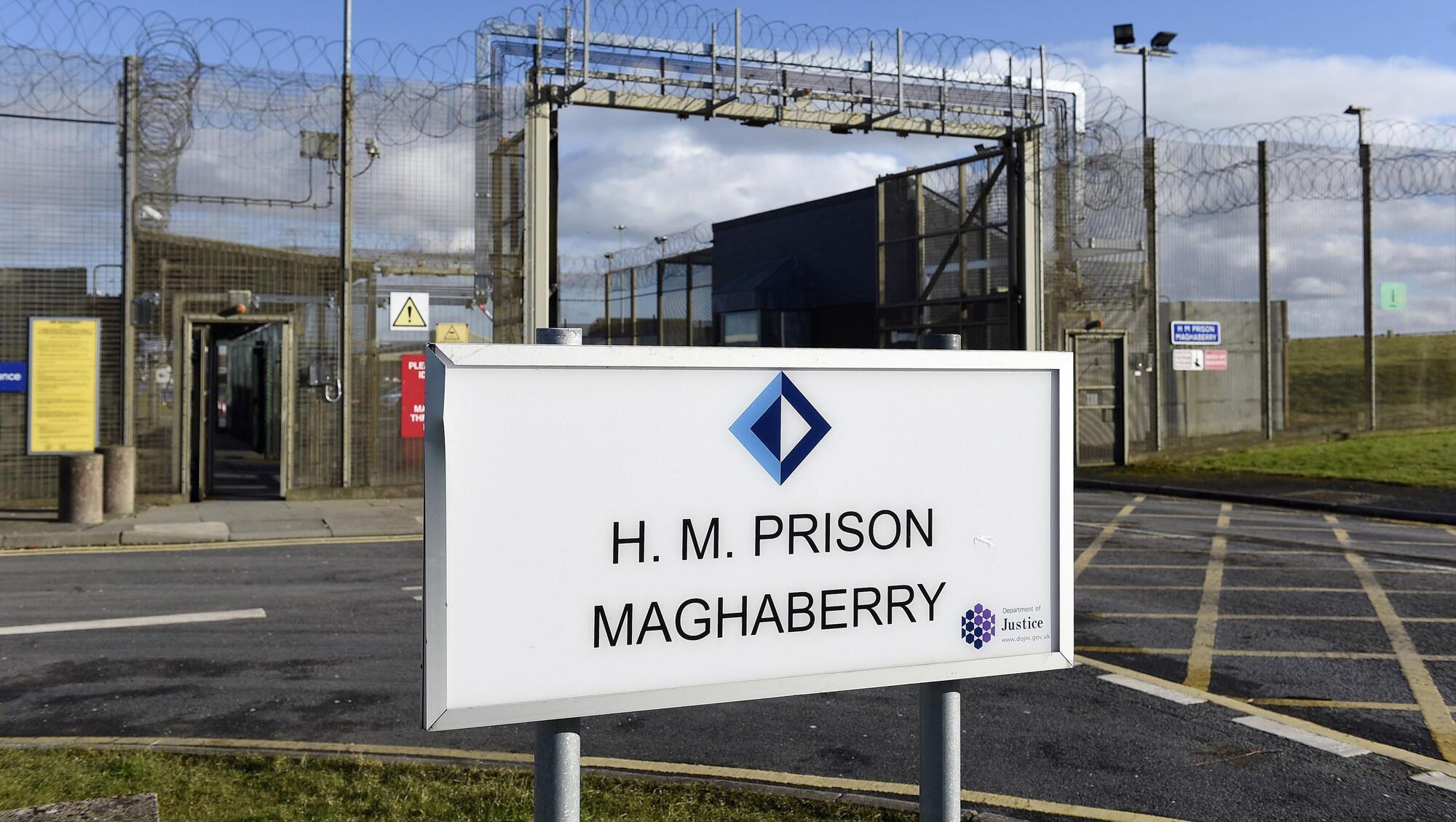
An inspection report has highlighted a serious drugs issue at Maghaberry Prison (Michael Cooper/PA)
More than a quarter of inmates surveyed in an inspection report said they had developed issues with drugs while inside Maghaberry Prison.
The report has highlighted a “serious drug problem” at the high security Co Antrim prison and has called for urgent action to be taken by senior leaders in the Northern Ireland Prison Service (NIPS).
An inspection at the prison was carried out last September and October by a team from Criminal Justice Inspection Northern Ireland (CJI), His Majesty’s Inspectorate of Prisons in England and Wales (HMIP), the Regulation and Quality Improvement Authority (RQIA) and the Education and Training Inspectorate (ETI).
They have also raised concerns about the delivery of education, skills and work activities.

In response, NIPS director general Ronnie Armour highlighted the impact of the Covid pandemic on the prison system and its “struggle to recover in the context of a rapidly rising prison population”.
Maghaberry is the only high-security prison in Northern Ireland. It houses paramilitary prisoners and operates as a remand prison for all adult male prisoners in the region.
In a joint statement, Jacqui Durkin, chief inspector of CJI and Charlie Taylor from HMIP, said: “Inspectors found a decline in performance against the ‘healthy prison’ tests since the last inspection in 2018 and identified a number of concerns which included access to drugs and significant areas for improvement in the delivery of education, skills and work activities.”
Ms Durkin added: “Inspectors identified there was a serious drug problem at Maghaberry at the time of the inspection.
“Forty-one percent of prisoners surveyed during this inspection indicated it was easy to get illicit drugs at Maghaberry and 28% said they had developed a drug problem while they were there.
“We found long delays in accessing clinical substance misuse treatment services.
“A decision to reduce drug testing and stop adjudications at a time when supply and demand were known issues is at best puzzling and needs to be reviewed.
“We found there was no effective or co-ordinated plan in place to reduce the demand for and supply of drugs and no means of assessing the effectiveness of actions taken. This needs to be addressed as a priority.”
Inspectors found there had been reduction in prisoners’ access to education, skills and work activities with only 15.5% of prisoners off their wing at the time of the inspection.

Mr Taylor said: “Staffing difficulties at Maghaberry meant the delivery of education and training was inconsistent with planned sessions often cancelled because prison officers were tasked to other work.
“Access to specialist accommodation and resources available in the learning and skills centre were underutilised, restricting opportunities for prisoners to develop practical skills.
“We also identified long waiting lists for important courses like essential skills in literacy, numeracy and information technology and communications, leaving many men unable to develop skills or gain qualifications in these key areas.”
The inspection report said staff-prisoner relationships they observed were friendly and relaxed but raised concerns about some comments prisoners and staff made to inspectors about the treatment of Catholic prisoners.
It also said that a lack of staffing in the Prisoner Development Unit meant that many of the 1,067 men in custody at the time of the inspection did not have a sentence plan.
Concerns were also identified about aspects of safe custody and the adequacy of safeguarding investigations.
Mr Taylor said: “This is a disappointing inspection compared to our previous visit and staff shortages and a rising prison population will continue to hamper progress.
“We accept the Covid-19 pandemic was challenging for Maghaberry as it has been for all prisons in the United Kingdom and we acknowledge the increase in the prison population and high numbers of men held on remand,” said Ms Durkin.
“However, prison leaders must focus on getting prisoners off wing and into the sort of meaningful work, training, education and rehabilitative support that will make them less likely to offend on their release.”
But NIPS director general Mr Armour said pressures at the prison will continue as the prisoner population hits record levels.
He said: “While the findings of inspectors are, of course, disappointing, they are not surprising.
“For some time we have been highlighting the impact of the pandemic on the prison system and our struggle to recover in the context of a rapidly rising prison population.
“When inspectors last visited Maghaberry in 2018, the population was 830, when they returned in October 2022 that had risen to 1,050 and, this week, the Maghaberry population stands at 1,230 men, of whom over half are being held on remand and therefore do not have to engage in rehabilitative work.”

He added: “While it is important that we don’t seek to make excuses for the decline in service delivery at the prison since the pandemic, no-one should underestimate the pressures prison staff are currently facing.
“It is important to recognise the exceptional work staff undertake with some of the most complex, challenging and dangerous members of our community.
“Like our hospitals, ambulance service, police and other front-line services, the current demands placed on prison officers is unprecedented.
“We are not complacent about the issues inspectors have raised, indeed we are determined to address them, however, it is important to recognise that due to the context in which we are operating in, this is likely to be the case for some time to come.”

CONNECT WITH US TODAY



Be the first to know the latest news and updates