Alarm at Garda use of mental health powers
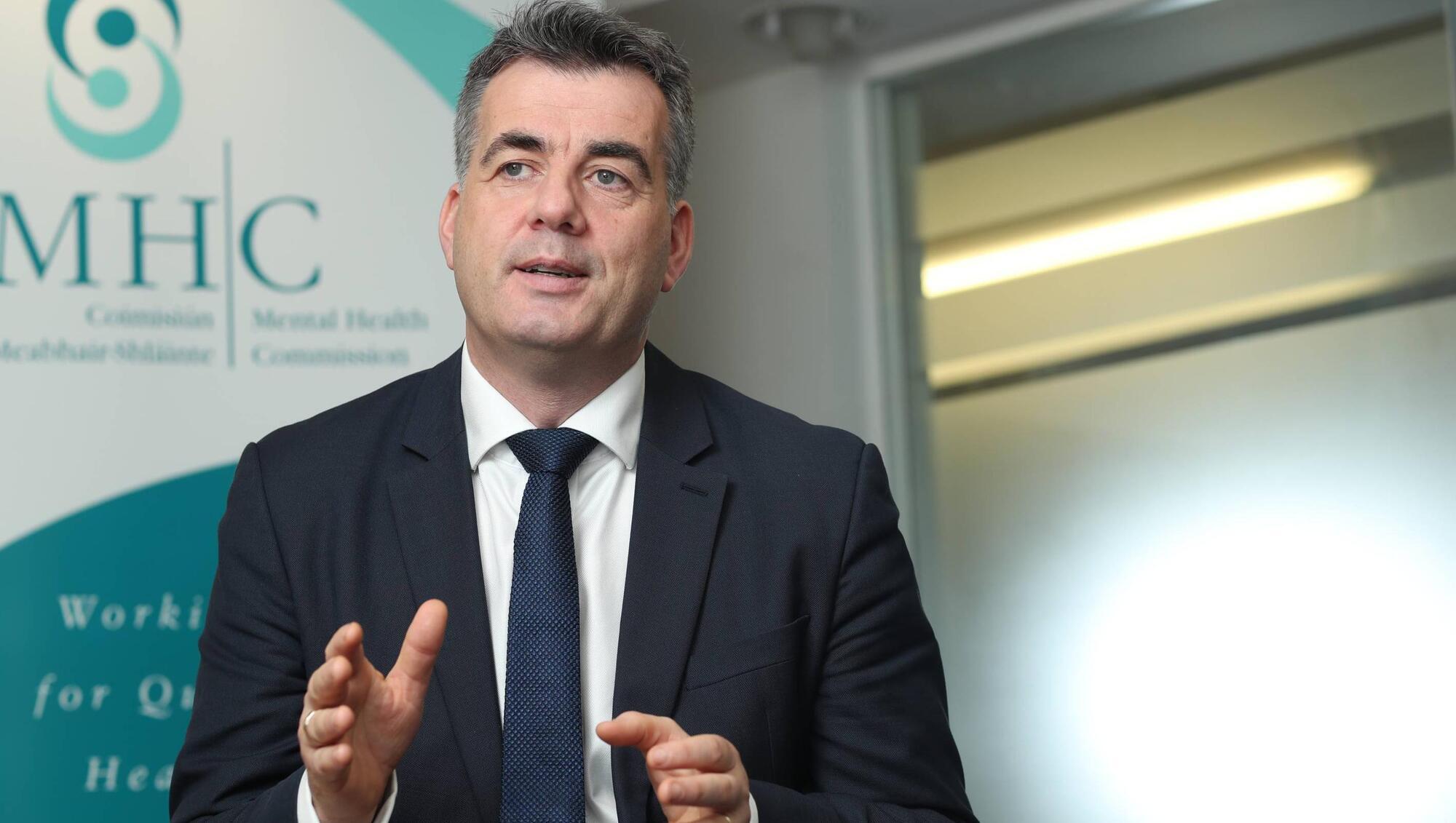
MHC chairman John Farrelly said: “It was very disappointing to see again in 2022 that the majority of applications to involuntary detain from the community was by An Garda Síochána as opposed to a healthcare authorised officer." Picture: Jason Clarke
The Mental Health Commission (MHC) has again expressed alarm at the rising level of involuntary detentions initiated by gardaí and has called for the matter to be addressed “at the highest levels”.
The commission said when people are going through a mental health crisis they should be met by a health professional and “not a law enforcement officer”.
The 2022 MHC annual report shows there were a total of 2,040 involuntary admissions in 2022, compared to 1,971 in 2021 and 1,919 in 2020.
Of these, gardaí made up:
- 32% of admissions in 2020, or 614 individual cases;
- 35% of admissions in 2021, or 690 cases;
- 36% of admissions in 2022, or 734 cases.
MHC chairman John Farrelly said: “It was very disappointing to see again in 2022 that the majority of applications to involuntary detain from the community was by An Garda Síochána as opposed to a healthcare authorised officer.
The fact that this is happening so often indicates a systemic issue that needs to be addressed at the highest levels. We hope this shall be addressed in the forthcoming amendments to the Mental Health Act.”
A person can be admitted to an approved centre — an inpatient psychiatric unit — if he or she is suffering from a mental disorder, as defined in section 3 of the Mental Health Act 2001.
The MHC is in discussions with the Department of Health to ensure the legislation is amended “to ensure that detentions should not be made by An Garda Síochána”.
The commission is also in ongoing dialogue with An Garda Síochána in relation to any “practical matters to ensure up-to-date knowledge of the law and the relevant statutory forms and how they should be completed”.
The MHC has previously said Garda HQ “share” their concerns.
Garda sources told the their use of the 2001 act “reflects the reality” members on the ground face.
Last November, gardaí told the Policing Authority that the number of Section 12 arrests under the 2001 act were expected to be about 7,000 for 2022, compared to 6,315 in 2021 and 4,000 in 2018.
Separate Garda figures, published last December, showed a 60% increase in the number of crisis situations that specialist Garda negotiators were called to deal with in 2021.
Some 38% of these cases were “mental health”-related and a further 25% were crisis interventions related to suicide or self-harm.
Garda HQ declined to comment on the MHC report but did refer to the Commission on the Future of Policing in Ireland, which reported in September 2018.
It urged that other State agencies be obliged to assist gardaí in mental health and other social situations and that so-called 'Crisis Intervention Teams' (CIT) be set up in every Garda division, comprising police, health and social workers, working 24/7.
A pilot CIT (since renamed Community Access Support Team) in Limerick was supposed to be operational by the end of 2022.
Garda HQ said it was “advancing” the CAST with HSE Mid-West.
understands the ongoing delay with the team starting is due to serious difficulties in recruiting the appropriate staff and ongoing talks about the delineation of work between the various professionals.
CONNECT WITH US TODAY



Be the first to know the latest news and updates