'Whitewashing' will see survivors decline to take part in state inquiries, says campaigner
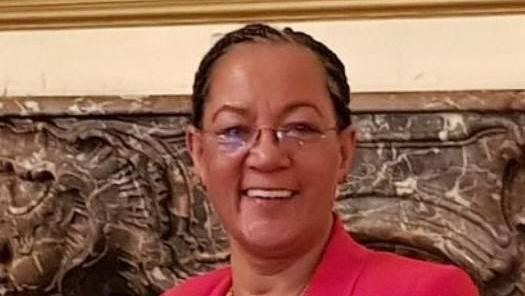
Rosemary Adasar, founder of the Mixed-Race Irish Association.
A campaigner of institutional abuse has predicted that survivors will decline to take part in state investigations because of the government’s history of “whitewashing” reports.
Rosemary Adaser, 67 who is a leading member of the Mixed-Race Irish group, was born in a mother-and-baby institution before being moved to several state-run facilities where she lived until she was 18 years old.
During those years she was also boarded out to “abusive foster families”, before falling pregnant at 16 and having her son taken by the nuns.
By the time she was 20, she left Ireland for London where she continues to live today.
Speaking at a conference on trauma-related policies in Dublin, Rosemary said out of all the inquiries she took part in, the Commission of Inquiry into Mother and Baby Homes was “the worst”.
“I’ve been involved in the Ryan Report, I’ve been involved with Caranua, I’ve spoken at the UN and the UK embassy, I speak to survivors and campaign for them — but the worst of them all was the mother and baby commission," she said.
“The others, which weren’t great either, at least described the appalling conditions and abuse in these places, The mother and baby report did not. It completely whitewashed the abuse and suffering of the women and children.
“It was a farce. I was on the collaborative forum as part of the commission and our report named the abuse, because it was owned and managed by survivors. We have been excluded all the way.
“You have upper-class people looking down at a predominantly working-class community. You have got to bring us in otherwise you’re not worth our time. If there is ever another inquiry survivors won’t bother to turn up, we’ve had so many now and what have they achieved?”.
Yesterday's event, titled , was organised by Maynooth University and the University of Galway.
The daylong conference at the Royal Irish Academy examined the legacy of abuse, failings, and injustice in the country’s former institutions.
The meeting heard how researchers and academics have been examining the experiences of survivors as part of public policy-making.
Their work involved reviewing several previous state inquiries including the Commission on Mother and Baby Homes in 2021, the McAleese Report in 2013, the Ferns Report in 2005, the Cloyne Report in 2011, and the Inquiry into Child Abuse (Ryan Report) in 2009.
The reports detail sexual and physical violence, neglect, and suffering endured by thousands locked up in former institutions run by the church and state.
Linda Connolly, professor of Sociology at Maynooth University, said we need to look at “trauma through the lens of survivors' experience” to make changes to our support networks.
“Researchers here have looked at a wide range of questions on institutional abuses, health failings, around cervical check, Hep C, sexual violence, and gender-based violence in the army. The third element is on policy and trying to create a conversation with a collation of voices.
“Trauma is something we don’t discuss enough, it has multiple layers. Trauma is often described as a psychological condition but what we are looking at is the hurt and cause of that. It’s about understanding the reasons why different groups in society are treated differently.
“There are serious crimes that require a huge level of effort by state, government, and society. We are not doing that”.
One of the organisers of the event, Dr Sarah Anne Buckley, an associate professor of History at the University of Galway, said: “Being aware of trauma both as researchers and policymakers and political representatives is vital because advocates and survivors have for decades been telling us about their suffering and how that didn’t make it into policy.
“So, this is a conversation about how that can happen quicker, it’s a huge issue. It must be led more in the future by those survivors who are directly affected."
CONNECT WITH US TODAY



Be the first to know the latest news and updates