Global agreement on monitoring of greenhouse gas emissions a 'landmark' moment
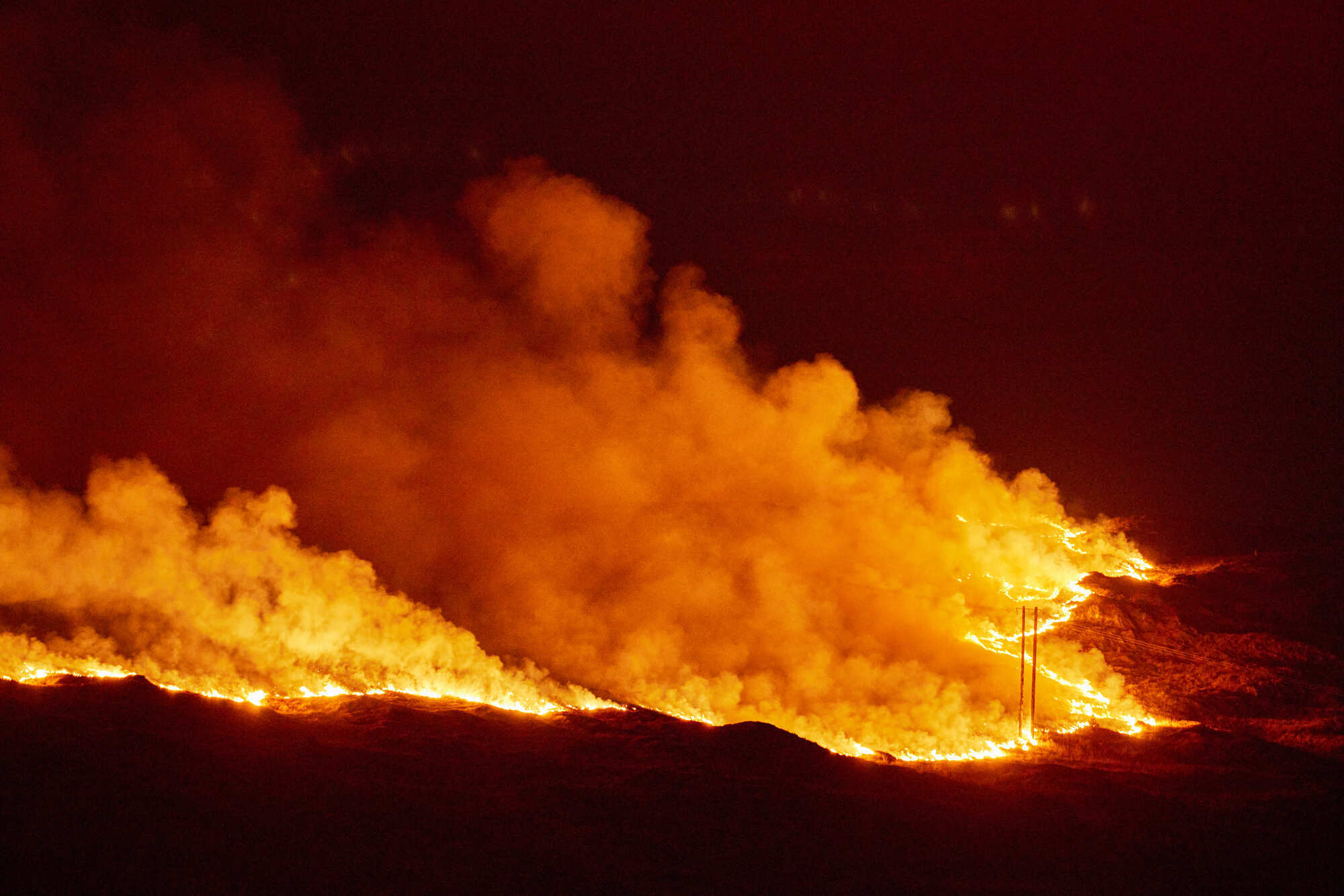
Earlier this week, the WMO released calculations that show climate and water-related events causing 11,778 reported disasters between 1970 and 2021, with just over 2m deaths and $4.3trn in economic losses. Picture: Miki Barlok
A new way to monitor global greenhouse gas emissions has been agreed by countries in what the World Meteorological Organisation (WMO) has called a "landmark" moment.
At the WMO's congress, 193 countries and blocs agreed to step up efforts to analyse greenhouse gas emissions, which are the main driver of human-induced global warming, in a more coordinated fashion.
Currently, there is no globally coordinated efforts to do so, as countries and blocs currently rely on researchers and national organisations to do so, leading to gaps in knowledge and sharing of mutually-beneficial data.
Global warming exacerbated by fossil fuel has accelerated the climate crisis, with a 1.5C temperature rise compared to the pre-industrial age unanimously seen by credible science as the tipping point to stave off the worst effects of climate change.
WMO secretary-general Prof Petteri Taalas said: “We know from our measurements that greenhouse gas concentrations are at record levels — in fact higher than at any time over the last 800,000 years.
CLIMATE & SUSTAINABILITY HUB
The new agreed greenhouse gas monitoring will provide vital information and support for implementation of the 2015 Paris Agreement to limit warming to 1.5C, he added.
The Intergovernmental Panel on Climate Change (IPCC) concluded in August 2021 that it was "unequivocal" that human activity is warming the planet, causing rapid and widespread changes to land, atmosphere, and oceans.
The changes, which are unprecedented for many centuries or even many thousands of years, have pushed up global temperatures by 1.1C, and are driving weather and climate extremes in every region across the world.
It said global warming of between 1.5C and 2C — limits countries have committed to in order to avoid the most dangerous impacts of climate change — will be exceeded in the 21st century unless deep reductions in greenhouse gas emissions occur in the coming decades.
Earlier this week, the WMO released calculations that show climate and water-related events causing 11,778 reported disasters between 1970 and 2021, with just over 2m deaths and .3trn in economic losses.
More than 90% of reported deaths worldwide occurred in developing countries, the WMO said. This is despite the same nations contributing a mere fraction of the greenhouse gas emissions that have been generated by wealthy Western countries.
The WMO's analysis found that in Africa, more than 1,800 disasters attributed to weather, climate and water extremes were reported between 1970 and 2021, causing nearly 733,600 deaths and $43bn in economic losses.
Droughts accounted for 95% of reported deaths, it added.
There were more than 3,600 disasters attributed to weather, climate and water extremes in Asia, with more than 984,000 deaths and $1.4trn in economic losses.
Europe has also had its share of climate-related disaster, the data show.
There were almost 1,800 disasters causing 166,500 deaths and $560bn in economic losses between 1970 and 2021. Europe accounted for 8% of reported climate-related deaths worldwide, with extreme temperatures the leading cause.
CLIMATE & SUSTAINABILITY HUB