Body expects 'substantial increase' in asylum-seeker appeals
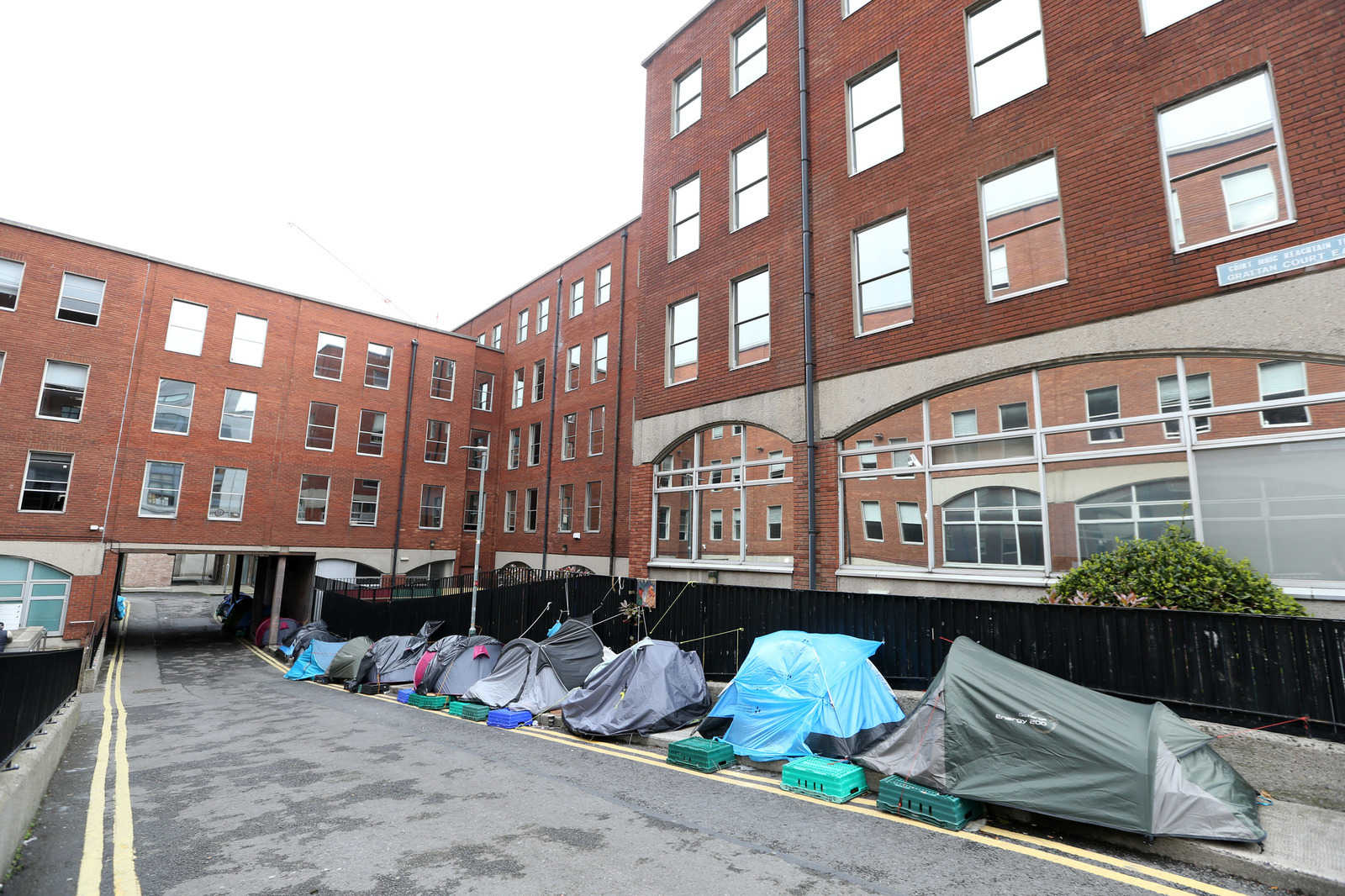
Asylum-seekers who had not been provided with accommodation pitched their tents outside the International Protection Office in protest earlier this month. Picture: Sasko Lazarov/RollingNews.ie
The body which rules on appeals made by asylum-seekers regarding their international protection claims says it is “essential” it is adequately resourced to do its work as it anticipates a “substantial increase” in appeals this year.
In its annual report for 2022, the International Protection Appeals Tribunal (Ipat) said as the first-instance appeal body for asylum appeals, it must have proper resources to “ensure that it is equipped to deal with those appeals expeditiously and in line with fairness and natural justice”.
It comes as the latest figures show an 8.5% increase in the number of people claiming international protection in Ireland in the first four months of 2023 compared to the same period in 2022.
So far this year, 3,628 people have applied for international protection in Ireland, representing a significant increase compared to previous years. In 2019, for example, there was a total of 4,781 such applications.
The Government has come under sustained pressure to source accommodation for all of those seeking international protection, as it struggles to provide shelter for both asylum-seekers and Ukrainians fleeing the war with Russia.
Earlier this year, RTÉ News reported that the number of staff working on processing these asylum appeals had actually fallen despite the number of applicants rising sharply. According to Ipat's annual report, it had an agreed staffing complement with the Department of Justice for 41 staff members covering this period.
The number of appeals made to the tribunal rose by 53% last year, from 768 to 1,180, while the number of completed appeals increased by 28% to 1,571. “The tribunal is committed to returning to its pre-pandemic targets regarding appeals processing times,” it said.
“In that regard, we are pleased to be able to report that the median processing time for all decisions issued in 2022 from ‘Appeal Accepted’ date to ‘Appeal Decision’ date now stands at 10.2 months, down from 13.5 months in 2021, and for appeals that were both accepted and decided in 2022, this stands at 3.7 months.”
Overall, it issued 1,237 decisions on international protection claims. In the majority of cases (760, or 61%), the tribunal made a ruling to affirm the original decision not to grant international protection.
In 36% of cases (or 443), the individual was subsequently granted asylum, while in 34 cases they were given subsidiary protection. The rate at which the tribunal affirms the original decision not to grant asylum has been falling, having been over 80% in 2017.
There was a higher rate of affirming the original decision in countries such as Georgia (75%), Albania (74%) and Algeria (84%). However, in countries such as DR Congo and Brazil (both 44%), less than half of the original decisions were upheld.
Ipat also pointed out that it continued to record a high number of hearing postponements which can arise “for a variety of reasons”. In over one fifth of such postponements, it was due to a legal representative seeking more time, or documentation being unavailable.
In just under one in 10 cases, it was because a tribunal member was unavailable. In 13% of cases, it was due to interpreter issues, and audio-visual issues were cited in 9% of postponements.
The tribunal scheduled 1,881 hearings last year. In 61 cases, the applicant was a no-show while appeals were withdrawn in 266 cases.
As of 31 December, there were still 851 cases outstanding for the tribunal.
In its introduction, Ipat had pointed to the need for adequate resources given the further pressure it was likely to face this year as international protection claims are still rising.
Justice Minister Simon Harris, in responding to a parliamentary question earlier this year, said Ipat had the capacity to handle 2,300 appeals last year “with a budget and staffing levels to match”.
“As such, Ipat currently has capacity both in tribunal member numbers and administrative staffing numbers to deal with the cases currently on hand,” he said.
CONNECT WITH US TODAY



Be the first to know the latest news and updates