New law 'gives me the same rights as everybody else' says Corkman
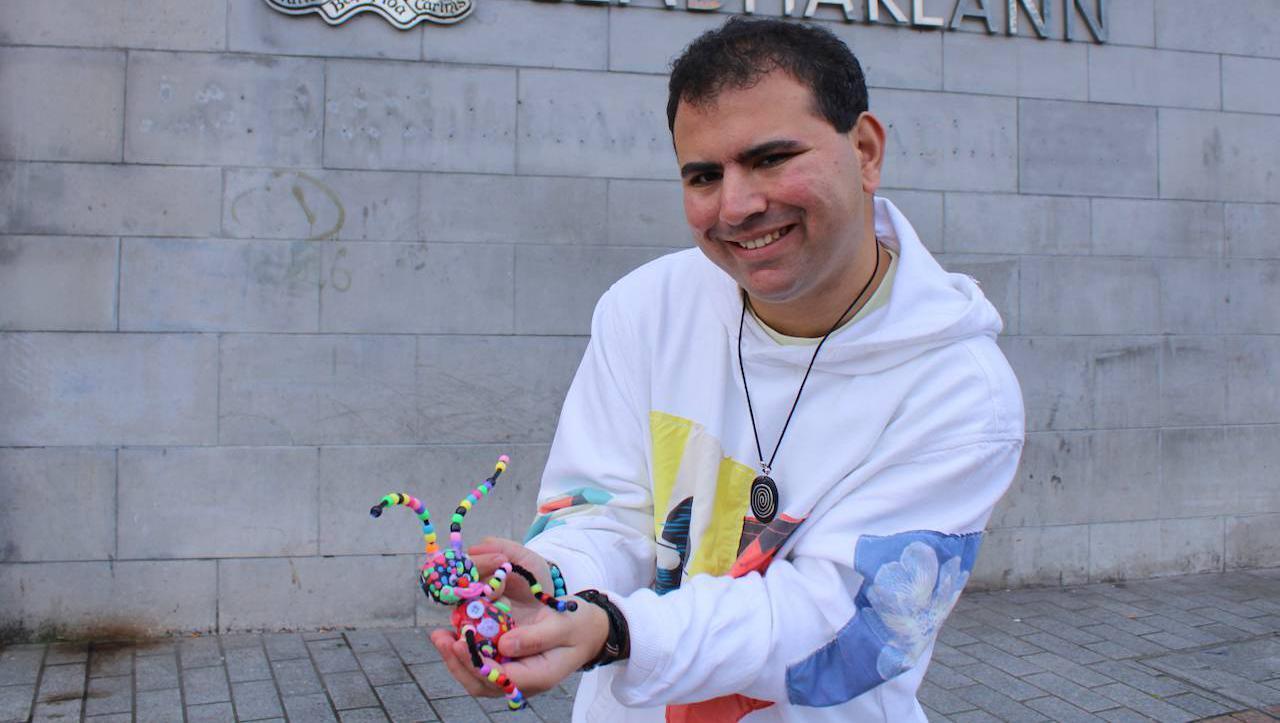
Artist Florin Nolan aged 24, lives in Cobh: 'My rights are that I would like to get out and get married, have kids and have a job and have my own business.'
A Corkman with autism and Asperger's syndrome has welcomed the Assisted Decision-Making (Capacity) Act, saying it means he and his peers will have the same rights as everyone else.
The act commences from Wednesday and reforms how adults who have difficulties exercising their right to make decisions are supported. These can be decisions around personal welfare, health or property, among other options.
Florin Nolan, aged 24, lives in Cobh and is a well-known artist locally, and held a sold-out exhibition recently at Cork City Library.
“My rights are that I would like to get out and get married, have kids and have a job and have my own business,” he said.
“I would like to have my own house, build my own dream house and just work hard. I’d like to be treated like all people are treated, because sometimes people with autism and people with other needs are sometimes not treated equally.”
He said people with disabilities can spend too much time indoors or isolated, saying people can be very lonely if they are not supported.
He pointed to a recent issue with his finances where the bank could not deal with his mother even though she is his nominated person for transactions.
“What’s sad is there’s still some things that I get stuck at, with bills or putting credit on the phone” he said.
“My mother is the only person who knows this, she supports me and I let her do it. But the woman from the bank wouldn’t let her.”
He added: “It’s not up to her [the bank], it’s up to me.”

Under the act, financial institutions will have access to a searchable register showing who customers nominated as a support through the new Decision Support Service (DSS), established within the Mental Health Commission.
DSS director Áine Flynn welcomed the act as “vitally important piece of legislation”.
“It brings about the abolition of the existing wards of court system, which has been in place in its current format since the Lunacy Regulation Act of 1971, so it’s over 150 years old,” she said.
“There will be no new applications for any adult to be made a ward of court after commencement, and all current wards of court will begin the process of transitioning out of wardship.”
Up to now, if a person was made a ward of court for the purposes of dealing with an inheritance or compensation fund, they lost the right to make any decisions.
From now, any actions will be specific and measured, Ms Flynn said, adding: “All of this is underpinned by some fundamental principles; capacity is assessed on a functional basis so it isn’t ‘what is your diagnosis’.”
She said the questions now will be: “What do you need to decide and can you decide it”.
Ms Flynn estimates up to 220,000 people could benefit, including people with an intellectual disability, acquired brain injury or other conditions such as dementia.
"We have a query management function, so people are emailing us and ringing us already," she said.
"We are doing our very best with their questions, so it is very much a public-facing organisation. People should feel free to approach us."
The Mental Health Commission said: “The core element of legislation is to support all persons to make their own decisions as far as is possible.”
More information and contact details for the DSS are available here.