Special needs assistant: 'For 18 years, I didn't know if I would have a job in September'
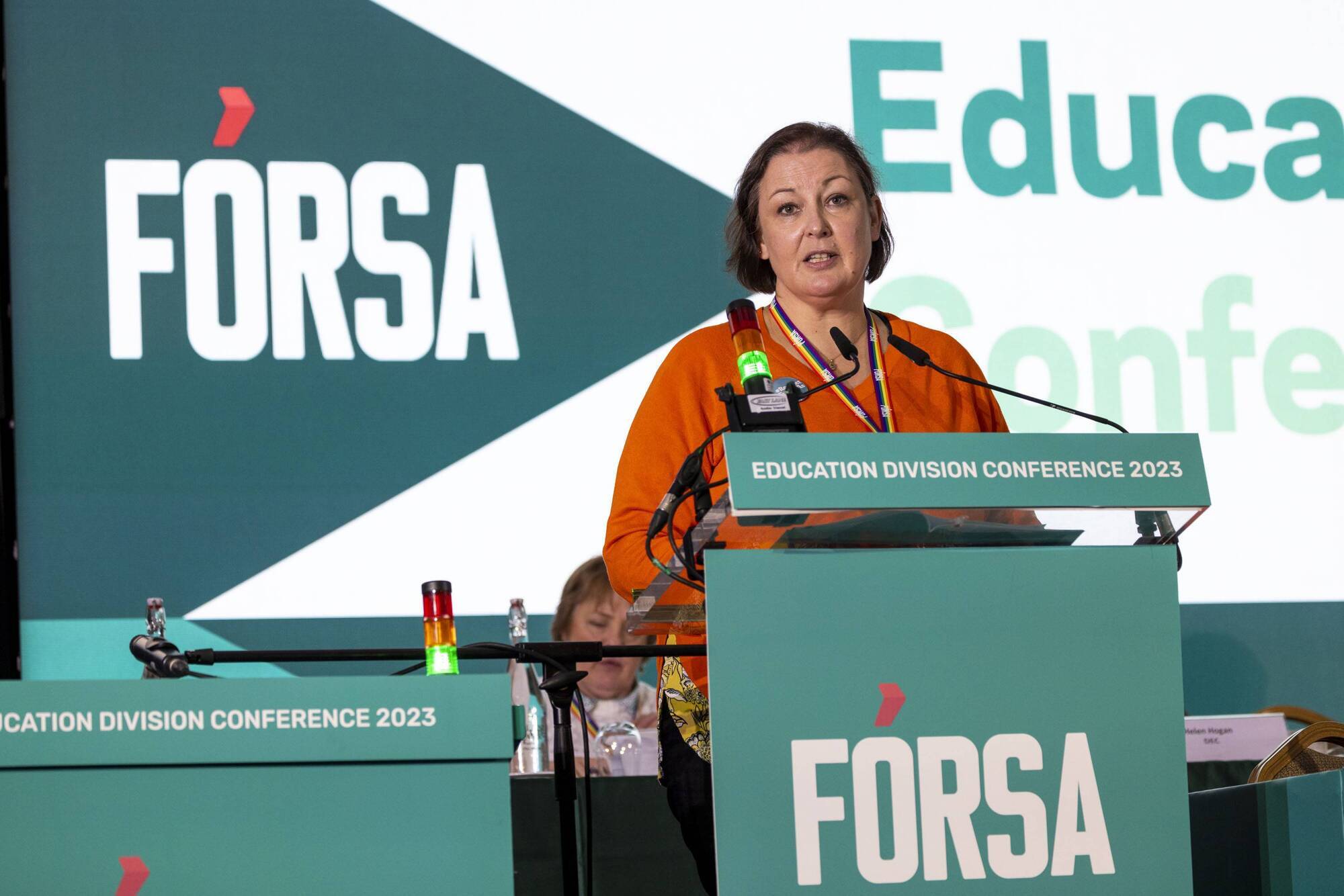
Carol McSherry: “It’s very hard to try to get a mortgage or a loan because we’re not really considered permanent, and it’s a 'last in, first out' type of system.” Picture: Fintan Clarke
They often act as the voices of children with additional needs in the classroom, and without them, thousands of students could not access their constitutional right to an education.
Yet, every year, many special needs assistants (SNAs) around the country find out if they have a job for the following year from a spreadsheet published online.
Carol McSherry has been an SNA for 21 years.
“For 18 of those years, I didn't know if I would be coming back to a job in September. I got involved in trade unionism originally because I was working in a school and we went from seven SNAs to two.”
Usually, SNAs must wait to find out their situation for the following school year when the National Council for Special Education (NCSE) publishes its allocation figures. This year, the NCSE has pledged to publish this list before the end of April. The later this list comes, the more anxiety is prolonged.
Ms McSherry said: “It’s very hard to try to get a mortgage or a loan because we’re not really considered permanent, and it’s a 'last in, first out' type of system.”
“Now, it has been frozen for the last three years because of Covid, and because of contract negotiations, but really there are more children coming into the system. It is a pressure point.”
SNAs are a female-dominated profession, she added. “Because the Department [of Education] has stated that you only need three Ds in the Junior Cert [to do our job], which is still the case, we're not treated as professionals.”
University College Dublin (UCD) surveyed SNAs last year, she added.
SNAs are responsible for students' primary and secondary care needs. “But we also facilitate inclusion. We get to know the child very intimately because sometimes we’re sitting beside them.”
“We advocate for them and we try to give them a voice as best we can. We become aware of different things. Say if a child is autistic, they might have an aversion to smells or a sensory issue."
"We know that and we work with the parents and the teachers.”
She would like to see a national SNA redeployment system. “Some of our SNAs are hitting their 60s. It’s about permanency and dignity.”
Addressing the Fórsa education division annual conference this week, Education Minister Norma Foley told delegates the Department of Education is fully committed to establishing an SNA model “fully cognisant” of matching resources with the care needs of those children who require support.
The NCSE previously recommended a change in the way SNAs are allocated to mainstream classes, and for a greater number of SNAs to be allocated on the basis of an educational profile of each school before the start of the school year in a similar manner to the allocation of special education teachers.
This “frontloaded” allocation model was due to be rolled out previously but the Department of Education advised last year there was insufficient data available, and the allocation for the 2022/23 school year was made under the traditional model.
![Carol McSherry: “Because the Department [of Education] has stated that you only need three Ds in the Junior Cert [to do our job], which is still the case, we're not treated as professionals.” Picture: Fintan Clarke](/cms_media/module_img/7043/3521752_13_articleinline_CarolMcSherryForsa_2012.jpg "Carol McSherry: “Because the Department [of Education] has stated that you only need three Ds in the Junior Cert [to do our job], which is still the case, we're not treated as professionals.” Picture: Fintan Clarke")
Fórsa will be consulted before any pilot commences, and the union is on record as warning that it will not accept any new mechanism to assess SNA allocations unless it contains a robust redeployment scheme.
Work is continuing on developing an SNA model that will accurately reflect and is responsive to the care needs of pupils, Ms Foley added. She has also established a dedicated unit within the Special Education division to consolidate SNA-related policy work. This unit will examine the key role of SNAs and any reform required.
The "immediate priority" is the review of the SNA contract in line with the commitments agreed under Building Momentum, the public sector pay deal. “The review is progressing internally in my department with a view to sharing a working draft with Fórsa representatives shortly,” Ms Foley said.
The impact of the lack of permanency can be felt every time an SNA applies for a loan, housing or a mortgage, Fórsa’s head of education Andy Pike said. “There is always a question to be answered for the financial institution. that question relates to whether or not they have a permanent job.”
“For 20,000 SNAs in our public service the answer is no they don’t, for the reality has been that SNAs every year wait to see if they have that job when the allocation figures are published.”
And while many jobs are affected by the risk of redundancy, “no others receive the news from a website in such an impersonal and callous manner”, he told the conference.

CONNECT WITH US TODAY



Be the first to know the latest news and updates