Good Friday Agreement archives: Agreement will be studied carefully by IRA
One republican who played a leading role in the 25-year Provisional campaign, said it was inevitable republicans would turn their guns on each other if the Árd Fheis endorsed the Stormont deal.
THE peace agreement will be studied carefully against its potential to move towards the primary objective of a united Ireland, the IRA said.
In a statement read at rallies on both sides of the border, marking the 1916 Easter Rising, the IRA also praised Sinn Féin’s work at the Stormont talks.
The IRA said it would judge the agreement against its potential to deliver a “just and durable peace,” while it remained to be seen whether the British government would “rise to the challenge of pursuing a democratic settlement.”
Martin Ferris, a member of Sinn Féin’s Stormont negotiating team, told over 3,000 at the republican plot at Milltown Cemetery in west Belfast, that the party had achieved the best possible deal within the parameters of the talks process.
HISTORY HUB
If you are interested in this article then no doubt you will enjoy exploring the various history collections and content in our history hub. Check it out HERE and happy reading
He added that it was not the outcome Sinn Féin had sought – and whether they could work with it would be decided only after careful analysis. At the same time, Sinn Féin president Gerry Adams, was urging republicans gathered in Carrickmore, Co. Tyrone, to closely examine the agreement, which has already been denounced by splinter republican groups.
The deal will be discussed at Sinn Féin’s Árd Fheis next weekend, and Mr Adams was keen to stress that the republican struggle for a 32-county socialist republic will continue.
Sinn Féin’s executive will discuss the agreement in advance of the annual conference, and Mr Adams said the most significant development last week was the British government moving the Ulster Unionists further than David Trimble’s party wanted to go.
Behind-the-scenes doubts were being raised as to whether a deal could be secured among republican factions without bloodletting. But security forces on both sides of the border believe the battle for the soul of republicanism will be short-lived.
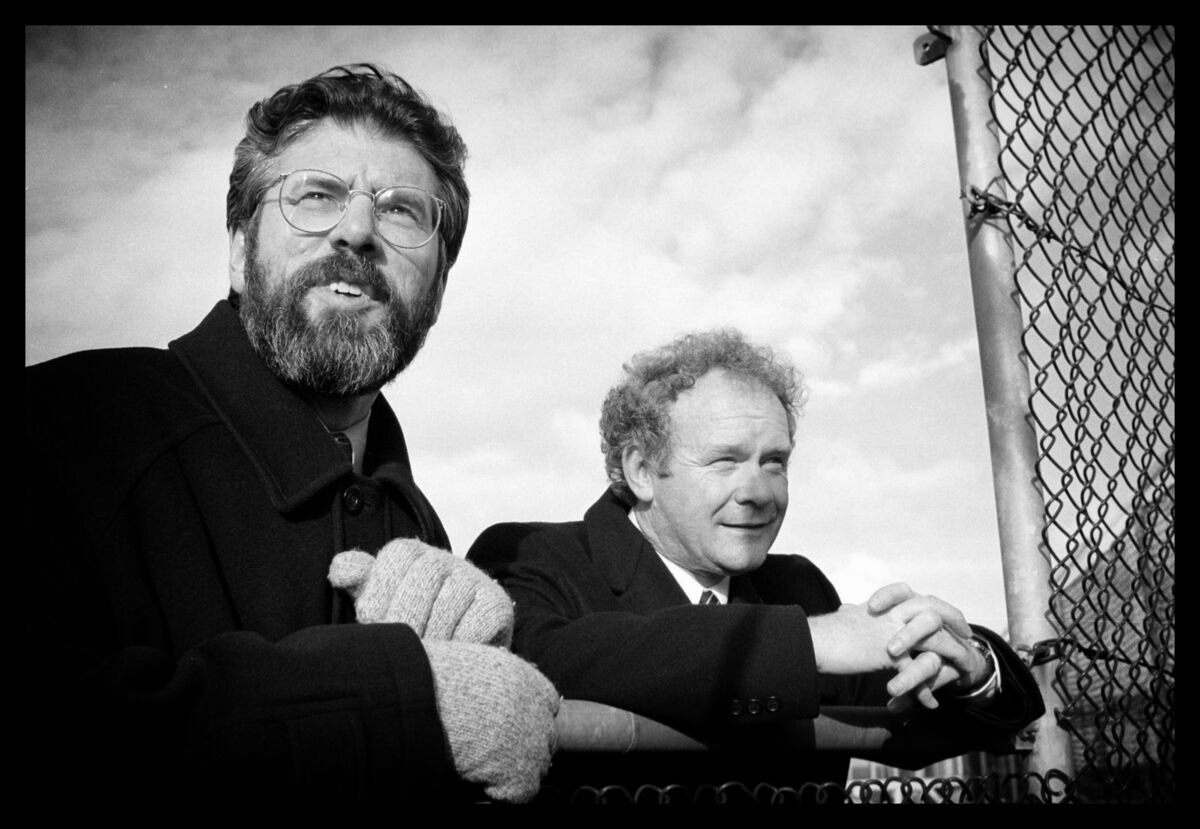
They are equally convinced that the likely winners will be the section of mainstream republicanism loyal to Gerry Adams and Martin McGuinness. One republican who played a leading role in the 25-year Provisional campaign, said it was inevitable republicans would turn their guns on each other if the Árd Fheis endorsed the Stormont deal.
He predicted the next week could be the most crucial in the history of the republican movement. “Gerry Adams has made it clear he expects his supporters to back him in seeking changes in British policy and removing the unionist veto. I believe he will carry the day — but it could be a closely-run contest, and probably will be determined by the early release of prisoners as much as anything else.
“I can’t see it being thrown out because it has the blessing of Blair and, more importantly, Bill Clinton.”
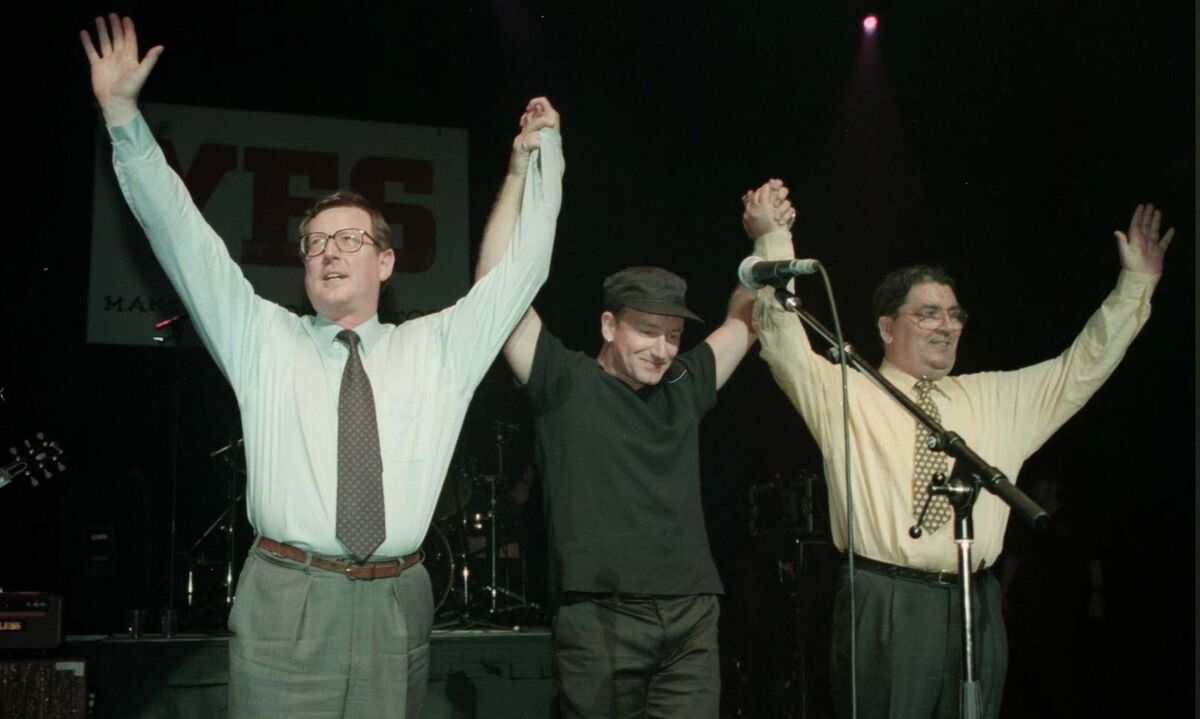
Mr Adams has undoubtedly taken more risks than most in his attempts to steer republicans towards a deal. And it is ironic that a politician who refuses to even speak to him, Ulster Unionist leader David Trimble, should not only be a political partner in a settlement but also forced to defend it against extremists.
The spectre of Michael Collins, the IRA leader who negotiated the Treaty which created partition, and as a result, signed his own death warrant, is known to haunt the Sinn Féin president.
Twelve years ago, veteran republican Ruairí Ó Brádaigh accused the Adams-led faction of a sell-out when a Sinn Féin Árd Fheis agreed to part company with the long-held republican principle of abstentionism from the Dáil.
The split which followed ended in the establishment of Republican Sinn Féin, which has been linked to the Continuity IRA, another splinter group opposed to the settlement and responsible for a string of bomb attacks in border areas in recent months.
The belief is that while Gerry Adams will be able to secure support for the deal, his biggest test will be whether he can do so while avoiding a further split in the republican movement.
CONNECT WITH US TODAY



Be the first to know the latest news and updates