Flu season likely to continue until March, HSE warns
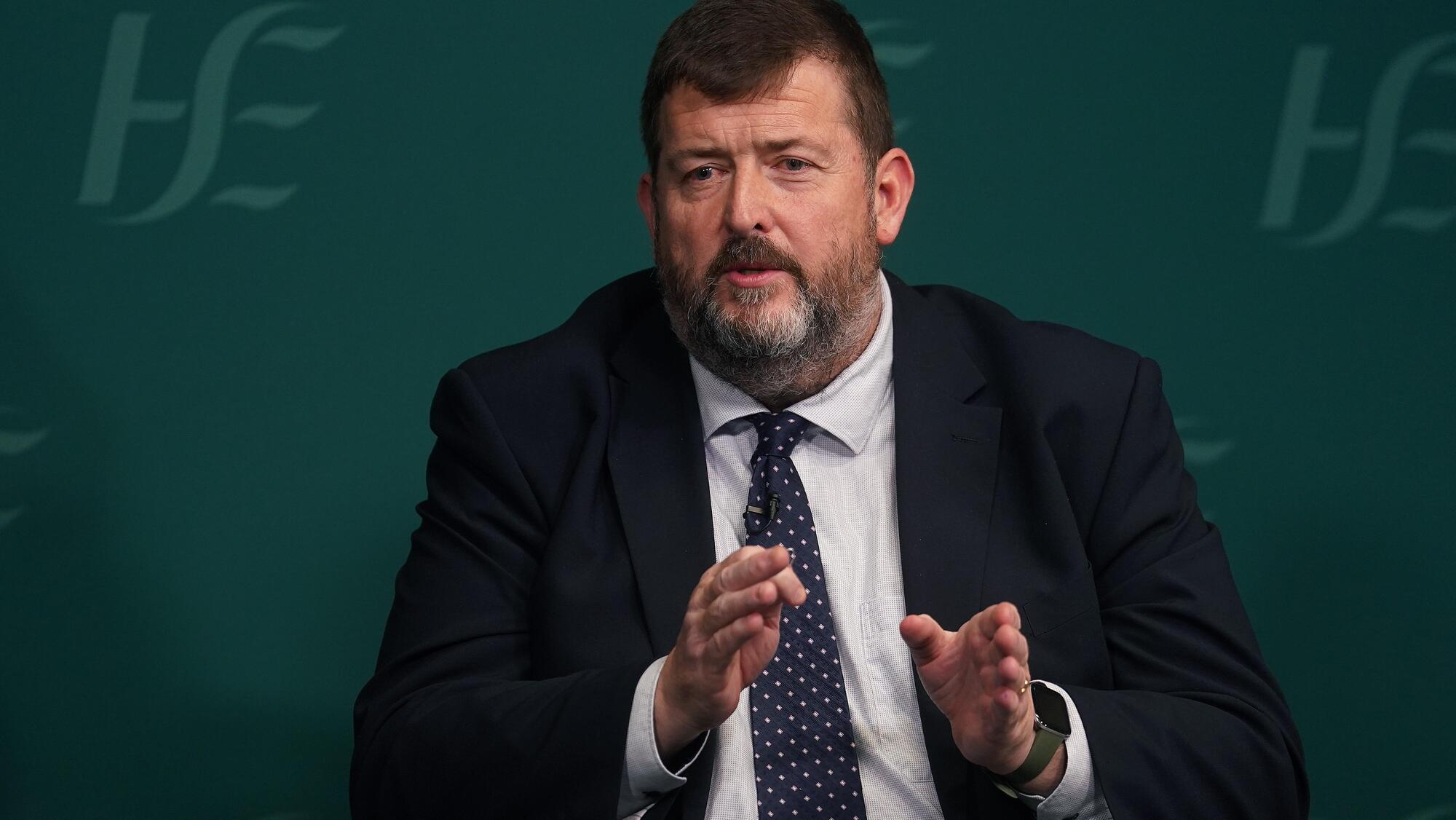
HSE Interim CEO Stephen Mulvany during the media briefing at Dr Steevens' Hospital, Dublin, to provide an operational update on health services and the HSE Winter Plan. Picture: Brian Lawless
The HSE has defended its handling of the overcrowding crisis but warned high trolley numbers may return again with emergency measures set to last up to 10 weeks.
Senior management also insisted the re-opening of three small hospitals to some emergency patients is “not a reversal” of a policy which saw these hospitals lose their emergency departments.
HSE interim CEO Stephen Mulvany said patient numbers in hospitals and GP services are now “matching or exceeding our most pessimistic model”.
Over the last three weeks, hospitals admitted 21,837 patients which was 10% above the modelling.
Flu numbers are continuing to rise, and he warned: “We will continue to deal with high levels of flu and other viruses during February and likely into March.” He added:
Referring to the peak of over 900 people on trolleys last week, he said: “can we absolutely be certain we won’t get to that level again? We can’t because we don’t know when the flu is going to peak.”
He defended planning for this winter season.
“I wouldn’t accept it was totally predictable, as we said it was an unprecedented level of flu season on top of two other circulating viruses, RSV and Covid, so we wouldn’t accept that,” he said.
Chief clinical officer Colm Henry also insisted modelling was done in unique situations, as society is more open now.
Cases of RSV, mainly among young children, are also continuing to rise but numbers of hospitalised children dropped by 5% last week.
Mr Mulvany, who has visited a number of hospitals, said not all sites are facing the same pressures.
Crisis measures include using 180 beds in private hospitals, increasing GP hours, extra hospital staff at weekends and working with Nursing Homes Ireland.
However, he conceded: “It is an emergency response as it has been designed, it is not sustainable in the long term.”
Meanwhile, ambulances can now take some patients to hospitals in Mallow, Cork, Ennis, Clare, and Roscommon instead of overcrowded hospitals despite a Government policy mandating closure of emergency services at these sites.
Mr Mulvany said: “It is absolutely not a reversal of the State’s policy on reconfiguration of small hospitals.” He went on to say:
The changes will continue, chief operations officer Damien McCallion said but are subject to evaluation. Dr Henry said people with illnesses likely to need intensive care will not be sent to these smaller hospitals.
Mr McCallion said they will look at other medical assessment units in smaller hospitals and this project may be rolled out further.
Lead on vaccination Eileen Whelan urged the public especially those aged 18 to 49 to come forward for vaccinations.
She also called on healthcare workers to get vaccinated, with this rate as low as 17% in some areas.
CONNECT WITH US TODAY



Be the first to know the latest news and updates