State papers: Irish authorities 'doubtful' of IRA links to daring Chile jailbreak
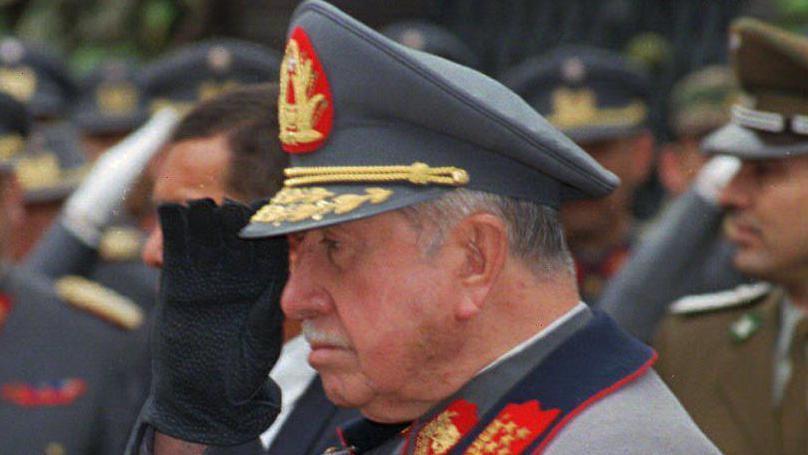
Two of the inmates had been serving jail sentences for the murder of a right-wing senator in 1991, while they were also convicted of an attempted assassination on the then-Chilean military leader, Augusto Pinochet (pictured), in 1986. File photo: AP/Santiago Llanquin
The Irish ambassador to Chile and gardaí were initially doubtful about claims by the authorities in Chile of IRA links to a daring escape of four high-security left-wing guerillas from a jail in Santiago in 1996.
Newly-released, confidential government files show the security forces in Chile had strong evidence that two sisters from Dublin had a role in arranging the helicopter that was used to break out the terrorists from prison on December 30, 1996, during a gunfight with prison security staff.
Two of the inmates had been serving jail sentences for the murder of a right-wing senator in 1991, while they were also convicted of an attempted assassination on the then-Chilean military leader, Augusto Pinochet, in 1986.
The helicopter, fitted with bullet-proof material, had collected the prisoners in a metal basket from the jail yard in an escape that was similar to that of IRA prisoners from an exercise yard in Mountjoy in 1973.
In May 1997, the Supreme Court in Chile requested any official documentation in the possession of the Irish authorities, including passport photos and any fingerprints of the two individuals – sisters, Frances and Christine Shannon from the South Circular Road in Dublin – who were believed to have hired the helicopter used in the escape as well as two cars used by the prisoners in their getaway.
HISTORY HUB
If you are interested in this article then no doubt you will enjoy exploring the various history collections and content in our history hub. Check it out HERE and happy reading
State papers show the Irish ambassador to Argentina (who had responsibility for relations with Chile) Art Agnew, advised the Government that it was “an extremely high-profile and sensitive” case and the handling of the request for mutual assistance by the Irish authorities would be the subject of much interest in Chile.
Read More
Mr Agnew recommended that full co-operation should be provided as Chile had a democratically elected government at the time, even though the former dictator Pinochet still remained as head of the armed forces. “It would cause very serious damage to the image of Ireland if we were to refuse co-operation,” Mr Agnew said.
Files show a senior official in the Department of Foreign Affairs informing Mr Agnew that gardaí regarded the two women as “subversives” but were “very sceptical” about the story of their role in the jailbreak in Chile.
Around the same time, Mr Agnew questioned if it was possible two innocent tourists, who might still be wandering around South America, might need to be alerted that they were being hunted by police.
The ambassador said he initially believed the innocent tourist explanation was possible and he noted that the escape required local knowledge “above all,” “You would be surprised how many young women wander around South America for six months or a year,” he remarked.
However, Mr Agnew said a subsequent newspaper report had provided details which would seem to rule out that possibility. Court records show the Chilean authorities established that Frances and Christine Shannon had entered Chile the previous month and left the country on the day of the prison escape.
Files indicated that eyewitnesses had placed the two Irishwomen at a certain hotel on various dates and at locations with others involved in the jailbreak, including a safe house which they had rented. The owner of the helicopter used in the jailbreak also recognised the two women.
They also show that Christine Shannon had made a phone call while staying at the hotel to a number belonging to the father of two males who were connected with a terrorist group.
Frances Shannon, who was aged 43 at the time, was identified boarding a flight for Sao Paulo in Brazil on the afternoon of the escape. Her sister, then aged 42, left Chile by car into neighbouring Argentina on the same day. Records show the Chilean authorities lost trace of the two suspects after they left Chile.
Both women had described their profession as “quality control” on tourist cards used when entering Chile, while the stated purpose of their visit was a “vacation.” Documents showed the Irish authorities confirming to their Chilean counterparts that the two held Irish passports at the time but were not on any “stop list”.
Christine Shannon, who was known as Tina, died in June this year. In an obituary published in An Phoblacht, she was described as a “dedicated IRA volunteer.”

CONNECT WITH US TODAY



Be the first to know the latest news and updates