Demand from data centres threatens Irish carbon budgets, study warns
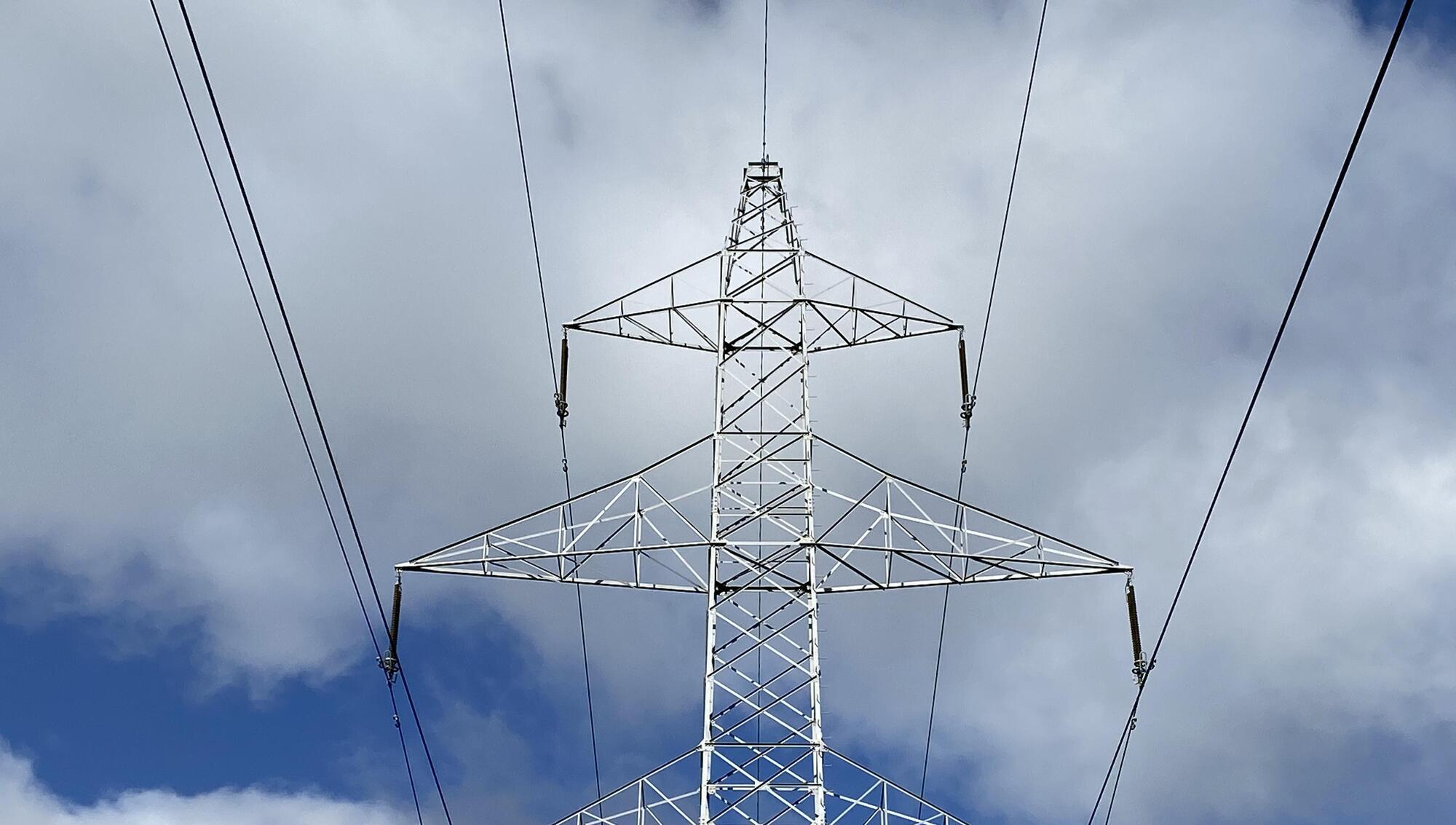
The electricity system faces multiple interconnected challenges, according to a study.
The increasing demand of data centres threatens Ireland's carbon budgets, while stubborn overreliance on fossil fuels is locking the country into a trap of energy insecurity, high prices, and high emissions.
Those are some of the conclusions of a major new report that will be presented to TDs and senators on Tuesday, which calls for fast reductions of all fossil fuels in the coming years.
The study, conducted by MaREI (Science Foundation Ireland Research Centre for Energy, Climate and Marine) experts, and funded by environmental organisation Friends of the Earth, found that the electricity system faces multiple interconnected challenges.
Carbon budget obligations will require the electricity system to both rapidly phase out fossil fuels while delivering far more electricity this decade, it said.
Electrifying heat and transport is also one of the most important options to reduce fossil fuels, and any constraint on electrification will threaten the achievability of sectoral emissions ceilings, it added.
Lead author of the report, University College Cork (UCC) professor in sustainable energy and systems modelling Hannah Daly said: "The source of Ireland’s energy insecurity and high prices are caused by over-dependence on fossil fuels, which are also the main cause of the climate emergency. Energy security measures must be aligned with climate policy, which requires rapid reductions in the consumption of all fossil fuels this decade.
“The good news is that energy transition measures — like building domestic renewables, improving energy efficiency, reducing car dependency and district heating — all support energy security, lower bills and bring wider societal and economic benefits.”
Meeting the carbon budget programme means that, compared with 2020, natural gas demand in 2040 is reduced by 93% in the power sector, 85% in the residential sector and 67% in business, the study found.
If data centres continue on their rapidly energy-sapping rate in a peak scenario, renewables would have to be rolled out at an almost impossible rate, it warned.
"To remain within emissions ceilings, data centre demand growth represented in EirGrid’s 'high' scenario — a 500% growth in electricity demand from data centres this decade — would require deployment of renewable electricity capacity at implausibly rapid rates: a quadrupling of renewable electricity generation this decade," it said.
That would have a knock-on effect in other sectors, which would severely curtail Ireland's emissions reduction ambitions, it warned.
"If significant growth in future renewable electricity generation is ultimately required mainly to serve strong data centre demand growth, this will further limit the potential for transport, buildings and industry sectors to meet their decarbonisation commitments."
The need for new natural gas-fired power capacity and emissions reduction obligations are clashing directly, the report said.
"New natural gas-fired power capacity is urgently necessary to meet climate commitments to replace older, more carbon-intensive generation capacity, but to meet carbon budgets, the annual power generation from natural gas plants (ie the actual operation of these plants annually) must fall by more than half by 2030."
The new energy modelling report from Friends of the Earth and produced by University College Cork's MaREI research centre said:
- Ireland’s new carbon budget obligation requires demand for natural gas to fall by 40% this decade and a further 80% in the 2030s. This means by 2040 gas demand is reduced by 93% in the power sector, 85% in the residential sector and 67% in enterprise.
- Huge growth in data centre electricity demand would substantially increase the challenges of meeting legally binding sectoral emissions ceilings. If data centre growth uses a significant proportion of increasing renewable electricity generation, this will limit the potential for transport, buildings and industry sectors to meet their decarbonisation commitments.
- While an increase in gas-fired electricity generation capacity is needed, largely to replace older polluting coal and peat-fired generation, the use of that capacity will have to decrease rapidly to stay within our carbon budgets. The modelling indicates that the share of time that gas capacity is used must be more than halved this decade for emissions to reduce in line with ceilings.
- The necessary reduction in gas-fired electricity use cannot be achieved without a very rapid acceleration in renewable electricity capacity deployment — around 15 GW of new wind and solar capacity this decade — and this challenge is amplified when higher demand growth from data centres is allowed. Any failure to rapidly deploy far greater renewable electricity capacity would lead to an increased utilisation rate of natural gas capacity, with a consequent increase in emissions.
- EirGrid and Gas Networks Ireland, the system operators of the electricity and gas networks, project future electricity generation capacity and natural gas demand without taking explicit account of sectoral carbon budgets or the long-term net-zero commitment. The result is projections of demand which risk being misinterpreted by policy and industry as being compatible with legally-binding climate commitments.
CLIMATE & SUSTAINABILITY HUB
CONNECT WITH US TODAY



Be the first to know the latest news and updates