'Dehumanising and abusive' - Women outline their experiences of sex trade
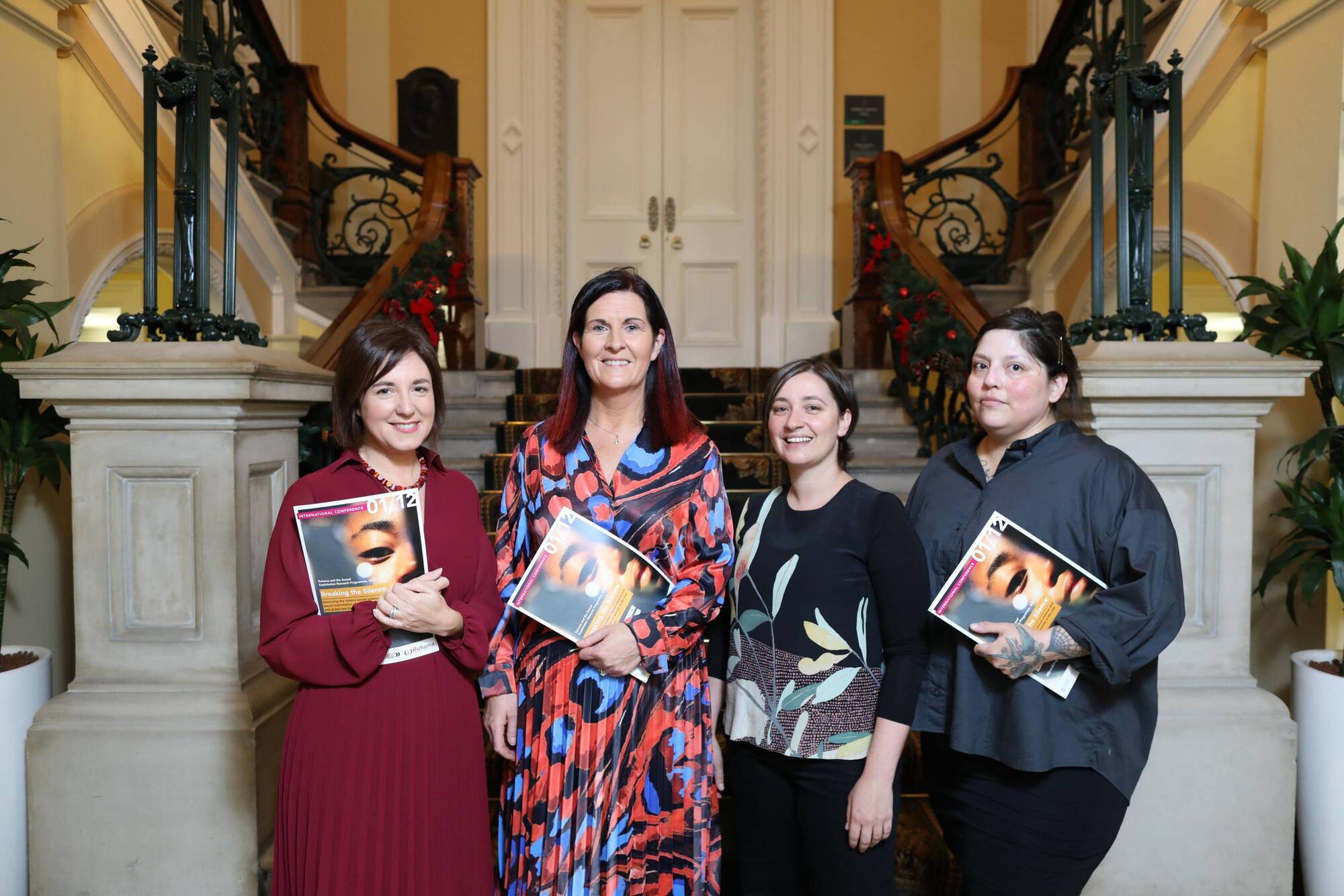
(Left to right) at an international conference hosted by Ruhama and SERP, entitled: ‘Breaking the Silence: Examining the hidden sexual violence and sexual exploitation of women in the Irish and global sex trade’, were Ruth Breslin, Lead Researcher at the Sexual Exploitation Research Programme (SERP) at UCD; Barbara Condon CEO, Ruhama; Dr Meagan Tyler, Senior Lecturer, La Trobe University, Melbourne, Dr Cherry Smiley, Researcher, Founder and Director of Women's Studies Online, Quebec, Canada; and Australia. Photo: Julien Behal
Mental health, financial and trust issues are among the leading barriers facing women leaving the sex trade, according to new research.
A leading charity called for accommodation supports for survivors and encouraged women to come forward for help. The research, which is the largest of its kind in Ireland, was launched in Dublin and heard from survivors of the sex trade.

During the first nine months of this year, Ruhama, a charity that supports survivors of the sex trade, saw a 42% increase in the number of women engaging with its services compared to last year. It also saw a 30% increase in new victims of trafficking during the same time period.
Emotional and mental health issues (55%), financial constraints (52%), and uncertainty about who to trust when asking for help (50%) were among the top five barriers facing women seeking to exit the sex trade.
“They experienced very severe violence, sometimes from sex buyers, sometimes from a pimp or a trafficker,” said Ruth Breslin, lead researcher with University College Dublin’s Sexual Exploitation Research Programme (Serp).
Women spoke of an “abusive and degrading” life and felt trapped due to financial constraints and not feeling “strong enough to get out”, she said.
Ms Breslin hopes the conference will contribute to “breaking the silence” on the issue and let women know that help is available. “You will be believed if you come forward with a story,” she added.
One woman interviewed by researchers said: “[Sex work] comes with so many challenges, like violence. You end up being beaten, drugged, raped, physically and emotionally assaulted.
“It was the most toughest, dehumanising, embarrassing and painful [experience],” she said.
Another was quoted saying she considered suicide when a social worker accused her of lying about her experience.
“[When] she didn’t believe me, it killed my spirit,” she said.
“For many years I wanted out,” said another. “Not my head [though]. My head wanted to keep working. But my soul wanted out. I wanted to be free, and I didn’t know how to do it.”
One survivor told the conference: “Prostitution should never be offered as a solution to poverty. It wasn’t sex, I didn’t want that. I needed money.
Ruhama chief executive Barbara Condon called for gender-specific accommodation for victims of human trafficking in the sex trade, as the research suggests it is core to a survivor’s recovery.
“Victims of human trafficking in Ireland cannot access safe and suitable accommodation,” she said. “Housing, or lack of it, has been one of the biggest challenges that our service users have faced in 2022.”
Women from Europe, Africa, South America and Asia participated in the study. The youngest was aged 12 and the oldest was 43, with an overall average age of 25. 16% of them entered the sex trade before turning 18. Most women surveyed had already left the sex trade.
When first coming to Ruhama, 83% had bad emotional and mental health, and more than 60% reported similarly bad physical and sexual health. After receiving support from the charity, these figures reversed dramatically.
Seven in 10 said mental health supports were the most important when exiting the trade, six in 10 said safe and stable accommodation was important, and half stressed the importance of education. Trauma was by far the biggest challenge cited by respondents for healing and rebuilding their lives after exiting the trade.