Flooding victims seven times more likely to suffer mental health issues afterwards
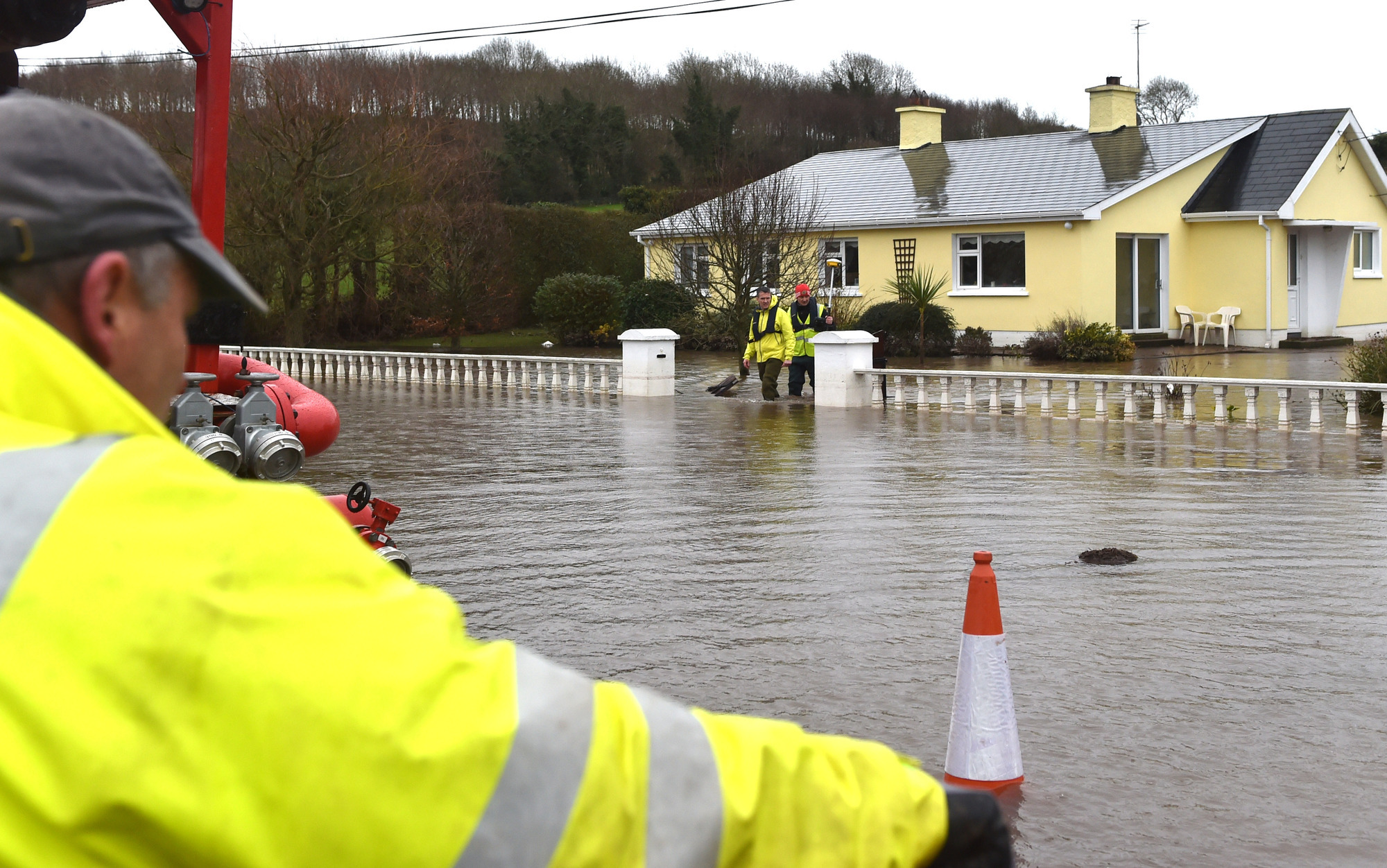
Professor Neil Adger's research indicated that people struggle with a loss of sense of place and a lack of agency over what can be done to prevent it and stressed the need to involve local communities in finding the best solution in protecting their area from flooding. File picture: Dan Linehan
People whose houses have been flooded are up to seven times more likely to experience anxiety, post-traumatic stress and even depression, which can go on for years.
That is according to a leading climate social scientist, who said planning flood defences in cities such as Cork must involve early public consultation to increase the community’s wellbeing.
Early consultations with communities can improve designs due to local knowledge and improve homeowners’ sense of agency and security with their areas, he said.
Speaking in Cork City Hall, Professor Neil Adger of the University of Exeter spoke on ways humans can adapt to flood risks as climate change intensifies the threat to our lives.
Prof. Adger suggested there may be other methods of flood defence on top of the planned physical barriers that could be considered in Cork.
“I don’t know the geography [of Cork] at all,” he said. “I don’t know how much the river is dammed upstream – because this makes a huge difference. But working on the upper reaches of the Lee to stop water flowing down [could help].”
The three types of flood risk solutions are hard engineering (sea or river walls for example), nature-based solutions and planned relocation of communities.
When asked if hard engineering solutions were the only viable solution for Corkonians, he said most solutions contain elements of all three.
“I completely understand that these things are highly contested and many of these are legacy issues going back over many decades. It’s good to see these are subject to public consultations and discourse. You know the risks are real because of floods in the city. Having that level of awareness is extremely positive."
Much of Prof. Adger’s research focuses on the mental impact of flooding to people’s lives, which can often affect far more than material loss.
He cited research that found people whose houses have been flooded are 5-7 times more likely to have experienced symptoms of anxiety, post-traumatic stress and even depression, which can go on for years.
His research indicated that people struggle with a loss of sense of place and a lack of agency over what can be done to prevent it and stressed the need to involve local communities in finding the best solution in protecting their area from flooding.
He said these mental impacts can be offset by “collective solidarity” and working together in the aftermath of floods. “Carefully designed adaptations can enhance overall wellbeing, sense of security and pride in place,” he said.
Prof. Adger said although climate change poses significant risks, it is the renewed “impetus to decarbonise the economy”, urging policymakers to consider a range of solutions at their disposal in consultation with communities.
Prof. Adger, who was brought up on a farm in Co. Antrim, spoke as part of a climate lecture series hosted by the Environmental Protection Agency (EPA).

CLIMATE & SUSTAINABILITY HUB
CONNECT WITH US TODAY



Be the first to know the latest news and updates