Lack of early warning systems sees half the world's countries ill-prepared for extreme weather events
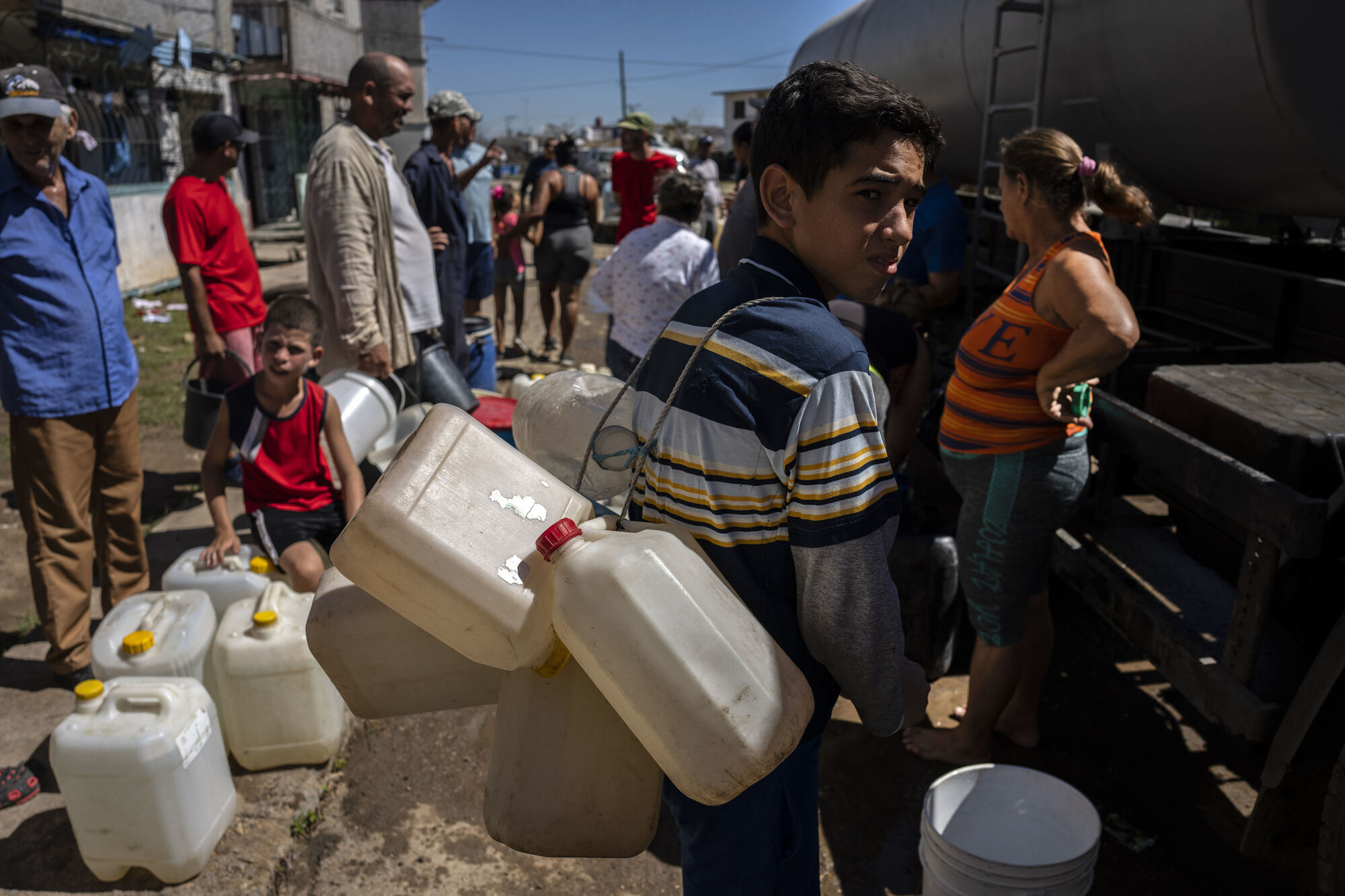
People line up at a tanker truck distributing drinking water amid the aftermath of Hurricane Ian in La Coloma, Pinar del Rio province, Cuba, last week. Picture: AP/Ramon Espinosa
More than half the world's countries are ill-equipped to deal with the likes of hurricanes, tsunamis, droughts, and heatwaves because of a lack of early warning systems in place.
A new report from the UN's Office for Disaster Risk Reduction (UNDRR) and the World Meteorological Organization (WMO) found poorer and island countries are in the firing line more than most, with deaths likely to be eight times higher than those with better warning systems.
This is despite the world's most developed countries being responsible for the vast majority of human-induced greenhouse gas emissions, a chief culprit of global warming which is driving extreme weather patterns in recent years.
UN secretary-general António Guterres pulled no punches after the publication of the report.
he said.
He said all countries should invest in early warning systems, because "extreme weather events will happen", adding that "they do not need to become deadly disasters".
Special assistance is needed for least developed countries, small island developing states, and Africa, the report said.
It found that from 2015-2021, 145 countries reported a total of 1.05bn people affected by disasters. The number affected by disasters per 100,000 per year has nearly doubled, from an average of 1,147 people per year during 2005 to 2014, to 2,066 during 2012 to 2021.
In 2021 alone, 38m new internally displaced people were recorded, of whom over 60% were due to disasters, it said.
The WMO warned single disaster events were not the only factor to consider, because events like floods can lead to secondary disasters such as disease.
"This is because of the need to warn not only against the initial impact of disasters, but also second- and third-order effects. Examples include soil liquefaction following an earthquake or a landslide, and disease outbreaks following heavy rainfall," it said.
Prof Petteri Taalas, WMO secretary-general, said the number of recorded disasters had increased by a factor of five, driven in part by human-induced climate change and more extreme weather.
The IFRC, the world’s largest humanitarian network comprising 192 national Red Cross and Red Crescent Societies, said "extreme-weather events don’t have to turn into humanitarian tragedies".
The body's global anticipatory action coordinator Gantsetseg Gantulga said: "When communities are warned ahead of disasters and able to take action, countless lives can be saved."
Check out the Irish Examiner's WEATHER CENTRE for regularly updated short and long range forecasts wherever you are.