'We don't want to strike, but we just can’t be paid less for the same job anymore'

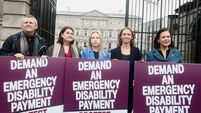
Socialist TD Mick Barry is to raise the issue of care workers' pay in the Dáil, adding that: 'The cost of living crisis is bearing down heavily on working people across the board, but the pressures are unimaginable for workers who haven't had a pay increase in 14 years.' Picture: Gareth Chaney/Collins
“We don’t want to strike but we have no other choice with the cost of living. We don’t want to be left behind anymore.”
These were the words of Gerard Madigan, a social care worker for people with disabilities in St Joseph’s Foundation in Charleville, Co Cork, ahead of a nationwide strike at community and care organisations. Some 1,000 community and care sector workers are expected to strike this week.
Workers at the Irish Wheelchair Association, St Joseph's Foundation, and EmployAbility are all set to strike for one day in Cork today.
On Thursday, workers in Western Care in Mayo, Ability West in Galway, and selected community employment schemes in Donegal will also be striking.
Workers at Enable Ireland in both Cork and Kerry are set to strike on Friday.
Community and care sector workers say that they have been forced onto picket lines because of Government failure to engage with them on their request for a first pay rise in 14 years.
They are calling for pay parity with heath service colleagues who do the same job, but on different contracts.
While Section 38 employees are classed as public servants, workers on section 39 contracts are provided funding under Section 39 of the Health Act, 2004 and are not classified as public servants, and do not benefit from public sector pay deals.
They tend to be paid less and can have less secure contracts than their Section 38 counterparts, even when doing the same job.
Many of these workers have not had a pay increase in 14 years.
“With the rising cost of living we are demanding pay parity,", Mr Madigan said.
Recruitment and retention of staff in community and care organisations has become a major problem, with understaffing hampering some services.
Mr Madigan said that pay parity with the public sector would ease this problem and allow the community and voluntary sectors to retain more good staff.
“If a pay linkage was agreed we wouldn’t be hemorrhaging staff. It’s bad for our clients and it's bad for our morale. St Joseph’s does great work recruiting staff, but once they’ve been trained, many leave for better pay for the same job in Section 38 organisations.
SIPTU Public Administration and Community Organiser, Adrian Kane, said: “These are workers who have dedicated themselves to caring for some of our most vulnerable citizens, and assisting their local communities.
"These are workers who never thought they would be forced into taking industrial action to have some degree of respect shown for the crucial work they do.
“It is the Government which has ultimate responsibility for pay rates in these organisations because it funds them."
Socialist Party TD Mick Barry will raise the issue in the Dáil today.
"The cost of living crisis is bearing down heavily on working people across the board, but the pressures are unimaginable for workers who haven't had a pay increase in 14 years," he said.
CONNECT WITH US TODAY



Be the first to know the latest news and updates