Q&A: What is the Government's pension plan?
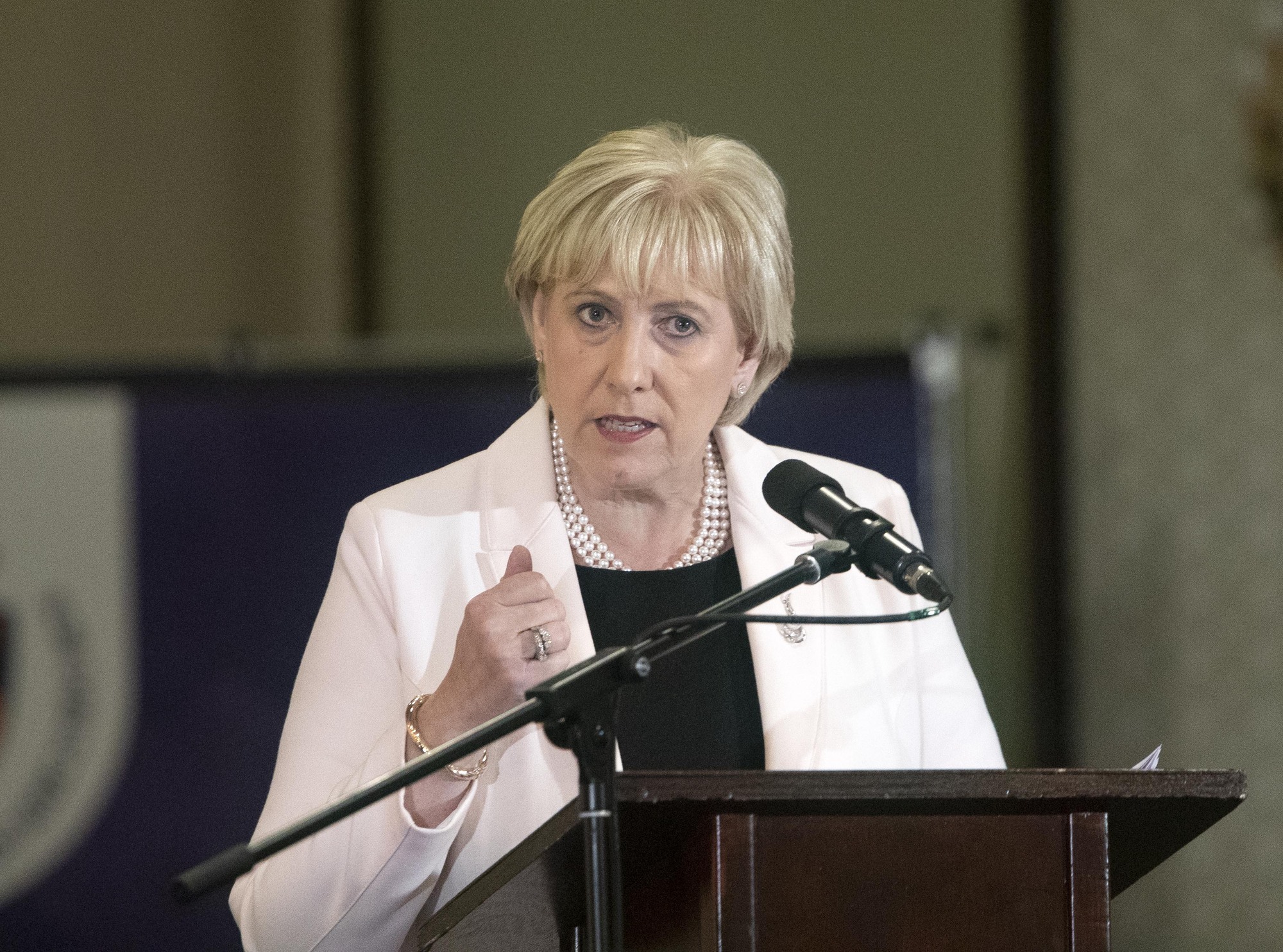
Minister for Social Protection Heather Humphries says an increase in PRSI will be needed to accommodate these planned pension changes. Picture: Colin Keegan/Collins
The Government has unveiled a major overhaul of the state pension, in a bid to finally end a long-running political dispute over the issue.
The announcement by Social Protection Minister Heather Humphreys got a mostly positive reaction from the public and experts, though questions remain about the exact benefit of its main plank — the deferral of the pension age.
Ms Humphreys and her Fine Gael colleagues will hope the move finally eases concerns about the so-called "pension timebomb".
The exact entitlement age for the state pension become a flashpoint in the 2020 election.
Fine Gael and Fianna Fáil battled during the campaign, and later in government formation talks, over proposals to increase the state pension age to 67 in 2021. The Fine Gael-Labour government had legislated for an increased age of 66 in 2014. This resulted in thousands of 65-year-olds having to obtain a benefit payment to bridge the gap.
Since then, decisions on the pension have been kicked to a commission, which returned its findings last year, saying that the retirement age should be set at 66 and three months in 2028, 66 and six months in 2029, and 66 and nine months in 2030, before hitting 67 in 2031.
Despite that advice from the commission, the Government has announced that the age will remain at 66.
However, in a bid to entice people to work longer and allow them the flexibility to decide whether to do so, workers will be allowed to stay in their jobs until they reach 70.
For every year they remain in work, they will be paid an extra 5%. Under today's rates, the new five rates are estimated to be: age 66 - €253, age 67 - €266, age 68 - €281, age 69 - €297, age 70 - €315.
There will also be full state pensions for long-term carers, and an examination of a scheme to pay pensions to those below the age of 66, but who physically cannot continue working beyond the age of 60.
The overhaul of the old-age pension will also see Ireland change to a total contributions approach over the next 10 years, meaning pension levels will be based on what is paid in over the lifetime of contributions.
Sinn Féin is the most notable critic. The party says the changes show the Government is against bringing the retirement age back to 65.
The party also argues that deferral of the pension until a worker is 70 means that they forego around €52,000, and the enhanced rate is being paid back incrementally thereafter. They say that you would have to live until your late 80s for this to make financial sense. They say it is a "Trojan horse" to increase the pension age.
The plan will be paid for by "slow and gradual" PRSI rises.
“Government will bring forward by spring 2023 a roadmap for PRSI increases over the next 10 years. I think it's important to be honest with people that PRSI raises will be needed to pay for a pension system into the future,” Ms Humphreys said.
All changes are anticipated to take affect in 2024.