ECB announces record increase in eurozone interest rates
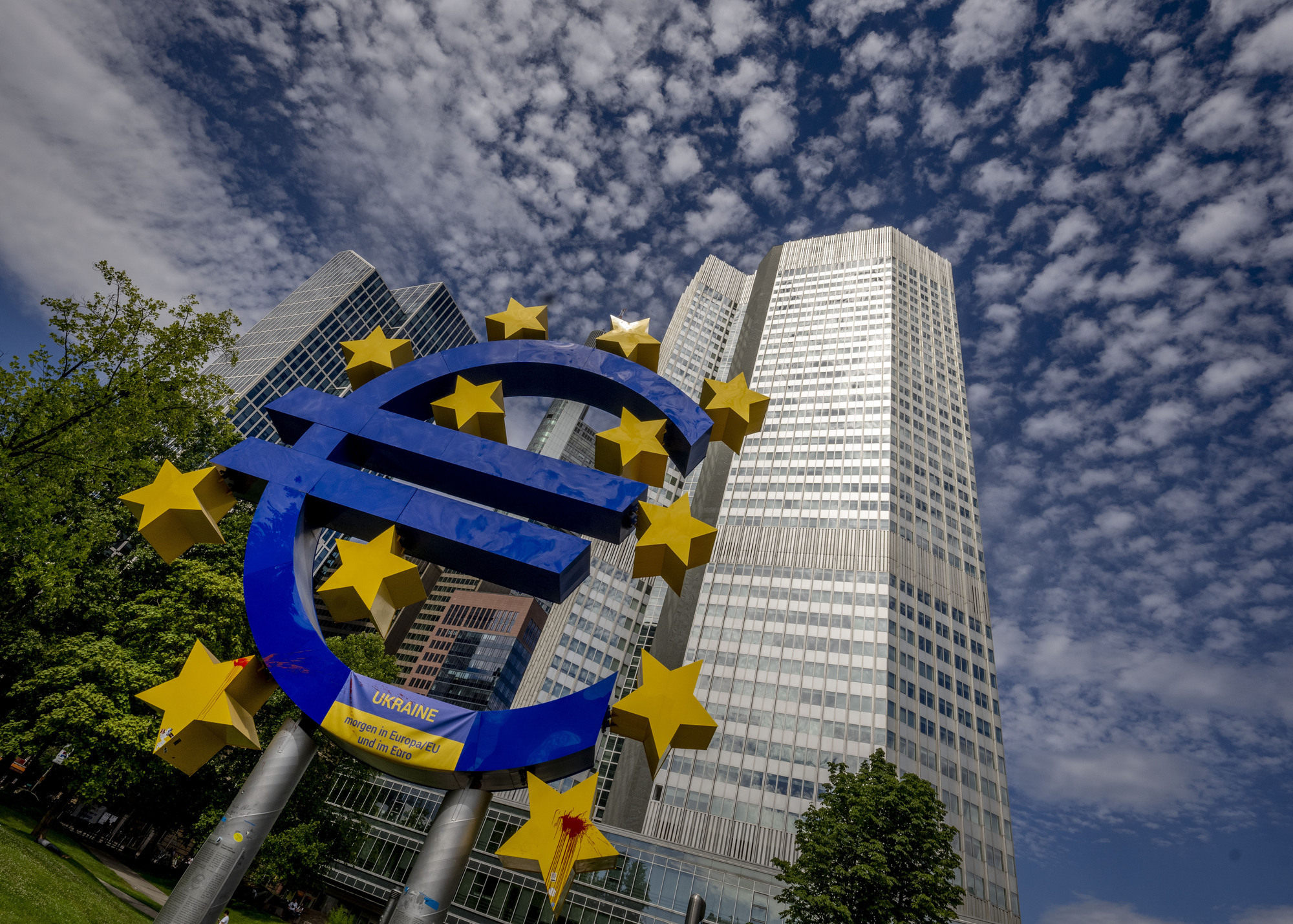
The ECB’s governing council has voted to raise all three key interest rates by 75 basis points, or 0.75% — a bigger hike than ever before.
The European Central Bank (ECB) has made its largest-ever interest rate increase, following the US Federal Reserve and other central banks in a global stampede of rapid rate hikes meant to dampen record inflation that is squeezing consumers and pushing Europe towards recession.
The bank’s 25-member governing council raised its key benchmarks by an unprecedented three-quarters of a percentage point for the 19 countries that use the euro currency.
The ECB usually moves rates by a quarter-point and has never raised its key bank lending rate by three-quarters of a point since the euro’s launch in 1999.
The hike means hundreds of thousands of homeowners are facing a big increase in their mortgage repayments.
There are 475,000 Irish tracker and variable rate borrowers who are impacted by ECB rate rises.
There is no escaping the rate hikes for 300,000 households on tracker mortgages because their home loan agreements stipulate their interest costs rise or fall in line with ECB rate moves.
Bank president Christine Lagarde said the ECB would raise rates “over the next several meetings” because inflation was “likely to stay above our target for an extended period”. It enacted a half-point hike at its meeting in July, its first increase in 11 years.
Meanwhile, the economy was “expected to slow down substantially over the remainder of this year”, she said, adding that energy prices would stay “extraordinarily high”.
The bank said it expected more hikes ahead because “inflation may rise further in the near term” and noted that the economy was expected “to stagnate later in the year”.
The move follows a half-point hike at the ECB’s last meeting in July, its first increase in 11 years.
The jumbo increase is aimed at raising the cost of borrowing for consumers, governments and businesses, which in theory slows spending and investment and cools off soaring consumer prices by reducing the demand for goods.
Analysts said it was also aimed at bolstering the bank’s credibility after it underestimated how long and how severe this outbreak of inflation would be.
After reaching a record 9.1% in August, inflation may rise into double digits in coming months, economists suggest.
The war in Ukraine has fuelled inflation in Europe, with Russia sharply reducing supplies of cheap natural gas used to heat homes, generate electricity and run factories. This has driven up gas prices by 10 times or more.
European officials decry the cutbacks as blackmail aimed at pressuring and dividing the European Union over its support for Ukraine. Russia has blamed technical problems and threatened this week to cut off energy supplies completely if the West institutes planned price caps on Moscow’s natural gas and oil.
Economists said the ECB’s interest rate hikes could deepen a European recession predicted for the end of this year and the beginning of 2023, caused by higher inflation that has made everything from food to utility bills more expensive.
Energy prices are beyond the ECB’s control, but the bank has reasoned that rate hikes will prevent higher prices from being baked into expectations for wage and price deals and that decisive action now would forestall the need for even bigger hikes if inflation became ingrained.
Europe’s central bank “wants to fight inflation — and wants to be seen as fighting inflation,” Holger Schmieding, chief economist at Berenberg bank, said.
Although energy prices and government support programmes to shield consumers from some of the pain would “have a much bigger impact on inflation and the depth of the looming recession than monetary policy”, he added.
Higher interest rates could help the fight against inflation by raising the euro’s exchange rate against the dollar and other currencies.
This is because the euro’s recent slide to under one US dollar — driven by soaring energy costs and dampening economic prospects — makes imported goods, including energy, more expensive.
The ECB has lagged behind other global central banks in raising rates. Central banks worldwide scrambled after being wrong-footed by inflation fed by Russia’s war in Ukraine and the lingering effects of the Covid-19 pandemic, which have sent energy prices higher and restricted supplies of parts and raw materials.
The sudden campaign to raise interest rates follows years in which borrowing costs and inflation stayed low because of broad trends such as globalisation, aging populations and digitalisation.
The ECB’s benchmark is now 1.25% for lending to banks. The Fed’s main benchmark is 2.25% to 2.5% after several large rate hikes, including two of three-quarters of a point. The Bank of England’s key benchmark is 1.75%, and the Bank of Canada on Wednesday raised its benchmark by three-quarters of a point, to 3.25%.
CONNECT WITH US TODAY



Be the first to know the latest news and updates