Call for government north and south to come together to tackle violence against women
Call for government north and south to come together to tackle violence against women

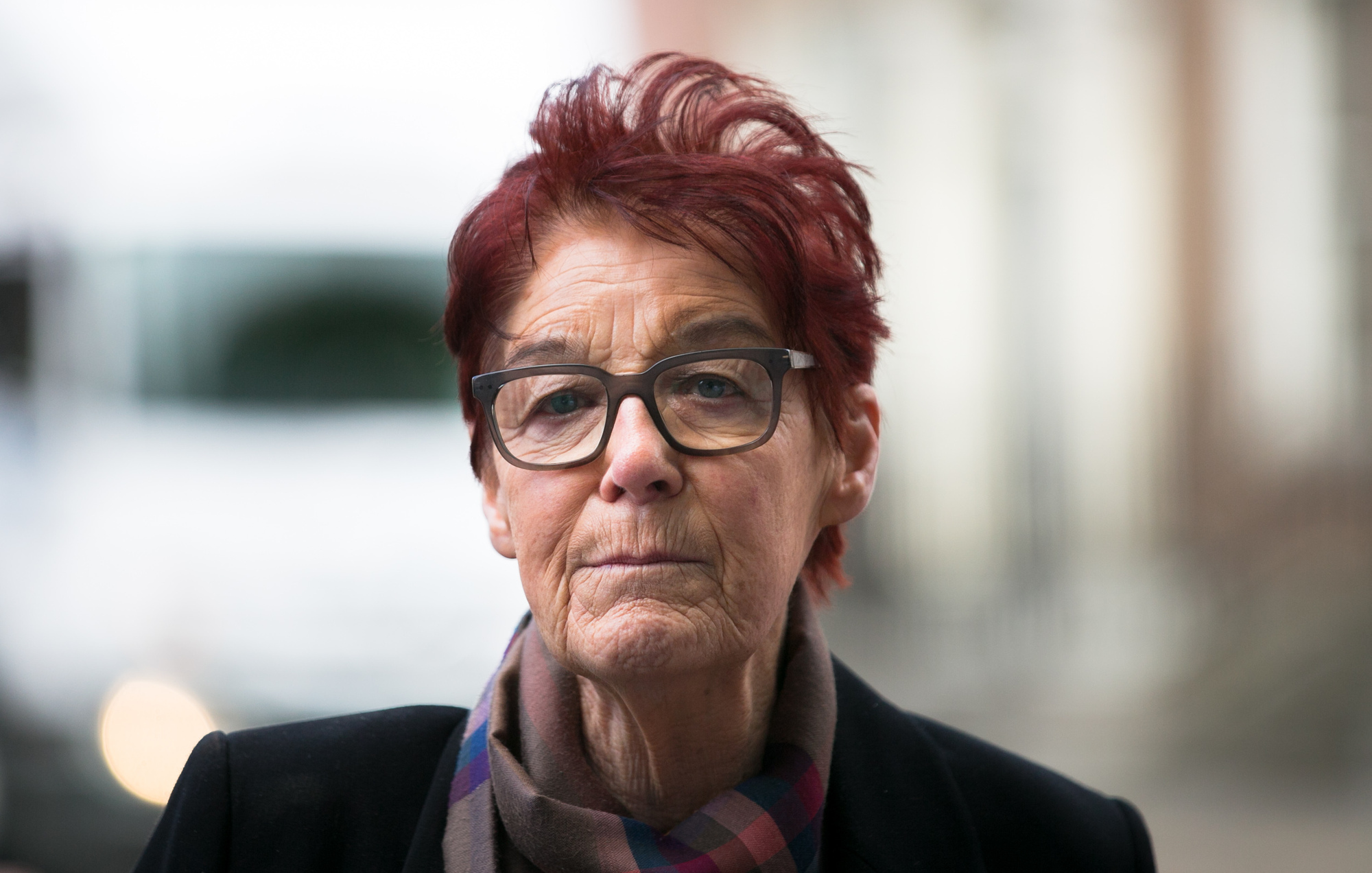
Ailbhe Smyth: 'We’re living on a small island together. It’s important that we cross that border, either virtually or in person, to make it easier to build trust and understanding and liking.' Picture: Gareth Chaney/Collins

Calls have been made for governments north and south to jointly tackle pervasive problems like poverty and violence against women after cross-border commonality was forged during an all-island women’s forum.

Taoiseach Micheál Martin will join the National Women’s Council (NWC) for the launch of the All-Island Women’s Forum report on Thursday.

The forum has addressed issues over the past year including violence against women, poverty, climate action, and the urban-rural divide. 

It also aims to address the under-representation of women in politics and to further develop women’s role in civic society.

Consisting of 28 members — 14 from the North and 14 from the South — the forum aims to build sustainable north-south links, providing a space for marginalised communities to build better understanding and inter-community links.

It has called for Governments north and south to make a joint commitment to developing an all-island approach to ending gender-based violence.

A joint north-south education scheme that encourages free movement and education exchange should be established to incentivise north-south exchanges, the forum found.

It also called for an all-island media partnership with adequate investment from State broadcasters, north and south, to increase women’s voices on issues.

Gender quotas were recommended for candidate selection in local elections, north and south, and for quotas at candidate selection for Assembly elections in Northern Ireland.

Forum member Tara Grace Connolly, who is the first Northern Ireland-born UN youth delegate for Ireland, told the forum that greater inclusion of Northern voices to Ireland’s Women, Peace and Security strategy is needed.

Hate crime legislation

The forum also heard evidence on the status of the hate crime legislation review in the North and the plan to introduce hate crime legislation in the South. 

Although misogyny is an ideology of hatred, it is not currently included in the legislation in Northern Ireland, but efforts are being made to add a protected characteristic of misogynist hate crime.

'Poverty as a Form of State Violence' was another area of focus. 

The forum heard women have fewer resources, less wealth, lower incomes, and greater unpaid care responsibilities, which limits their choices around paid work and greater reliance on low-paid and precarious work.

Research presented by Siobhan Harding to the forum confirmed the strong links between women’s poverty to child poverty and the long-term impacts of welfare reform such as universal credit. 

It found 23.8% of women are on low pay in Northern Ireland compared to 16% of men.

Karen Kiernan highlighted continuing structural barriers keeping mostly women who are mothers in poverty in Ireland and called for the strengthening of equality grounds in the review of equality legislation, including the addition of a socio-economic ground.

Ms Kiernan also called for a national child poverty action plan across government departments in addition to child-safety-centred family law reform, with appropriate out-of-court services, assessments, therapeutic supports, trained staff, and specialist courts. 

“If we know an experience, process or service is traumatising to people why would we keep doing it?” she asked.

Asylum seekers

Further structural barriers exist for migrants and asylum seekers with immigration restrictions, such as no recourse to public funds, and the low level of financial support provided, placing vulnerable women at high risk of destitution and unsafe relationships.

Kendall Bousquet presented stark insights to the forum on the connection between poverty and immigration status.

“Asylum seekers are confined to poverty since the majority are barred from working,” she said.

“One-quarter of destitute asylum seeker women in the UK reported being raped or sexually assaulted while rough sleeping or sleeping in other people’s homes. With reporting rates remaining extremely low”.

The forum noted there was an information gap in what rights asylum seekers have in Ireland, north and south, and that the systems in place in both jurisdictions place asylum seekers at high risk of poverty and sexual exploitation.

Rural women

It also examined the plight of rural women.

In Ireland, just over 30% of the population lives rurally. 

In the North, rural women account for over 20% of the Northern Irish population, yet they receive just 1.3% of government funding distributed to women in the region.

Paula McAliskey said resourcing in Northern Ireland still tended to be urban-centric. 

But rural women traditionally bear most of the caring responsibilities, which often isolates women from participating fully in social, economic, and community-based activities. 

Lack of public transport is a further burden on rural women, pushing families further down the poverty line due to the rising cost of fuel, and creating challenges in terms of accessing public services including healthcare.

Elaine Crory: 'There’s a lot that we have in common'

Elaine Crory.
Elaine Crory.

Elaine Crory, good relations co-ordinator with Women's Resource & Development Agency, in the North, took part in the forum.

“It’s the kind of opportunity you don’t pass up,” Ms Crory said.

“We’re usually working so hard and so fast that we don’t have time to look around us. 

"So having something that allows you to look around you at other people working in similar fields in other parts of the island and learn from them and share your learnings with them is just so valuable. 

"We need to see more of that in the voluntary sector.

“There’s a lot that we have in common, that’s my biggest learning in a nutshell.

“There are differences obviously, different challenges, different legislative backgrounds, different environments, but there is also an awful lot we share in common.

“A lot of the work I do is on violence against women and girls, we have a different legislative landscape and a different set of support organisations in Northern Ireland to the Republic. But we share the same cultural atmosphere. 

"So it was so valuable to learn from other people doing this work here and in the Republic. 

"To pool our resources in terms of our ideas, our learnings and our thoughts.

“We’re behind the Republic and the UK in terms of violence against women and girls. 

"We’re only now putting together our violence against women and girls strategy. 

"We’ve been slow to get certain things off the ground, usually due to other things taking priority — that itself tells a story in terms of priorities. But we can learn what has and hasn’t worked elsewhere.” 

Conversely, Ireland can learn from the North’s experience with hate crime legislation, which the South is still working to introduce.

Violence against women and girls throughout the pandemic has been “horrendous” across the island, she said.

Northern Ireland and Bulgaria share the horrifying title of having the joint highest number of women and girls murdered during the pandemic in Europe.

The North also has the lowest conviction rate for rape of adults across the two islands of Ireland and the UK, Ms Crory said.

The Gillen Review into the law and procedures in serious sexual offences in the North has made more than 290 recommendations to improve that landscape.

And efforts are now being worked on collectively to tackle the scourge of sexual violence which gives Ms Crory hope.

The learnings and inter-relationships forged through the All-Ireland Women’s Forum also gives her hope for a brighter, safer future.

Some organisations have continued to collaborate since formal forum meetings ended and ideas are being germinated across the border in both directions.

“I do some work with Disability Action Northern Ireland around violence against disabled women specifically,” she said.

“They’re just starting into this piece of work now because they have not had resources to do it until now.

“But from the forum, I learned about a disability advocacy service that exists in the south and I’m going to be speaking more to Disability Action Northern Ireland to look at setting something like that up, because it’s specifically about disabled women, distinct from the disabled community as a whole, and the specific challenges disabled women face.

“Sometimes, you have to see it before it occurs to you that yes, it’s a wonderful idea. It’s the kind of thing we hope will bear fruit in the next couple of years.”

Ailbhe Smyth: 'Women do so much of the heavy lifting'

Deepening understanding, fostering ties and sharing information between women’s groups north and south are valuable outcomes for Ailbhe Smyth.

The feminist activist and academic facilitated a monthly Encounters programme, running parallel to the forum, where grassroots groups in the North were paired with similar groups in the South.

“Women would take stock of what was going on across the border in their areas and get to know one another,” Ms Smyth said.

“It was about deepening the understanding of the kind of activities and community-focused work that women on both sides of the border are doing.” 

Domestic violence, peace-building, LGBTQI, and various community groups from the North were paired with other groups from the South.

It sometimes led to the groups sharing resources and deciding to work on projects together.

“What struck me the most is that north and south, women do so much of the heavy lifting in our communities,” Ms Smyth said.

“It was not about the politics of the island but the politics of women.

“We’re living on a small island together. It’s important that we cross that border, either virtually or in person, to make it easier to build trust and understanding and liking.” 

The cost-of-living crisis was a major focus for groups both north and south of the border, she said.

“The groups were all deeply anxious about the future for their communities.

“They’re very concerned about what will happen to people, particularly those most disadvantaged and on the margins. Where is the funding going to come from in already very stretched budgets? Everyone said there was not enough funding for community work, that was the cry across the board.” 

Lack of recognition of women's work and lack of representation in high-level decision-making were also identified as major problems.

“It’s really important for women to move into politics.

“Women carry a heavy burden for the wellbeing of our communities and have a very strong sense that it not adequately recognised; that women don’t have adequate representation at all and that funding is not adequate.” 

But the forum is an important way to strengthen women’s groups so that collectively, they can demand change, Ms Smyth said.

“It helps women to become more determined and better able to articulate our demands and put them on the table. It builds strength and confidence the more grassroots organisations can work together and understand that these are common problems across the whole island.” 

Ms Smyth said securing funding for another year for the project was vital if the good work of the forum was to continue.

More in this section

Lunchtime News

Newsletter

Keep up with stories of the day with our lunchtime news wrap and important breaking news alerts.

Cookie Policy Privacy Policy Brand Safety FAQ Help Contact Us Terms and Conditions

© Examiner Echo Group Limited