Government told new emergency consultant posts must be accompanied by more beds

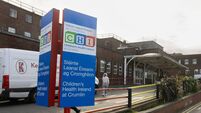
'The most significant problem currently affecting clinical care in emergency departments is the inability of a patient who requires hospital admission to be provided with a hospital bed in a timely fashion, resulting in unacceptable levels of ED crowding.' Picture: Larry Cummins
A proposal to fund 50 new emergency medicine consultants is welcome but will not address overcrowding on its own unless extra beds are urgently funded in parallel.
That is according to the Irish Association of Emergency Medicine (IAEM) which represents consultants working in emergency medicine here.
It recently emerged that Health Minister Stephen Donnelly plans a 40% increase in the number of these consultants within months, with plans for at least doubling the numbers over following years.
“The most significant problem currently affecting clinical care in emergency departments [EDs] is the inability of a patient who requires hospital admission to be provided with a hospital bed in a timely fashion, resulting in unacceptable levels of ED crowding with inpatient boarders,” the IAEM said.
“As welcome as this initiative may therefore be, the appointment of additional consultants in emergency medicine will not address this issue.”
They urged that the funding of extra hospital beds be urgently allocated in parallel with this measure.
“It is unfortunately but incontrovertibly true that crowded EDs and delays to hospital admission from the time of the decision to admit are each independent predictors of excess 14-day mortality,” they said.
A British study found for every 82 admitted patients who were delayed in getting a hospital bed more than six to eight hours from when they arrive at the ED, there is one extra death.
Published in the in January by NHS doctors, it found delays of more than five hours led to increases in all-cause 30-day mortality.
The IAEM said Ireland’s low hospital bed numbers impact on this as if there is no bed then patients remain in the ED on trolleys.
“These stark realities will only be addressed by the provision of the necessary acute bed capacity to bring Ireland’s acute bed stock from its currently paltry 2.7/1,000 of the population to the OECD [Organisation for Economic Co-operation and Development] average of 4.3/1,000 population,” it said.
The IAEM welcomed the announcement of funding for 50 new posts, particularly the suggestion that further posts would be funded in the future. It said this would allow scope for the national training scheme to train new doctors into emergency medicine.
It has been estimated there could be as many as 800 consultants posts either vacant or filled on a temporary basis across all types of hospital consultants roles.
The IAEM said the salary inequities leading to this growing number of vacancies could also impede plans to improve access to emergency medicine unless addressed.
“In an environment in which there are currently many hundreds of consultant posts vacant nationally because of the very significant disparity in pay between established consultants and those appointed since 2012, this worthy initiative may fail unless this salary inequality, which makes consultant posts in Ireland particularly unattractive compared with elsewhere in the developed world, is addressed, and addressed urgently,” it said.
CONNECT WITH US TODAY



Be the first to know the latest news and updates