ABP granted permission for houses on land on which no vacant sites levy paid since 2017
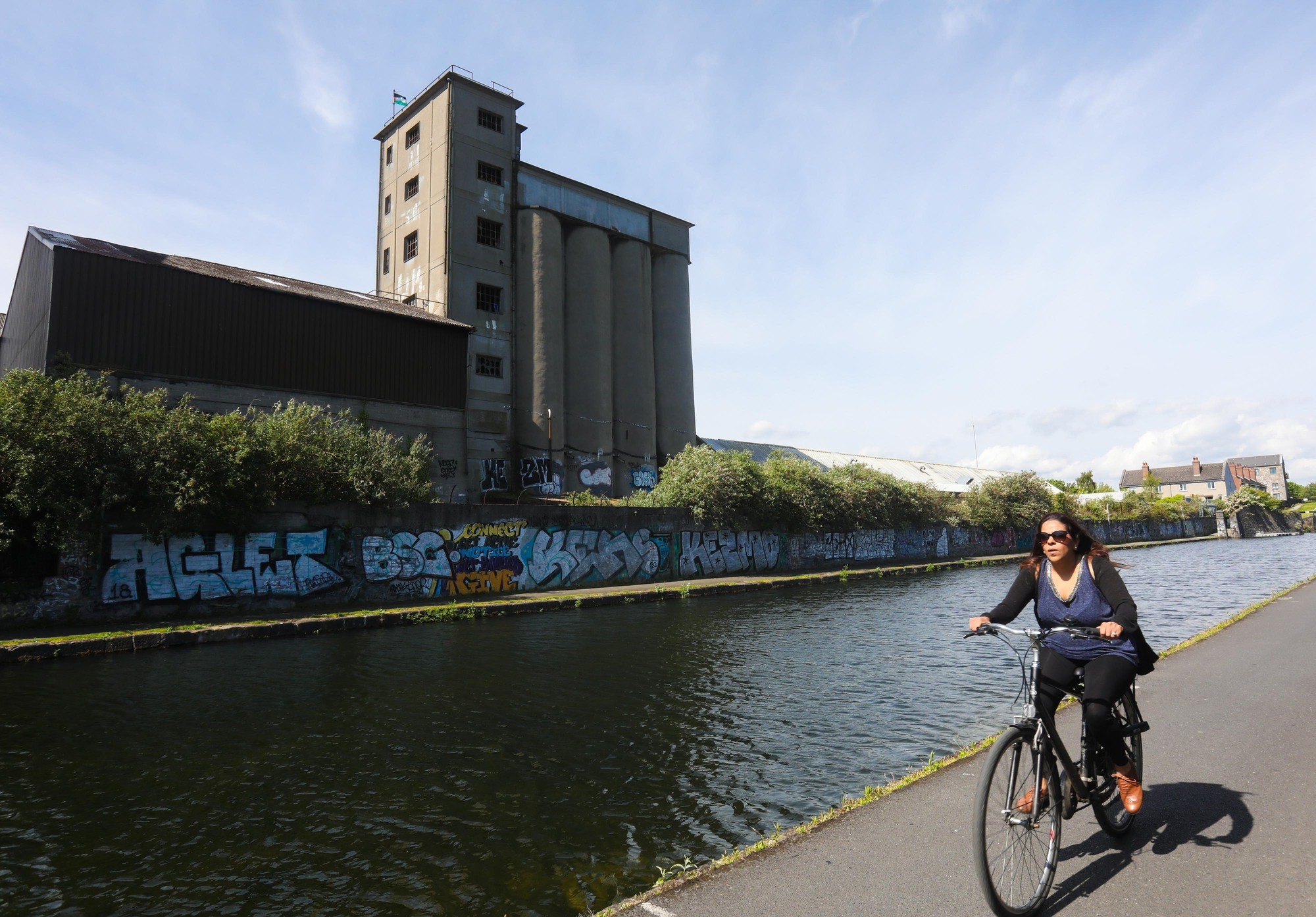
The Old Bakery Site at Cross Guns Bridge in Phibsborough, Dublin Picture: Leah Farrell / RollingNews.ie
An Bord Pleanála granted permission for a strategic housing development (SHD) in Dublin, on a property which has been on the vacant sites register since 2017, with no levy having yet been paid.
The planning authority granted planning for a SHD in May 2021, approved by then deputy chair Paul Hyde, for 205 build-to-rent apartments at the €7.2 million-valued Old Bakery Site in Phibsborough.
However, that land has been on Dublin City Council’s vacant property list since November, 2017.
The developer, Bindford Limited, launched a judicial review against Dublin City Council about the decision to place the property on the vacant site list the following July.
That case was last heard in March, 2020 and remains outstanding.
Dublin City Council has since confirmed that no vacant sites levies are collected while a judicial review — a legal challenge to the integrity in law of decisions made by State bodies or authorities — remains live.
Since 2017, all local authorities have been required to maintain a vacant sites register, for properties suitable for housing but which have not been put forward for development, with levies on those lands payable a year in arrears.
The vacant site levy was charged at 3% of market value prior to 2019, and at 7% thereafter.
The Old Bakery Site was valued as being worth €7.2 million in April 2021. Using that value as a proxy, it could amass levies of close to €3 million by the end of this year.
Dublin City Council had not responded to a request for comment regarding the judicial review — specifically as to whether or not vacant site levies are paid on a cumulative basis if they have been deferred by a legal action which subsequently fails — at the time of publication.
Bindford likewise did not reply to a request for comment on the matter.
The Old Bakery SHD is itself the subject of a judicial review dating from 2021 taken by a number of local residents’ groups, who have argued that An Bord Pleanála's decision should be quashed on various grounds, including that it would allegedly contravene urban building height requirements, and that the board had allegedly failed to identify a basis to conclude that the proposed development was of strategic importance.
The site remains undeveloped at present, 14 months after permission was granted.
It is as yet unclear on what basis Bindford’s judicial review was taken against the vacant site decision.
A common trait of many such objections will be a developer’s attempt to show that a site, while undeveloped, is nevertheless being used for a specific purpose.
Strategic Housing Developments were first introduced as part of the then Government’s Rebuilding Ireland housing plan in late 2017, with a view to fast-tracking residential development by bypassing the local authority planning system.
However, the system has become bedevilled by legal issues which have seen nearly one in five of the 496 SHD applications to date cited for judicial review.
Of the 93 cases taken to date, An Bord Pleanála has lost 32 of 35 cases decided in the High Court.
Those statistics have seen the board's legal costs balloon to roughly €8 million per annum in recent years, fully one third of its budget.
The SHD system is currently in the process of being phased out. The Government meanwhile recently passed legislation by guillotine to make access to judicial review more difficult for objectors to planning decisions.