Number of life-saving first responder teams drops by more than a third post-pandemic
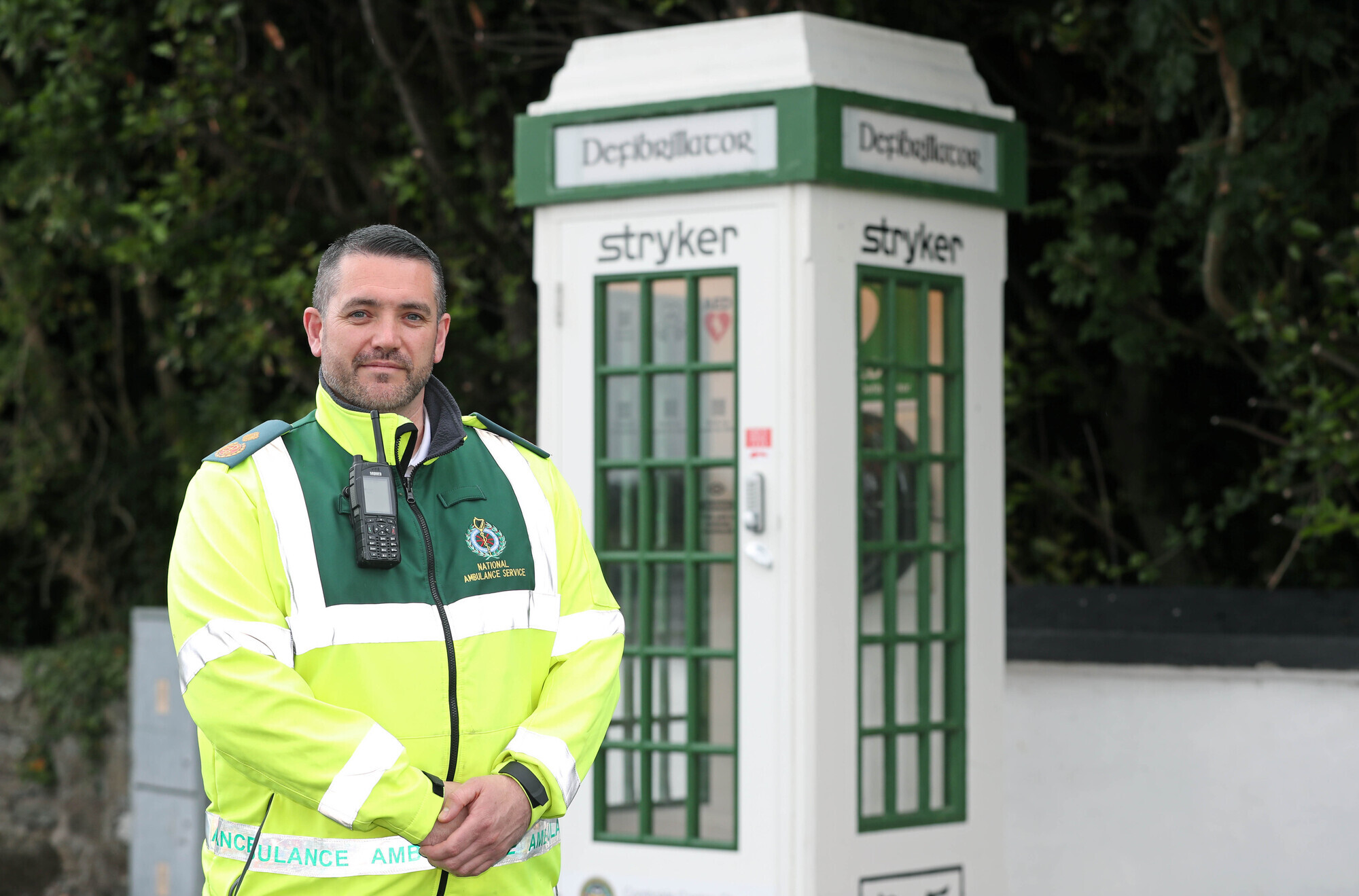
Ger O'Dea, National Ambulance Service community engagement manager: 'We really rely then on the first responders to get there quicker because they don’t have to travel the same distance. It really important in rural settings.' Picture: Jim Coughlan
The number of life-saving volunteer teams answering emergency heart attack calls has dropped from 275 before the pandemic to just 170 now.
There has been an urgent call for volunteers to get involved once more.
Community first responder teams were stood down in March 2020 to help limit the spread of the virus. Almost two and half years later, many have not yet returned to action due to a shortage of volunteers around the country, the National Ambulance Service (NAS) said.
These trained volunteers are often the first on the scene to a heart-attack call, with the potential to save lives by using community defibrillators before an ambulance arrives.
The teams have been returning to this crucial work since December 2020 and have answered more than 3,000 emergency calls in that time, NAS figures show.
Ger O’Dea, the Cork man who is national community engagement manager for the ambulance service, said they are fully trained before going into action.
“They might be in the right place at the right time and be there within a minute or two,” he said.
“That is really important for the patient because for every minute that goes by the chances of survival drop by 10%. That is every minute without CPR and a defibrillator, the chances drop by 10% after a cardiac incident.”
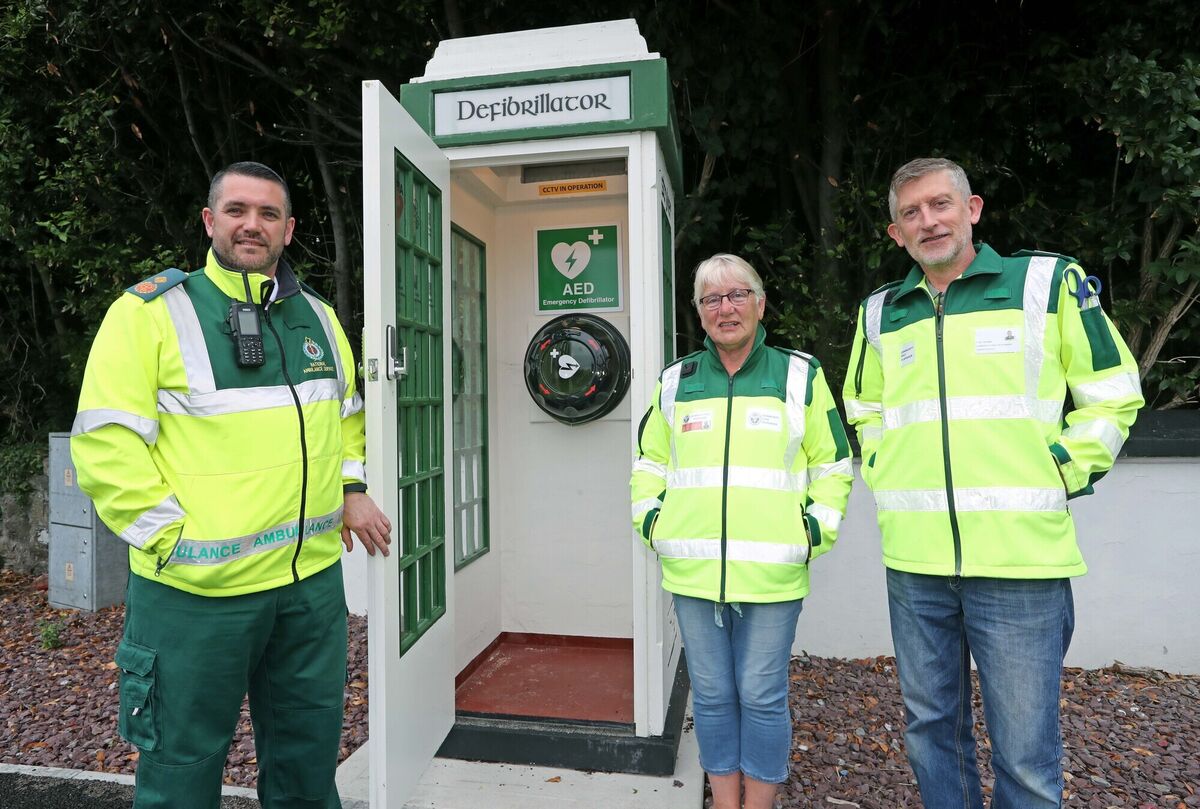
When an emergency call is made following a cardiac arrest, the NAS computer system checks whether there is a community scheme nearby. If there is, then an automated text message is sent to members of that group as well as the ambulance call-out.
“The idea is they do drop everything if they are available, and they will respond alongside the ambulance,” he said.
He pointed to the community scheme in Timoleague village in West Cork, a popular tourist destination, as an example. He said this could be vital, as the nearest available ambulance could be in Cork City or Skibbereen, both about 40 minutes away.
Volunteers might arrive wearing jeans or pyjamas under their regulation ambulance jacket, he said, having come straight from their home day or night.
There are up to 10,000 community defibrillators in Ireland, according to the Irish Red Cross. There are currently 170 community first responder schemes running, with 80 more teams in training or preparation.
Some cover densely populated areas like Cork City, while others are more localised, with volunteers on all teams coming from a mix of backgrounds.
“You’d have everyone from someone who has never done CPR before, who has witnessed a cardiac arrest and they want to do their bit and help,” Mr O'Dea said.
“You’d also then have people who do have a medical or emergency background — firemen, nurses, guards, doctors would sign up to it. Generally, the population who become involved are the ordinary members of the community.”
More information on becoming a community first responder is available here.
CONNECT WITH US TODAY



Be the first to know the latest news and updates