Families of children waiting for heart transplant appeal for donors
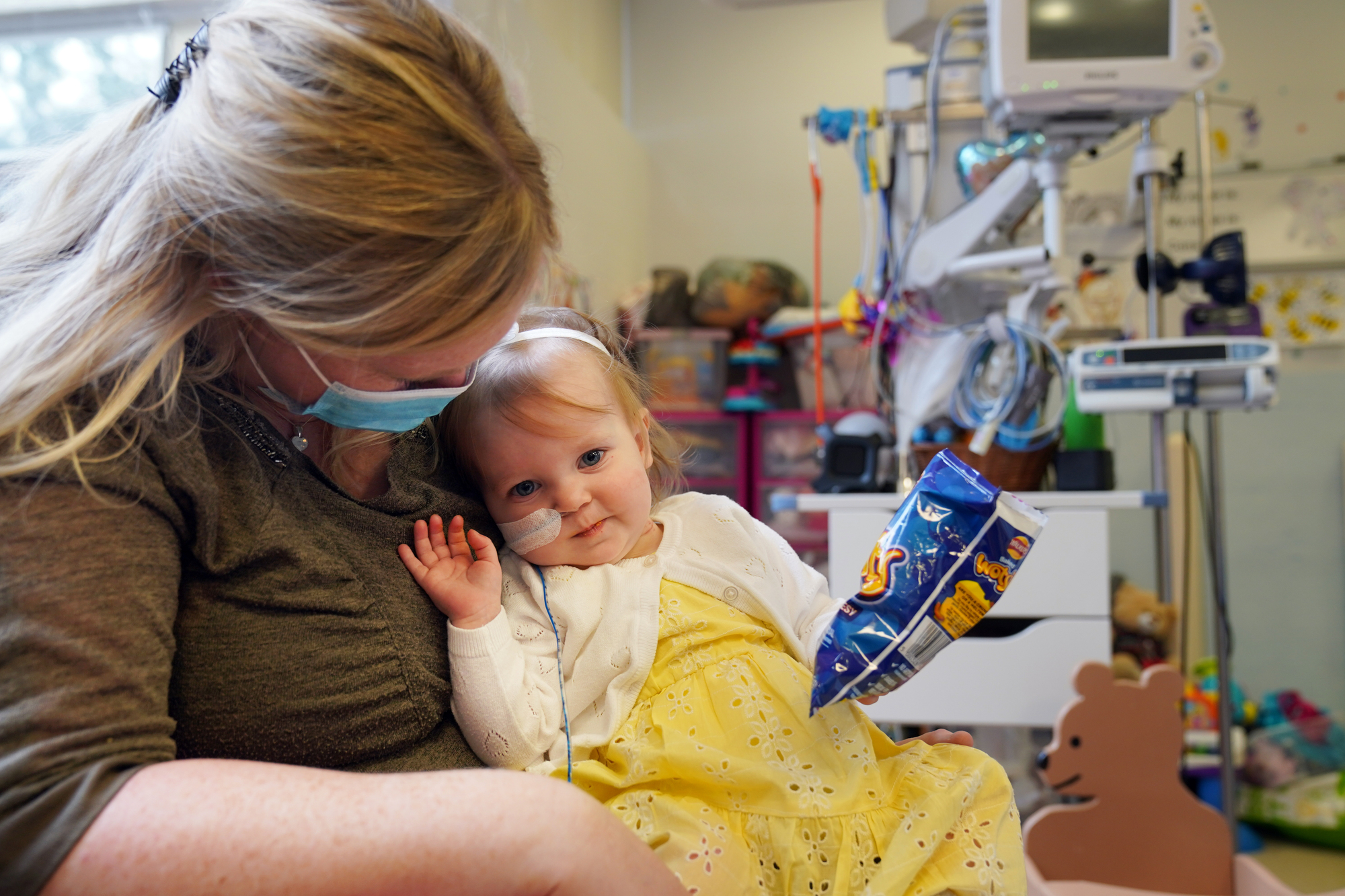
The families of five children waiting for a heart transplant have joined together to ask people to consider becoming organ donors.
Since the pandemic the number of available organs has dropped, leading to extremely poorly children waiting even longer for a life-saving operation.
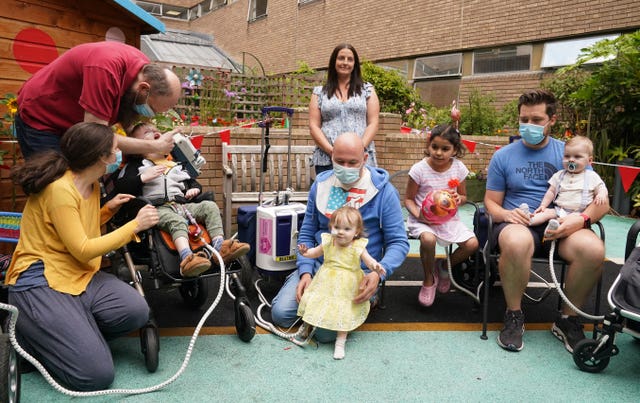
Ward 23 of the Freeman Hospital in Newcastle is home to Leyla Bell, 10 months, Beatrix Adamson-Archbold, 18 months, Luke Myles, one, Ethan Mains, three, and Nour Hussein, eight.
They are kept alive with portable blood pumps but cannot leave the hospital for long and rarely go outside.
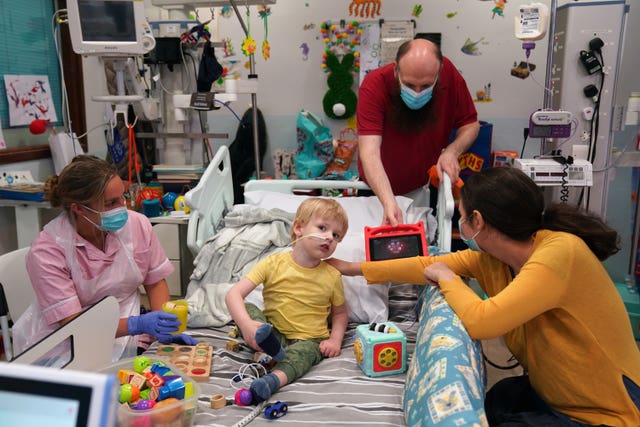
All five urgently need a new heart and their parents have made a joint appeal for more people to sign up to become a donor in the event of their own death.
Ethan’s father Stuart Mains, from Glasgow, said: “Organ donation is such an abstract thing you never really think about it until you need to.
“I hope we can bring a little bit of human connection.
“It is a horrific situation, and I wouldn’t wish it on anybody, all we can ask is that anyone who finds themselves faced with this decision gives it a little consideration and thought.”
The Freeman Hospital is a specialist centre for heart operations. It said around 48 children in the UK currently need a new heart, with hundreds more waiting for other organs.
Many of them require a heart from a young donor, and NHS Blood and Transplant said around 55% of families who suffer the death of someone under 18 agree to a donation – a figure the organisation hopes will rise.
Leyla is in paediatric intensive care, and her mother Savana, from Heywood, Greater Manchester, has been a registered donor since she was 16, and is aware that another child needs to die for her daughter to get a heart.
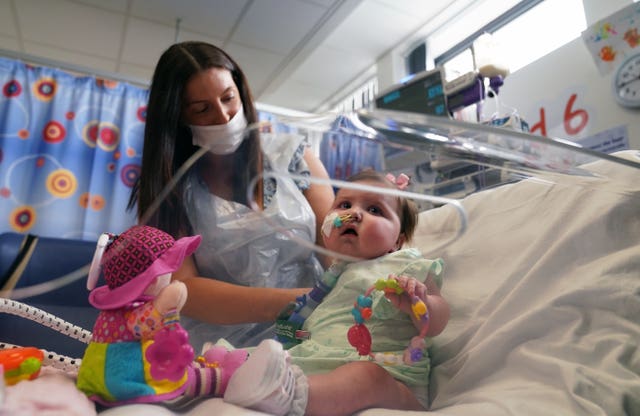
She said: “I wish there was another way but there isn’t, and I can understand why some people say no as they are being asked to donate an organ at the worst time in their lives; when they’ve been told they will never see their child awake again.
“I’d just hope they’d take solace in the fact that their child lives on in someone else.
“All we are asking is for people to have that conversation.
“If you asked 1,000 people, would they accept an organ if they needed it, they would because they want to live – and that’s all we want to do, I want to give my daughter that chance too.”
Luke has just had his first birthday in hospital and his parents Cillian and Lesha, from Galway, Ireland, said: “We all need to remind ourselves every day how incredibly lucky we are to be alive and healthy.
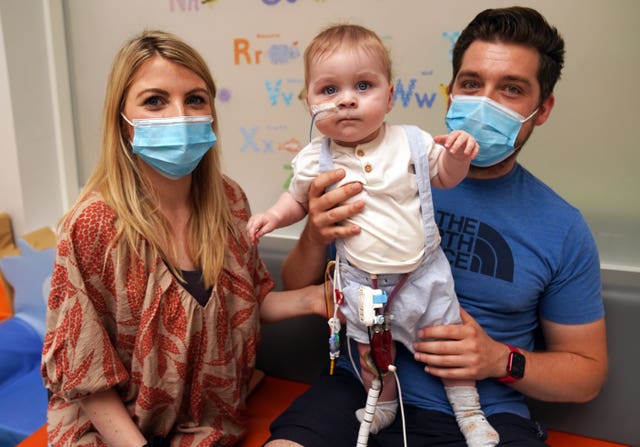
“We know that every single parent in our situation would make the decision to be an organ donor and would donate their child’s organs in that most awful and unthinkable situation.”
Children on the urgent list for a heart transplant wait, on average, two and a half times longer than adults – around 91 days rather than 35 days.
For many of the Freeman families, it has been much longer.
Nour’s father Ammar, from Manchester, said: “When we first arrived, I don’t think we understood just how long this process could be.
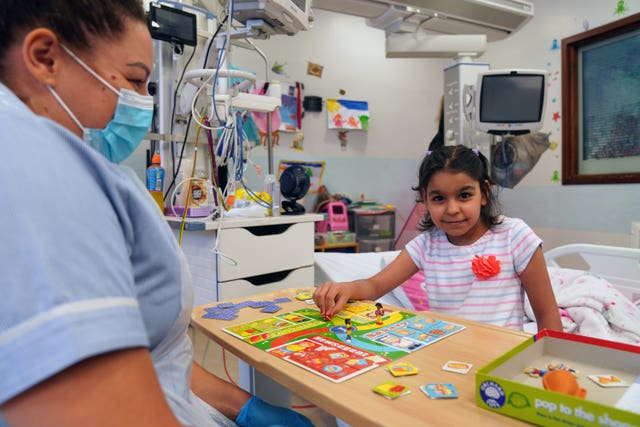
“We thought we wouldn’t be here too long, but it was a big shock to hear about families who have waited one or two years for a donor to become available.
“Now we know we could have a really long wait ahead of us.”
Beatrix has been in hospital since May and her parents, Terry and Cheryl, from Burnopfield, County Durham, in particular know what a huge step donation can be.
They agreed to donate their daughter Isabel’s heart to research in 2018 after she was stillborn with a defect in the left side of her heart.
“The sense of grief I feel about Beatrix’s situation feels the same as the grief I felt for Isabel,” said Terry.
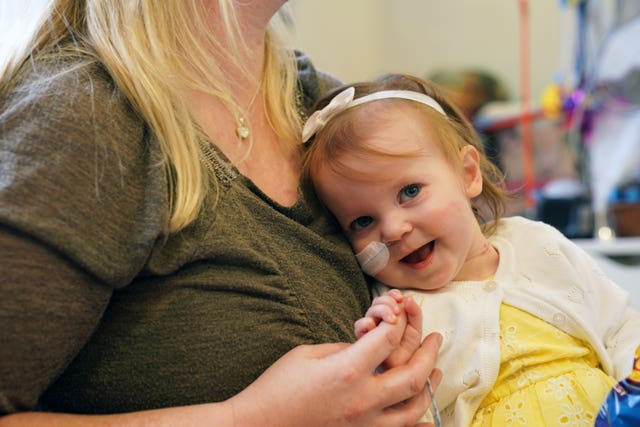
“We agreed for the organ donation to take place and we have taken comfort from that since.
“The reality is, without parents considering the unthinkable or choosing to donate in the midst of their own tragedy – without that, none of these children would have a chance at life.”
Paediatric intensive care consultant Emma Simpson said: “These are children who are kept alive by a blood pump.
“Without that blood pump they wouldn’t survive, they are completely dependent on this life-saving technology.
“It’s a very artificial way to live, it’s a very mechanical way to live.”
A Freeman spokeswoman said: “If you want to be an organ donor after you die, it’s really important that you talk to your loved ones and make sure they understand and support your organ donation decision.
“You can also register your decision on the NHS Organ Donor Register.”
To find out more about organ donation in the UK visit www.organdonation.nhs.uk/


CONNECT WITH US TODAY



Be the first to know the latest news and updates