Climate change brings Europe its second-warmest June on record

A construction worker drinks water during a heatwave in Seville on June 13. Temperatures last month in Spain, France, and Italy soared above 40 degrees. Photo: Cristina Quicler/AFP
Europe experienced its second-warmest June on record this year amid extreme heatwaves across the continent due to “human-induced climate change”, a new report has said. Last month was colder and drier than usual in Ireland.
A report from the Copernicus Climate Change Service (C3S), which monitors weather patterns in the context of climate change for the European Commission, analysed the frequent heatwaves and unusual weather patterns experienced last month.
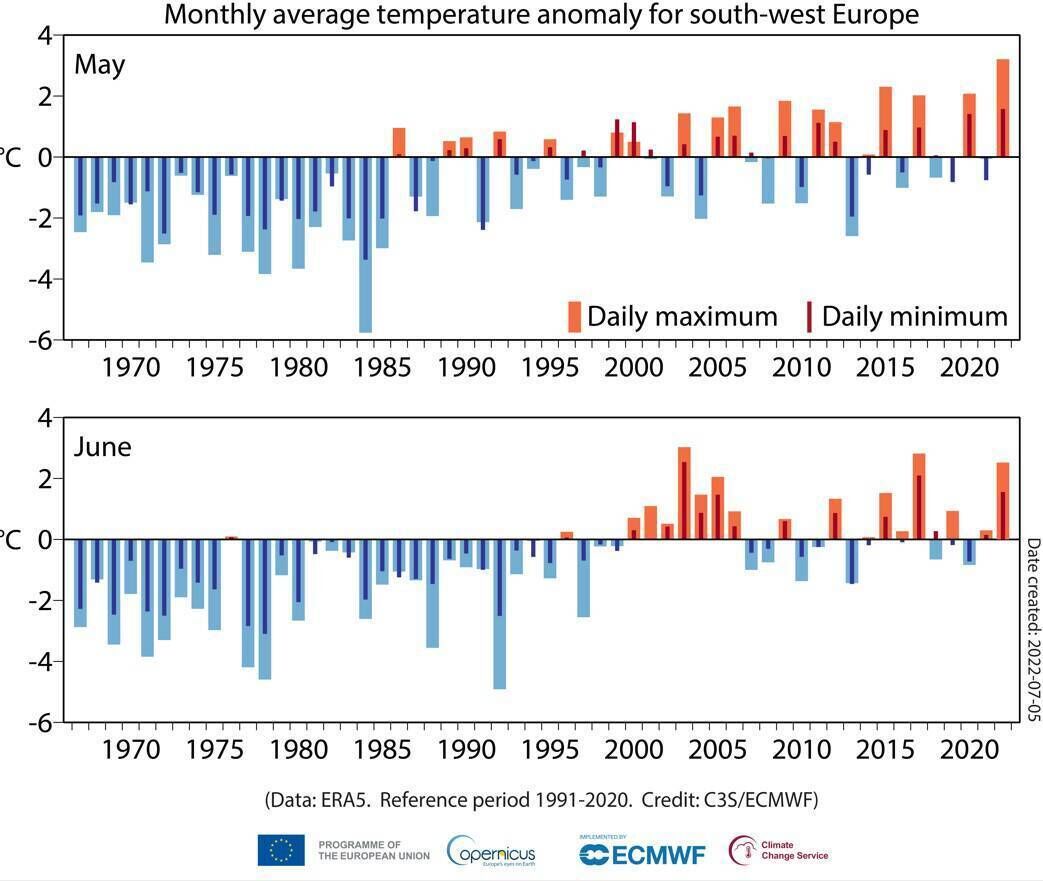
It was the third-warmest June this year for southwest Europe, only beaten by longer spells of hot weather in 2003 and 2017.
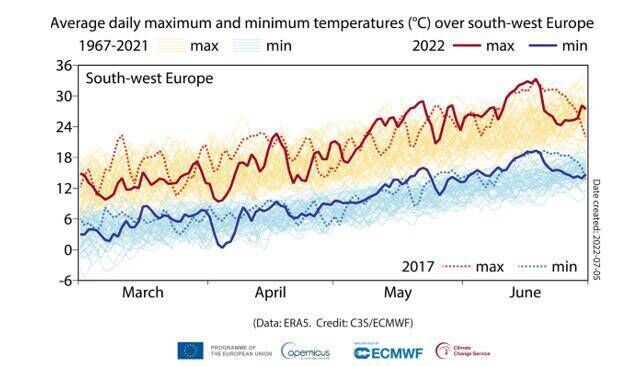
Temperatures in Spain, France, and Italy soared above 40 degrees which exacerbated the ongoing drought conditions in the Italian Po river basin where conditions are affecting agriculture, energy management and river transport.
This heat also extended across North Africa, where Tunisia equalled its monthly temperature record.
Temperatures continue to rise globally due to climate change, making it the third-warmest June on record, 0.31 degrees higher than the 1991-2020 average. Long spells of exceptionally high temperatures were felt in northern parts of China and Japan where heatwaves broke local records.
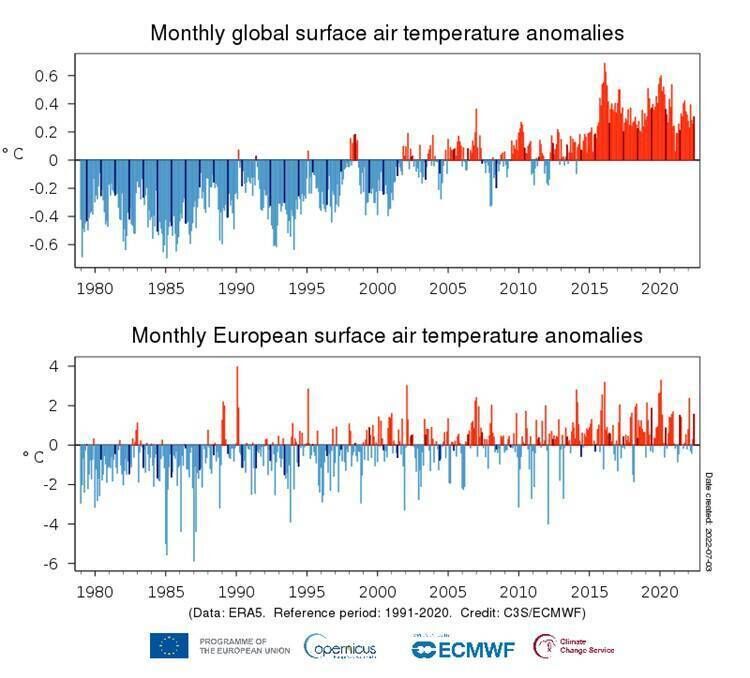
Although these heatwaves in parts of Europe and Asia are exceptional, these events are not unexpected, C3S said. There is an increase in “frequency and intensity of heatwaves” and this rise “can be attributed to human-induced climate change and is expected to continue in the future as the climate continues to warm globally”.
C3S warned heatwaves “can pose various risks to human health such as heat exhaustion, severe dehydration, and increased risks for persons affected by chronic illnesses”.
“Heatwaves similar to those observed this year are expected to become more frequent and severe in the years to come, both in Europe and further afield,” said Carlo Buontempo, director of the C3S. “It is especially important to make reliable data publicly available so that anyone could monitor these trends and better prepare for what is coming.”
Last month, a large part of Europe also experienced lower-than-average precipitation. The report said it was drier than average over most of the Iberian Peninsula, UK, and Ireland, from the northern Balkans across eastern Europe, over north-western Russia, and in Italy.
Global land-averaged relative humidity has decreased over the last 40 years and remained low since the early 2000s, the organisation said. Last month, global relative humidity was below the corresponding 1991-2020 average, showing the second-lowest value on record for the month of June.
The drying detected is not associated with a substantial reduction in precipitation, the report said, but is understood to be related to a larger rise in surface air temperature over land than over sea.
Colder-than-average temperatures were experienced in Ireland, western Russia, central Turkey, western areas of the Iberian Peninsula, Greenland and most of South America, the organisation said. Antarctic sea ice extent reached its lowest value for June in the 44-year satellite data record, at 9% below average, only just below June 2019.

CONNECT WITH US TODAY



Be the first to know the latest news and updates