Q&A: What is happening with the latest Covid treatments?
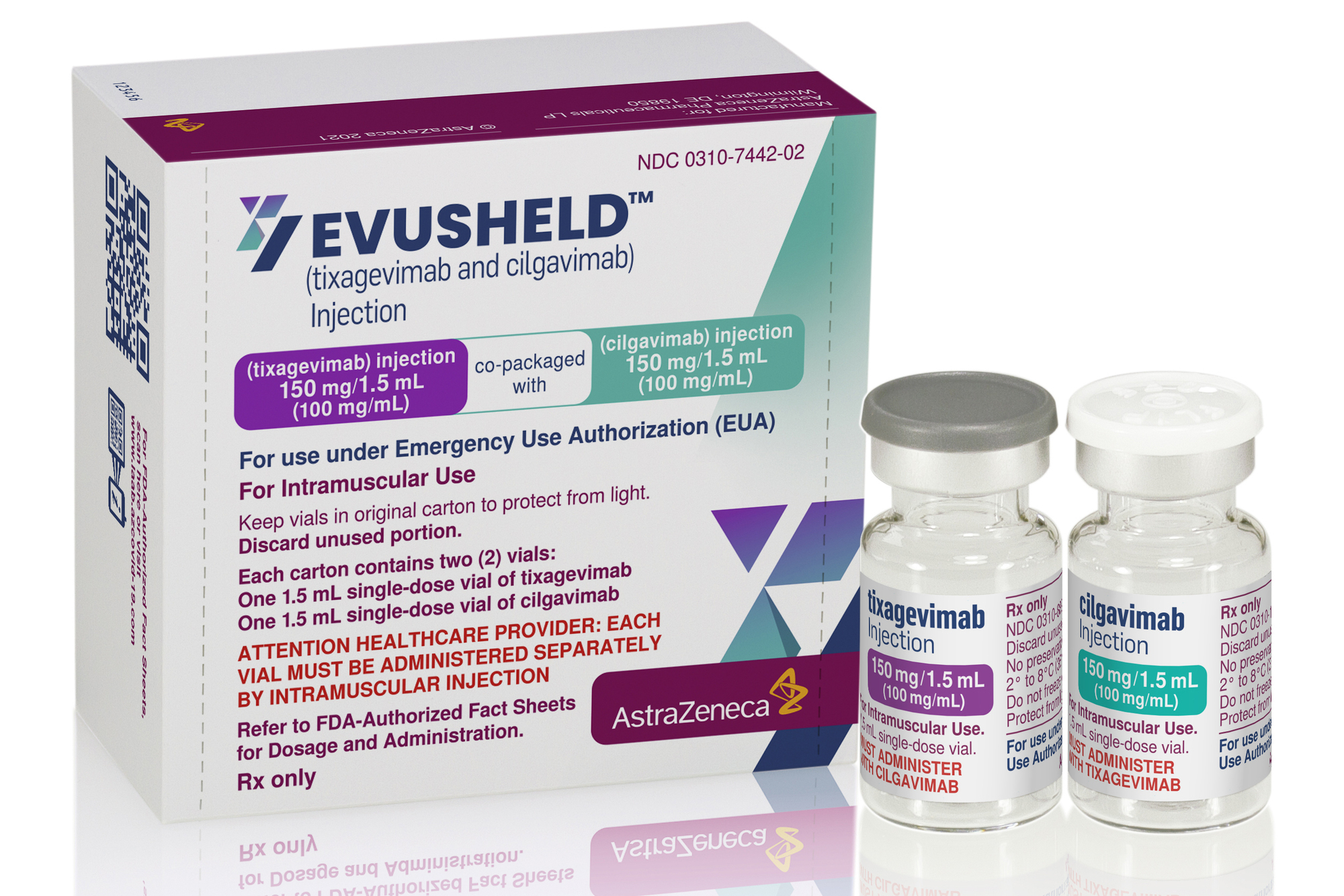
Trials show Evusheld can prevent Covid-19 infections even for immunocompromised people who did not get full protection from Covid-vaccines. Picture: AstraZeneca via AP
Treatment and even prevention of Covid-19 infection is updating rapidly now, with benefits for patients in Ireland.
About 5,000 doses were made available to hospitals in early April and now through GPs since Tuesday. They must be taken within five days of a positive test result to be most effective.
In Ireland, only unvaccinated adults at risk of severe Covid-19 infection and immunocompromised people can get these.
It is believed hospitals are applying this quite strictly and the is aware of one case where an elderly person was denied Paxlovid as their illnesses did not match the criteria, leading to a prolonged illness.
Patients who do qualify have been advised to make a list of medications as Paxlovid is contraindicated for a number of other relatively-common drugs.
This GSK-manufactured treatment was hailed with excitement earlier in the year despite needing to be given through a drip in a hospital. However, it has now proven less effective against Omicron variant BA2. Last week, the HSE’s Dr Colm Henry wrote to doctors advising: “it is now less helpful in the Irish context due to the prevalence of the BA.2 Omicron sub-variant”.
A separate HSE communication in recent days said it would focus more on Paxlovid instead. Only 681 doses of Sotrovimab have been given here.
Trials show this monoclonal antibody combination treatment can prevent Covid-19 infections even for immunocompromised people who did not get full protection from Covid-vaccines. It is being assessed for use in Ireland and is already used across the UK and some EU countries.
Manufacturer AstraZeneca said it was optimised to work differently to other antibody treatments.
“The half-life extension more than triples the durability of its action compared to conventional antibodies, with data from the PROVENT Phase III trial showing protection lasting at least six months,” said Dr Walid Kandeil, medical director for vaccine and infectious diseases with AZ Europe and Canada.
The HSE and Department of Health are working on a booster vaccination programme for over-65s and immunocompromised people aged over-12, following advice in early April.
This could start as soon as May, based on a six-month gap from the last booster round.