'Swamped' principals want extra posts to cater for influx of Ukrainian students

Schools will be unable to meet the challenges caused by the fallout from the pandemic and provide for an influx of Ukrainian students without additional school leadership posts, teachers have warned.
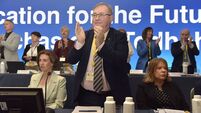
Principals and deputy principals are “already swamped by administrative and bureaucratic overload”, Michael Gillespie, general secretary of the Teachers’ Union of Ireland (TUI) told delegates at its annual congress in Wexford.
With large numbers of Ukrainian students expected to begin enrolling from next Monday as schools return after the Easter break, strategic planning for "larger numbers" in September is needed now, he said.Â
There are currently 2,000 Ukrainian students registered at primary school level, and 1,800 at post-primary.
A significant increase in the current schedule of posts of responsibility, which include principals, deputy principals, and assistant principals, is also “urgently needed".Â
“Without this, schools simply cannot meet the pastoral, administrative, and curriculum needs in our schools, not to mention the critical emergent needs — to deal with the fallout from the pandemic, to provide appropriately and generously for our new Ukrainian students.”Â
“Add to all of this, the demographic increase in numbers entering our schools which begets its own demands and the proposed reforms at Senior Cycle.”Â
Teachers will “pull out all the stops” to welcome students, Eamon Dennehy, president of the Association of Secondary Teachers Ireland (ASTI) told delegates in Cork.

John Boyle, general secretary of the Irish National Teachers Organisation (INTO), said primary school teachers would "work closely with your department to meet this challenge head on — to equip our schools, support our teachers and most of all, to help our new pupils."Â
Pay and the cost-of-living crisis dominated the agendas of the different annual teachers’ conferences, held for the first time in person since the beginning of the pandemic. Education Minister Norma Foley told delegates the Government is “strongly aware” of the cost of living challenges for society.
Addressing both the Irish National Teachers Organisation (INTO) in Killarney and the ASTI in Cork yesterday, she said she “looks forward to discussion and engagement around the table” with teachers campaigning for pay increases. The minister is due to address the TUI later on WednesdayÂ
Ms Foley promised resources would be put in place to meet the challenges posed by the war in Ukraine, akin to the €863m that was secured in additional funding for Covid measures over the last two years.Â
She said strategic planning for “potentially large numbers of children” that may arrive into Ireland has already commenced, to “fully leverage existing capacity in our public services to meet the needs of these people”. She said it is difficult to quantify the number of Ukrainian students that will enrol in Irish schools.Â
As the second day of the annual teachers’ union conferences gets under way on Wednesday, focus will turn to the Leaving Cert. Post-primary teachers are set to debate if they will engage with proposed Leaving Cert reforms, which will see teachers grading their own students.Â
A motion before the ASTI will call for the union to refuse to engage in any discussion on reform until a “full, open and transparent” study of the Junior Cycle has been conducted and its findings made public. At the TUI, a motion will call on its executive committee to see that implementation of the Leaving Cert reform is delayed due to the negative impact of Covid-19.