The US enforcement body with the Kinahans in its sights
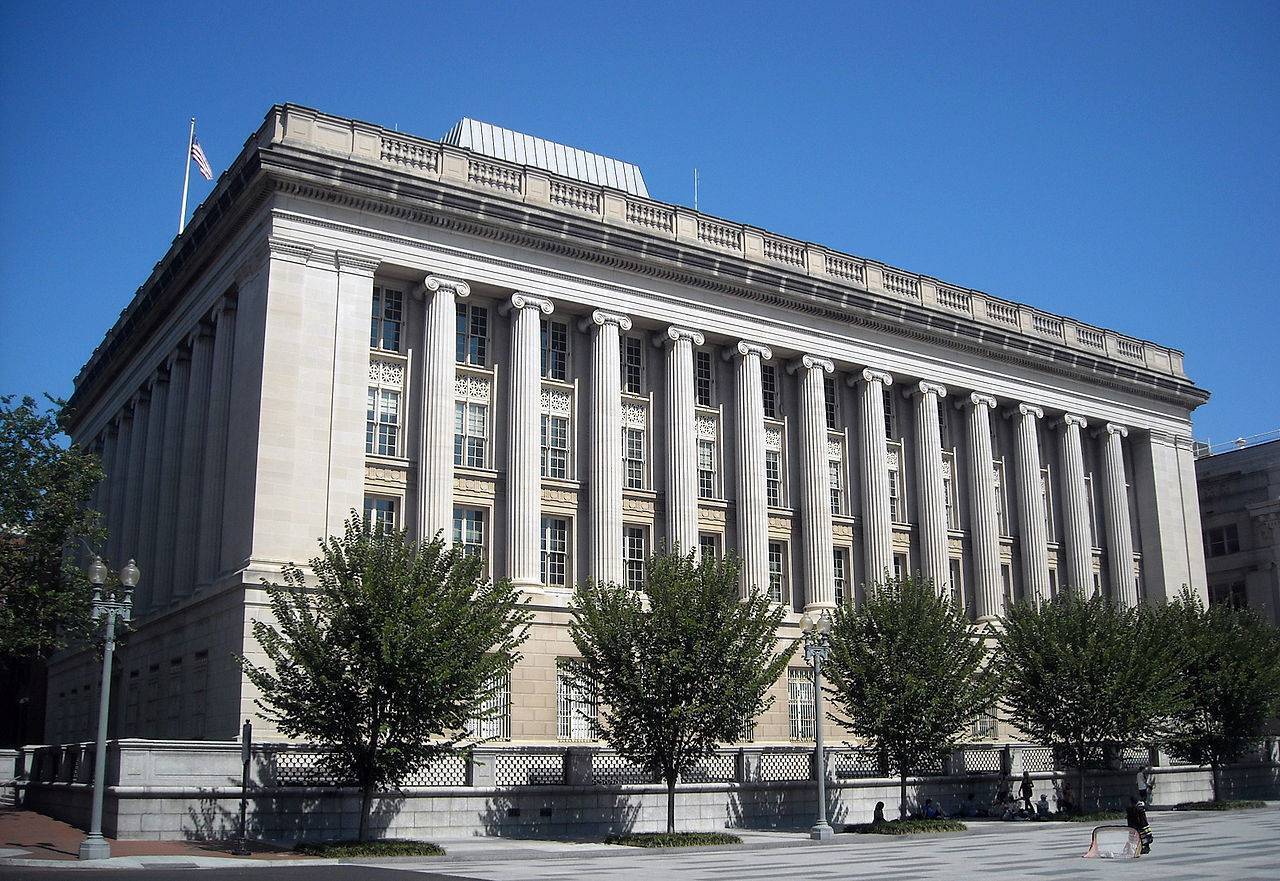
The Office of Foreign Assets Control, headquarters in Washington DC, enforces economic sanctions programmes aimed at stopping in its tracks any activity contrary to US foreign policy interests. File picture
In falling foul of the US Office of Foreign Assets Control (OFAC), the Kinahan cartel has made a powerful enemy. It will do well to survive this particular battle.
With blanket financial sanctions placed on seven of the notorious gang’s most prominent faces, including Christy Kinahan Sr and his son Daniel, together with a reward of up to $15m for the successful imprisonment of the duo and Daniel’s brother Christy Jr, a fire has been lit under the cartel, the sheer heat of which has taken most observers by surprise.
While the Kinahans are synonymous with organised crime in Ireland, perhaps most notoriously in terms of the cartel’s hideous feud with the Hutch family from 2016 onwards, until now the organisation had been seen as able to act with impunity, with its figureheads comfortably ensconced in the United Arab Emirates.
An Garda Síochána has been working diligently for five years to take down the organisation, and now it is clear it has the backing of OFAC to get its man.
Tuesday’s blow to the cartel (or organised crime group, as it has now been officially dubbed) represents stunning news for the public here.
While the vast majority of credit for the newly imposed sanctions rests with Assistant Commissioner John O’Driscoll and his team, it is now known that the involvement of OFAC with the gardaí dates back to the arrival of Drew Harris as Garda Commissioner in September 2018.
Commissioner Harris’s achievement in getting OFAC on board following a trip to Washington DC is one that will stand to his own legacy as Garda chief.
For while little is known about OFAC, certainly outside the US, the agency is a truly powerful one.
Set up in 1950 as the Division of Foreign Assets Control subordinate to the Department of the Treasury, the office enforces economic sanctions programmes aimed at stopping in its tracks any activity contrary to US foreign policy interests.
That includes countries (international sanctions announced by the US over the Ukraine war have all been processed via OFAC) and individuals, such as terrorists and drug traffickers. OFAC also has the power to ‘block’ property interests, so while the target will still own the land in question, they won’t be able to sell it.
The Kinahan cartel’s main spheres of operation are Ireland, the UK, and the US. Though the extent of its US cash and property interests aren’t fully known, they are likely significant given OFAC’s interest, and willingness to put a $5m bounty on three men’s heads.
Tuesday’s announcement saw a united front of the gardaí, Europol, and the UK’s National Crime Agency. But OFAC is the crown jewel. The agency, which has a staff of roughly 240, reportedly went through a period of serious staff attrition during Donald Trump’s presidency, on foot of that administration’s hostility towards the US public service, but Joe Biden’s tenure has been far more sanctions-friendly.
In sanctioning the seven Kinahan figures and three of their companies, OFAC has ensured that US financial institutions and companies will be blocked from doing business with any of those entities, while all property and assets the Kinahans have in the US can be blocked and frozen. Likewise, those sanctioned can no longer travel to the US.
These penalties put the Kinahans on a level with Cuba, North Korea, Russia, Venezuela, and Syria — entities all deemed toxic by the US.
It’s an unenviable position to be in, both in effect and in terms of reputational damage. Daniel Kinahan’s boxing interests, hitherto seemingly untouchable, may now finally start to feel the pinch of association with a man deemed an American national security threat.