'Treated like a servant, threatened with deportation': Ukrainian woman's host family experience
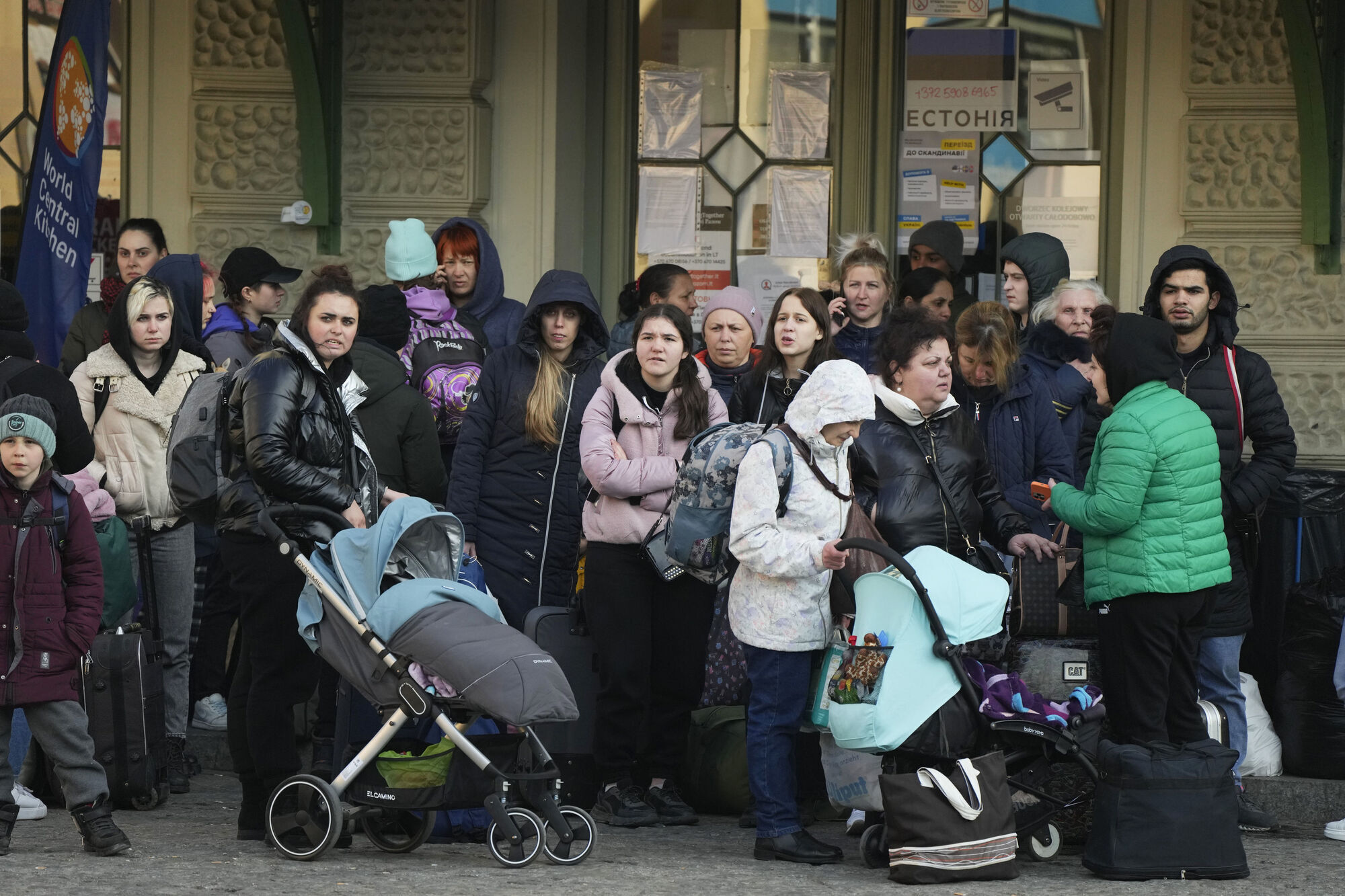
Refugees from Ukraine wait at a railway station in Przemysl, Poland. A Ukrainian woman has warned other refugees to use only official channels when sourcing accommodation in Ireland after a host family âexploitedâ her. Picture: Sergei Grits/AP
A Ukrainian woman has warned other refugees to use only official channels when sourcing accommodation in Ireland after a host family âexploitedâ her and threatened to have her deported after witnessing a violent row in their home.
The warning comes as the Irish Red Cross said it is carrying out a significant body of work in conjunction with other agencies to assess almost 23,000 applications it has received to help to house Ukrainians in Ireland.

The woman, in her late 30s, said she left her home town, just outside Kyiv, late last month, soon after the Russian invasion.
She chose to come to Ireland with her daughter, 7, as she speaks good English and was hoping to find work, but was forced to leave behind her husband, mother, and much of her family.Â
The woman and her daughter made it to her host familyâs house in the west of Ireland a few days before St Patrickâs Day. She told the that she met the mother of the host family through a Facebook group and accepted her offer of accommodation, as she was told there were long delays in accessing housing through the Red Cross.
âShe seemed very kind,â the woman said. "Told me she would be very happy for us to stay. I told her I would not be able to pay for rent until I got work and she said that it was okay, that my safety and my daughterâs safety were important.â
The host family included a couple and their two young boys. The Ukrainian woman said that, shortly after she arrived, the mother began asking her to help around the house, which she was happy to do.
However, she said the requests for help quickly turned into orders and she felt less like a guest and more like a servant.
âAt first she would say âcan you help me with this?â and I would. But, later, she would just tell me to âgo clean the windowsâ or âgo cook dinnerâ.
âOne day, I had been with her two children all day when she came home and started shouting that the house was very unclean.Â
The situation deteriorated when the host couple had a violent row one evening.
âIt was very upsetting,â said the woman. âAll the children were crying. My daughter asked me if we could go home. I was scared because we were in the countryside. I had no transport and it was a long way to the town.â
Following this incident, the Ukrainian woman contacted a friend, also from Ukraine, who was living nearby.
Once she explained what she had witnessed, her friend insisted the woman and her daughter come and join them. The host she was staying with was an elderly woman who had an extra room and was willing to accommodate them.
âWhen I told the mother of the home that I wanted to leave, she became upset,â she said. âShe said that I didnât understand and couples have fights in Ireland, that it was normal.
âI told her it was too upsetting for my daughter.
âWhen I told her I was certain, she started shouting.Â
âFor people coming here, please go through the right agencies, like the Red Cross. They can help you. Most Irish people are the kindest in the world and I am so grateful for their help, but a very few are not so kind.
âYou donât want to end up somewhere where you are not safe.â
An Irish Red Cross spokesperson said vacant properties are being prioritised for evaluation. For shared accommodation, where people offer parts of their homes for refugees, Garda vetting is also being conducted for those who register through the Red Cross portal. This takes up to seven days.
With roughly 23,000 pledges in just a few weeks, this represents a significant scaling-up of resources compared to the pledges made for Syrian refugees just a few years ago. The Irish Red Cross said it took three months to receive 1,000 pledges at that time.
If people take in refugees outside of this process, the State and Irish Red Cross may be unaware of where these refugees are and unable to provide supports.
The spokesperson added that all applications will be assessed and work is ongoing to house the Ukrainians who have already arrived in Ireland.