How Ireland is scrambling to do all it can to support Ukrainian refugees
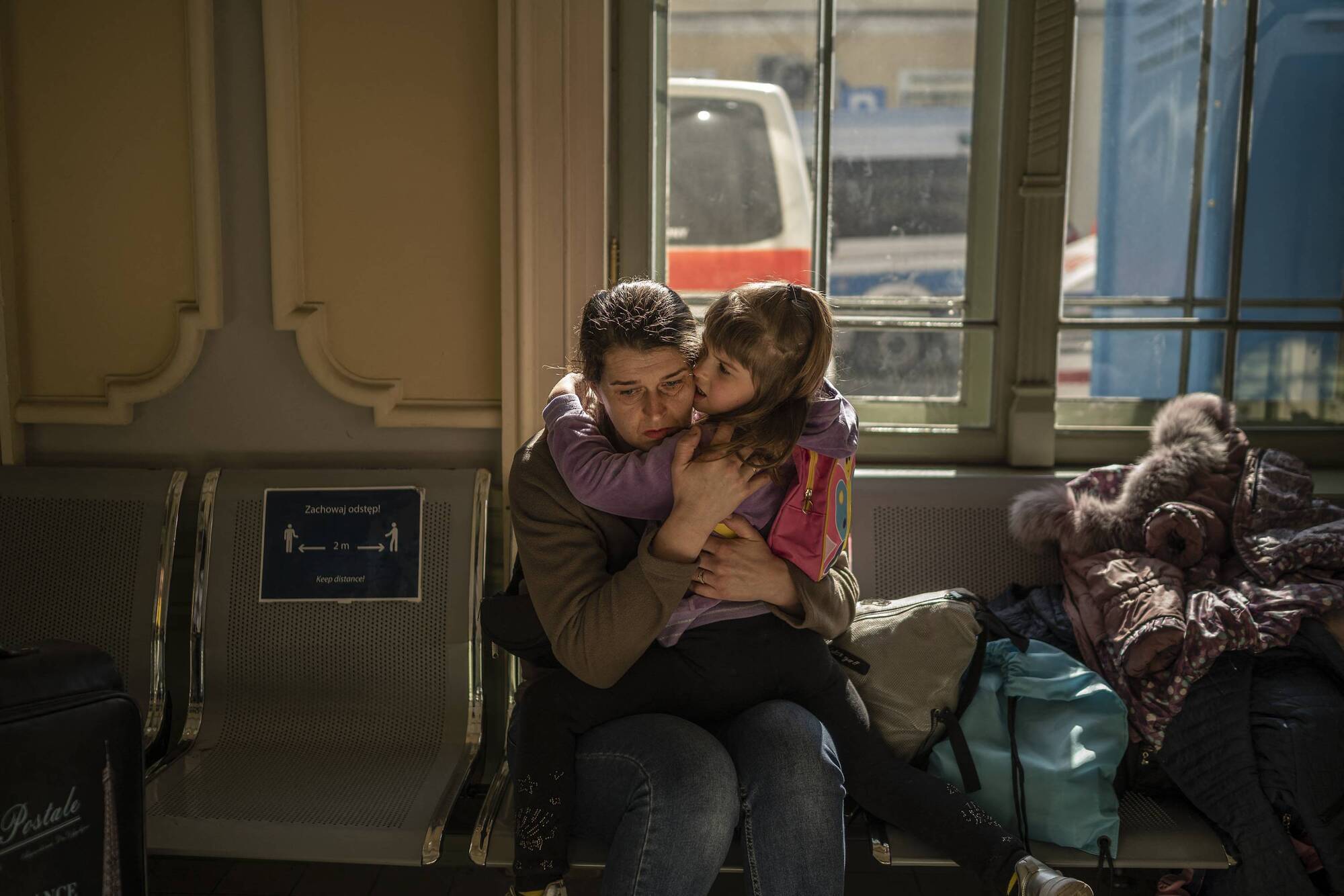
TOPSHOT - A Ukrainian evacuee hugs a child in the train station in Przemysl, near the Polish-Ukrainian border, on March 22, 2022. Picture: Angelos Tzortzinis / AFP via Getty Images
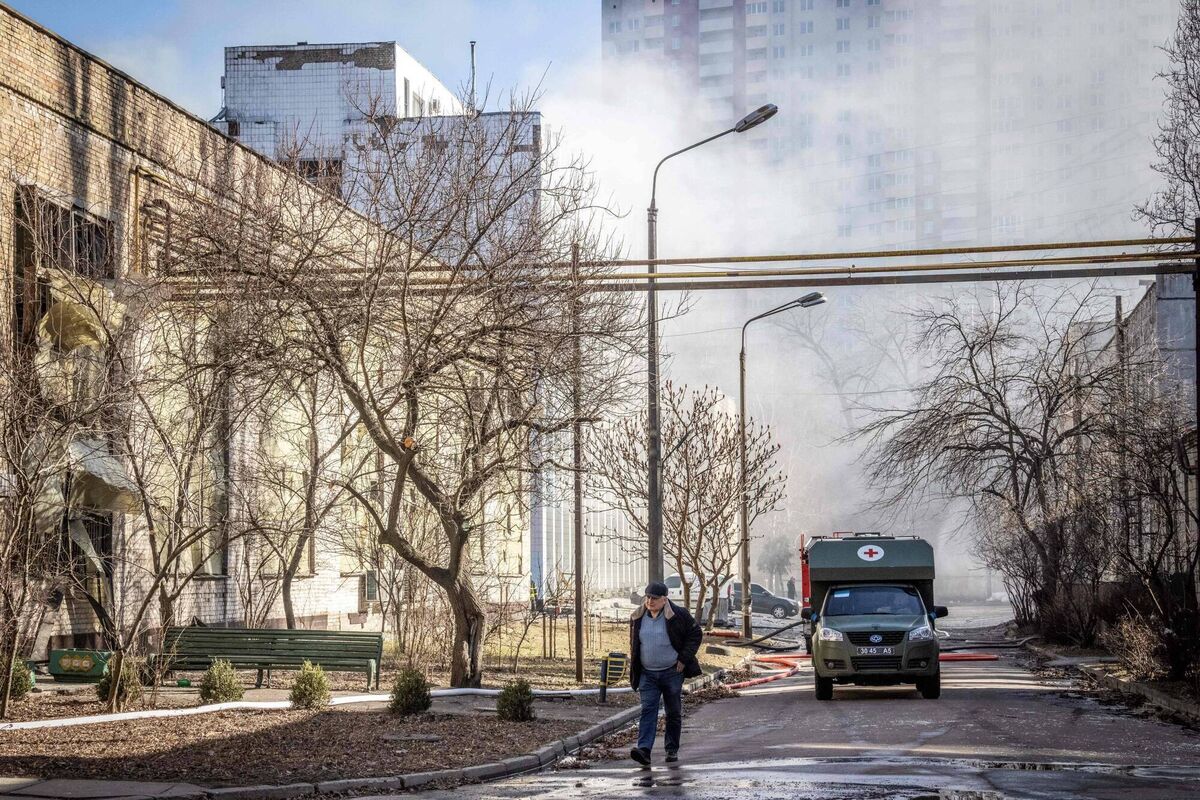
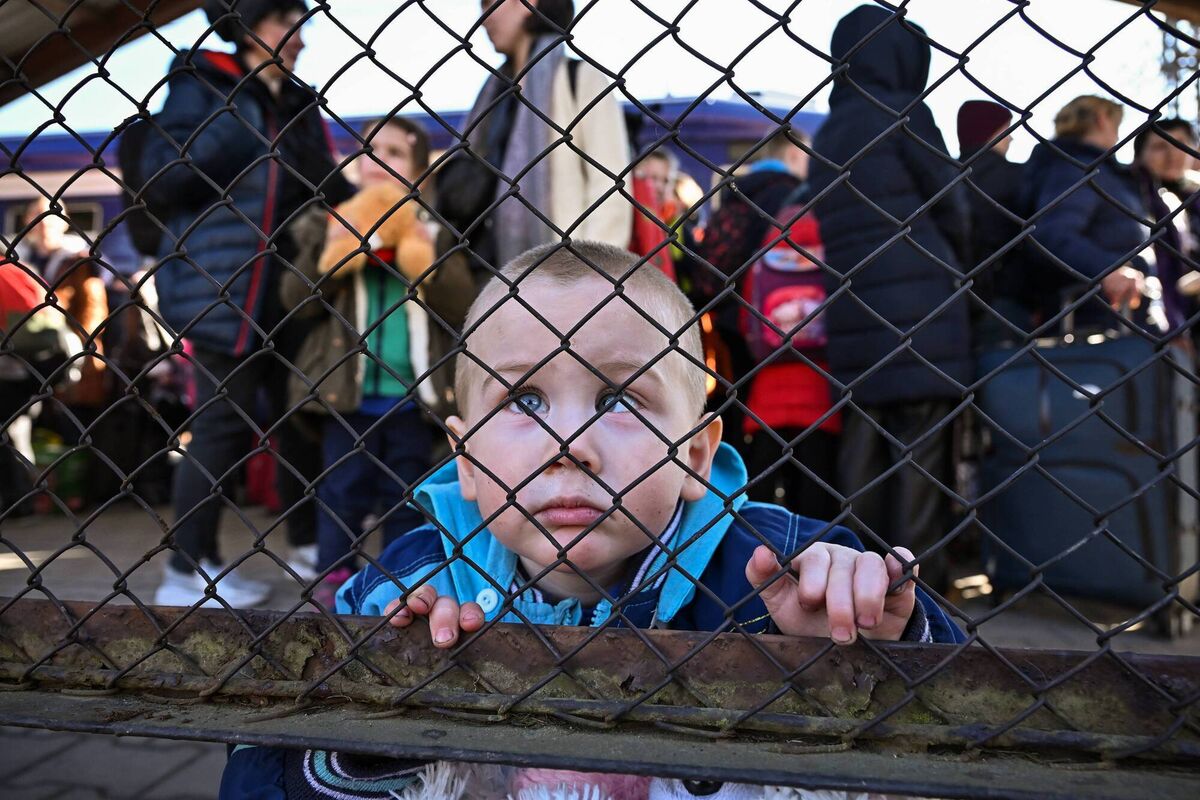
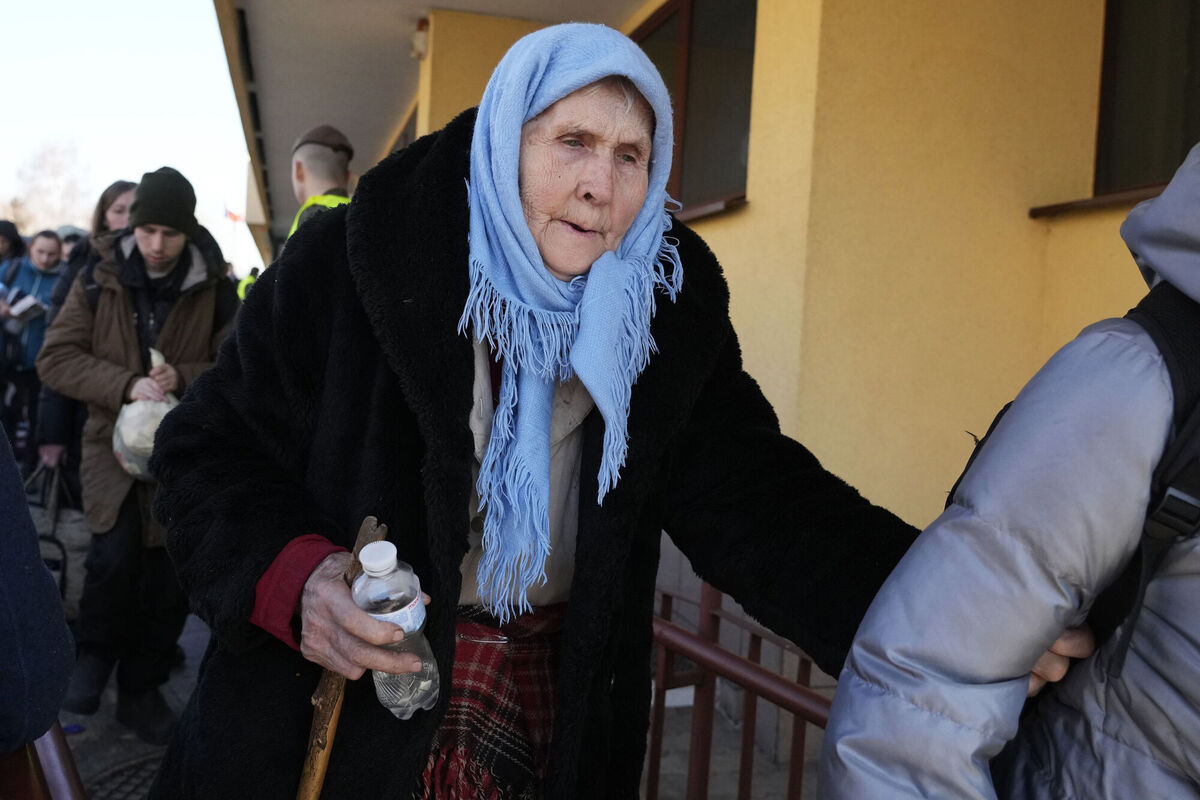
Hundreds of Ukrainian people, mainly women and children, are arriving into Ireland every day, often traumatised by what they have witnessed in their home country.
State bodies are desperately trying to put supports in place to help them integrate into Irish society. Here are some of the measures that are already in place.
In many cases, Irish families have thrown open their doors to people fleeing Ukraine, but more capacity is needed and according to the government, 500 state-owned properties have now been identified to potentially house refugees. Already more than 2,200 people from Ukraine are being accommodated in hotels.
For context, 5,794 adults accessed emergency accommodation across the last quarter of last year. More than 4,000 people have sought state accommodation and Tusla is already housing 22 unaccompanied minors.
The government has said there is no limits on the number of people who can seek to come to Ireland and that the priority is to use vacant units.
The Department is also advising employers they are free to accommodate any new employees privately once the accommodation is of an approved standard, once the newly-arrived Ukrainian national has secured a PPS number.
Garda vetting is required for homes offering spare rooms to minors or vulnerable adults, but while the issue has been raised in the Dáil, there are still concerns from NGOs that some people could fall prey to exploitation.
The Department of Children, Equality, Disability, Integration and Youth said "all options are being looked at" when it comes to accommodation, in what it said is an evolving situation.
Those options include hotels, guest houses and B&Bs; accommodation pledged by the public; State-owned or private properties which may be suitable for short-term accommodation; religious properties; and local authority facilities.
Like many households around the country, schools have been welcoming new arrivals from Ukraine.
English languages classes are being planned to help children adapt to their new surroundings.
Tens of thousands of spare education places in primary and secondary schools have been identified, with a greater level of capacity at primary level.
Of the more than 7,300 Ukrainians already issued with PPS numbers, 2,727 are children, with multiples of that number likely to arrive as the crisis worsens. Those looking to register children into schools are advised to access the Tusla Education Support Service through tusla.ie.
The Department of Education said there are already significant resources for schools to help them support children who do not have English language skills, while the National Educational Psychological Service has developed materials for schools to assist them in supporting children of Ukrainian heritage and others who may be experiencing distress in relation to current events.
And a spokesperson said: "The Teaching Council is working closely with the Department to prioritise any Ukrainian nationals who arrive in Ireland, who are teachers, to register with the Teaching Council."
There is also a focus on those in higher education. A spokesperson for the Department of Further and Higher Education said it is continuing to work with the sector exploring potential options to enable students displaced from universities in Ukraine to continue their studies here.
"Officials from the Department are currently engaging with the representative associations (IUA/ THEA) to develop a process, which will facilitate continuity of studies, including medical education.
"This requires detailed evaluation of the Ukrainian programmes, and its institutions to ensure alignment between the studies already completed and the outstanding learning of possible programmes."
The government has said 7,326 Ukrainians have already been issued with PPS numbers since arriving here - opening the way to vital support payments.
Under the Temporary Protection Directive, triggered by the EU on March 4, qualifying Ukrainian nationals arriving here have permission to live in Ireland for one year, with the possibility of extensions, as well as full access to the labour market, access to accommodation, and medical care and education. It also allows for social welfare income supports.
According to a Department of Employment Affairs and Social Protection (DEASP) spokesperson: "Under the Temporary Protection Directive, people displaced from Ukraine are entitled to the full range of welfare supports on the same basis as any EU citizen. This means they can apply for and receive any social welfare payment including, for example, Jobseeker payments, pensions, back to school clothing and footwear allowance and rent supplement.
"Community Welfare Officers are located in the Dublin Airport Reception Centre, the Ukraine Support Centres and the Department’s Intreo Centres.
"For those that require immediate financial supports the Supplementary Welfare Allowance will be paid initially at the rate of up to €206 per week with increases for adult and child dependants. The Department will, in the coming weeks, transfer recipients of this income support onto a primary payment appropriate to their circumstances."
Registration for those welfare supports is relatively painless, with a form in Ukrainian for reference. People arriving from Ukraine can access weekly Exceptional Needs Payments under the Supplementary Welfare Allowance scheme, typically €206.
People arriving from Ukraine are also advised of the availability of Exceptional Needs Payments under the Supplementary Welfare Allowance scheme. Child Benefit will also be paid to the parent or guardian of a child who has moved here.
Department officials meet those coming here at airports and ports, while two additional dedicated Ukraine Support Centres have been set up in Dublin and in Cork, with a further centre to open at Henry Street, in Limerick this Wednesday.
A spokesperson for the Department of Health confirmed that refugees holding temporary protection status are entitled to apply for a medical card in order to access primary care services for each adult and child dependents.
"A process is being implemented to facilitate timely access to a medical card, based on the Personal Public Service Number (PPSN) provided by the Department of Social Protection," they said.
People are advised to contact an Non-Governmental Organisation if they are on-site at their location, or ask centre management for assistance.
According to information now available to Ukrainians registering with the Department of Employment Affairs and Social Protection: "If you require immediate access to medical care or medication, or any questions on your entitlements, services or how to access HSE health or social services in your area, you can contact HSE live on www.hse.ie or via phone on 01 2408787."
One NGO, SafetyNet Primary Care, has already had almost two dozen medics come forward to assist with new arrivals in congregated settings but said more would be required.

CONNECT WITH US TODAY



Be the first to know the latest news and updates