Department publishes review addressing gender balance in STEM education
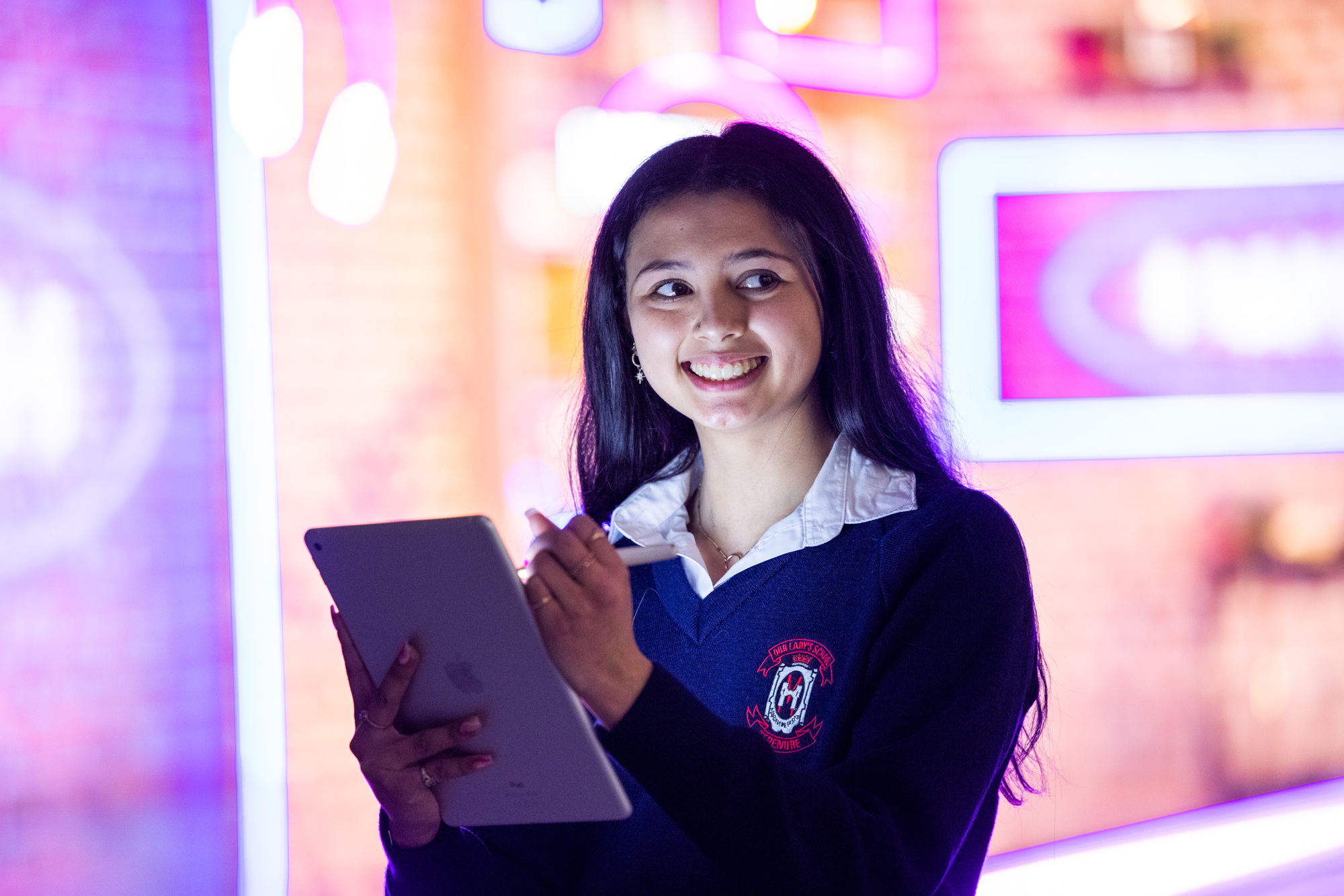
Laura Kongsuwan, transition year student, Our Lady's School, Terenure, Dublin, at the I Wish 2022 STEM Showcase, which was broadcast live from the RDS to over 17,000 female students globally. Picture: Naoise Culhane
The availability of post-primary subjects should be studied to understand where barriers are preventing students' access to specific subjects, a review looking at gender balance in STEM education has found.
The recommendation is one of 16 published today by the Department of Education’s Gender Balance in STEM Advisory Group, which was tasked with examining ways to address disadvantage and under-representation when it comes to science, technology, engineering, and mathematics (STEM) subjects.
While female students have access to the same opportunities as their male counterparts, they remain significantly underrepresented in STEM fields, despite some improvements in recent years.
Recommendations published today include the development of a continuing professional development programme in STEM for early years educators, and for all teacher education to include training on the barriers to participation of underrepresented groups in STEM.
It also recommended increasing equitable access nationwide to meaningful STEM role models and career awareness activities that challenge stereotypes. "An evaluation of the provision already in place should be undertaken in order to make informed decisions on how to progress in this area."
The report also recommended that a national accreditation framework be developed for schools for "whole school culture change at primary and post-primary levels, to address gender balance, equity and inclusion actions".
According to the Gender Balance in STEM Advisory Group, the recommendations were developed with a view to addressing the issues of equity of access and inclusion, rather than just gender balance.
"By addressing the wider diversity issue in STEM, gender balance in STEM will benefit."
Norma Foley, the Minister for Education, said it is important "to acknowledge that there is a need to move away from seeking a change in girls’ attitudes, beliefs and behaviours, towards seeking to change structures, policies and broader representation of STEM in society, to ultimately break down the barriers to more balanced participation for all learners."
Margie McCarthy, chair of Gender Balance in STEM Education Advisory Group, said:"Our goal was to guide national actions to ensure world-class, inclusive STEM education in Ireland for our young people." To make a difference, a co-ordinated approach and actions are needed across the constituent parts including schools, teachers, families, and society, she said.
CONNECT WITH US TODAY



Be the first to know the latest news and updates