Whether war is long or short, Ukrainians and Russians will pay the greatest price
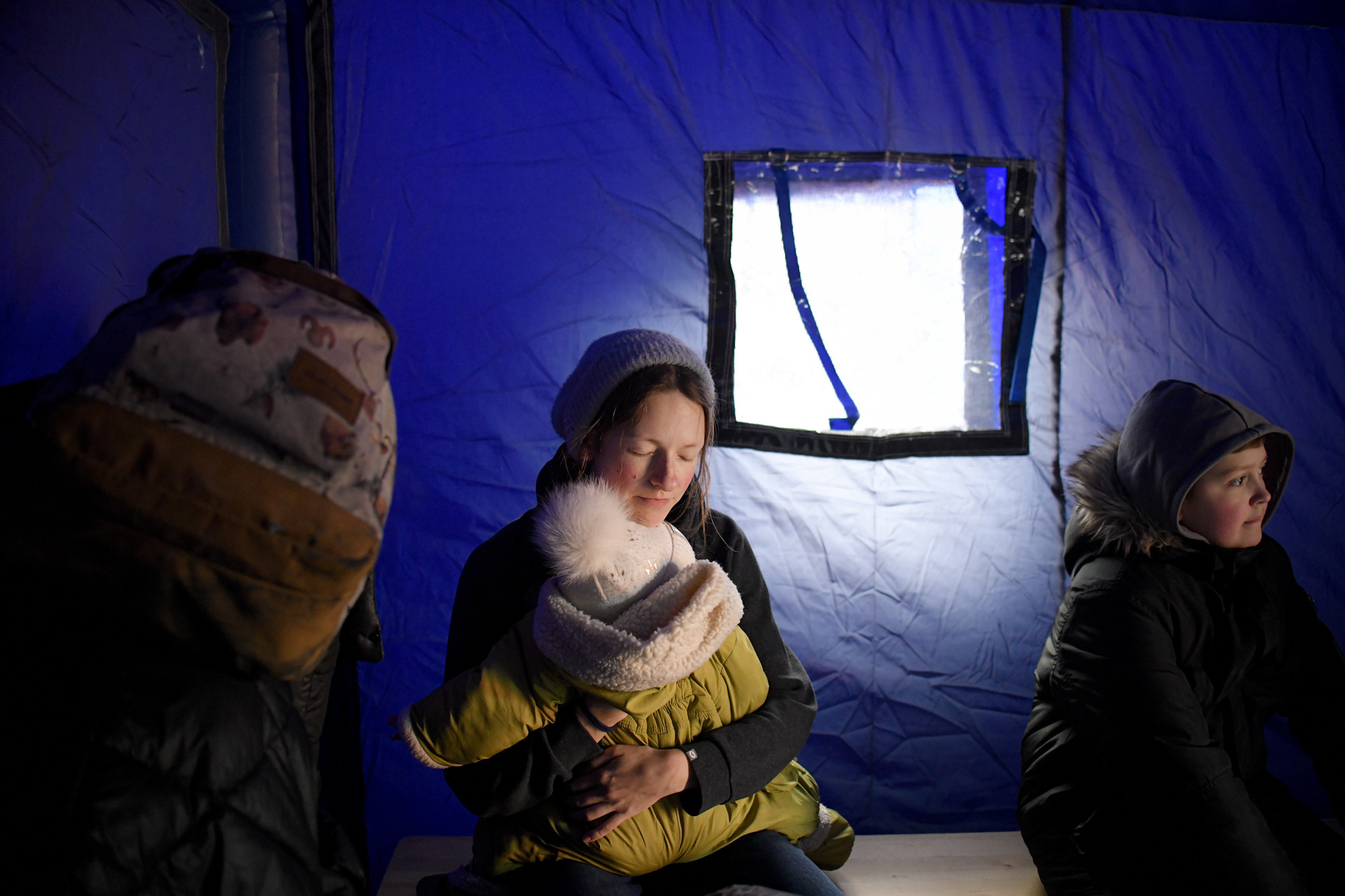
A refugee fleeing the conflict from neighbouring Ukraine holds her baby as she sits in a tent at the Romanian-Ukrainian border, in Siret, Romania on Saturday. Romania, which shares around 600 kilometres of borders with Ukraine to the north, is seeing an influx of refugees from the country as many flee Russia's attacks. Picture: Andreea Alexandru/AP
In the weeks before Russia launched its invasion of Ukraine, observers debated the likely scale of Russian military action.
Would Russian president Vladimir Putin pursue the limited goal of expanding Russian controlled territory in eastern Ukraine?
Would this be widened to include seeking control of territory on Ukraine’s southern coast on the Black Sea?
Or would Russia seek to invade most or all of Ukraine?
It is now clear that Vladimir Putin is pursuing the maximalist objective of invading most or all of Ukraine.
Russian forces have attacked Ukraine from the east in the Donbas, from the south via Crimea and the Black Sea and from the north via Belarus.
They are trying to encircle and capture Ukraine’s capital Kyiv and other major cities such as Kharkiv in the east.
Before the war began, some Western intelligence experts suggested that the Ukrainian military might be able to hold out for only 10 to 15 days.
Russia’s armed forces are larger and significantly better equipped than those of Ukraine. Ukraine’s airforce and air defences are weak.
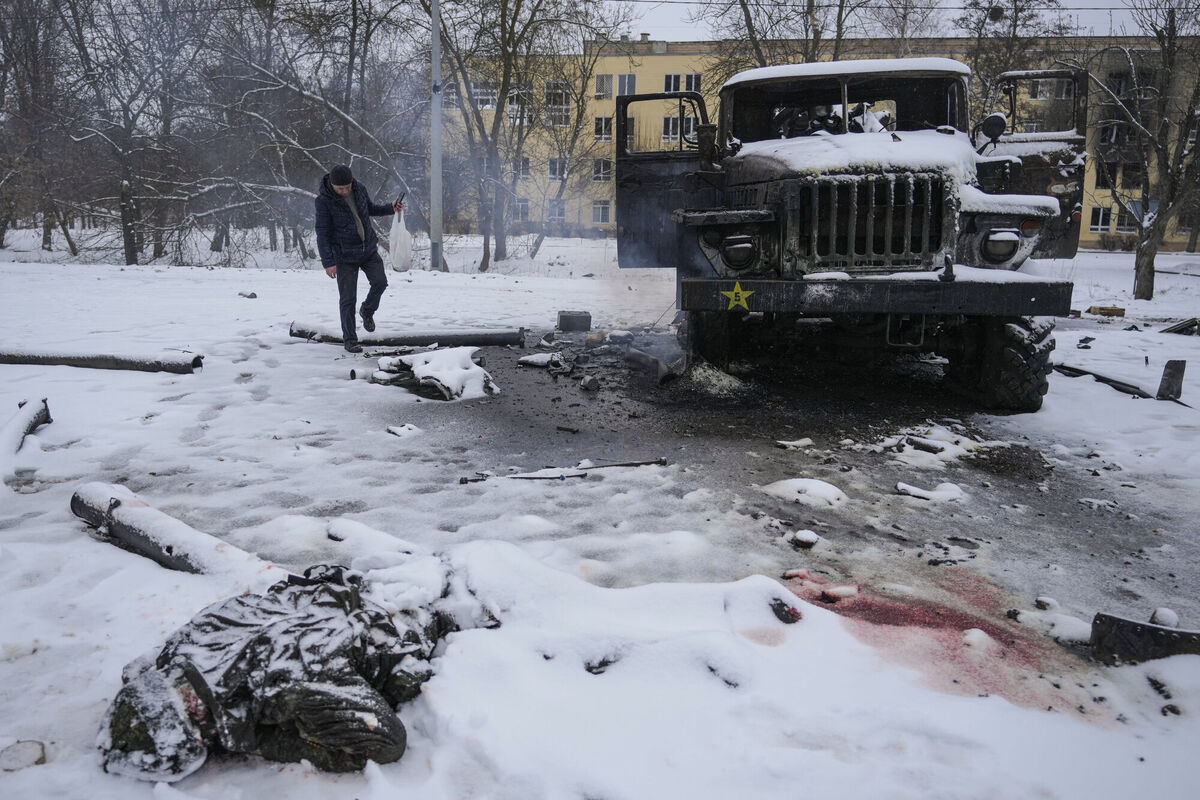
Russia will be able to establish air superiority, making Ukrainian forces on the ground vulnerable targets.
Kyiv and other Ukrainian cities could fall to Russia within days. So far, Russia has not unleashed its full military power (including bombers, heavy artillery, and multiple launch rocket systems (MLRS)) on Ukrainian cities.
If Russia attacks Ukrainian cities with these systems, we could see appalling levels of death and destruction.
After Russia’s intervention in eastern Ukraine in 2014, however, Ukrainian forces proved surprisingly adept at holding back Russian-backed separatist forces.
It is not impossible that Ukrainian resistance could be stronger than some expect. In this scenario, we could see sieges of Kyiv and other cities or highly destructive urban warfare, as Russia seeks to take cities street by street.
Russia’s focus of Kyiv suggests that its first objective will be to install a Russian-backed puppet government in the Ukrainian capital (Mr Putin will doubtless be blind to the irony of his own description of Ukraine’s democratically elected government as a Western puppet regime).
Russian forces may seek to capture or kill Ukrainian president Volodymyr Zelensky and other political leaders; Mr Zelensky has apparently rejected a US offer to evacuate him from Kyiv.
He may appoint an acting president to lead the country in his absence or part of the Ukrainian leadership may flee westward to Lviv.
If Russia captures the whole of Ukraine, a Ukrainian government in exile could be established in Poland or Romania.
Even if Russia captures Kyiv and other Ukrainian cities, resistance is likely to be continued by the Ukrainian military and by informal volunteer forces (as occurred in eastern Ukraine in 2014).
This may involve classical counter-insurgency tactics, such as ambushes, bombings, and targeting Russian supply lines, but could also include larger-scale military engagements.
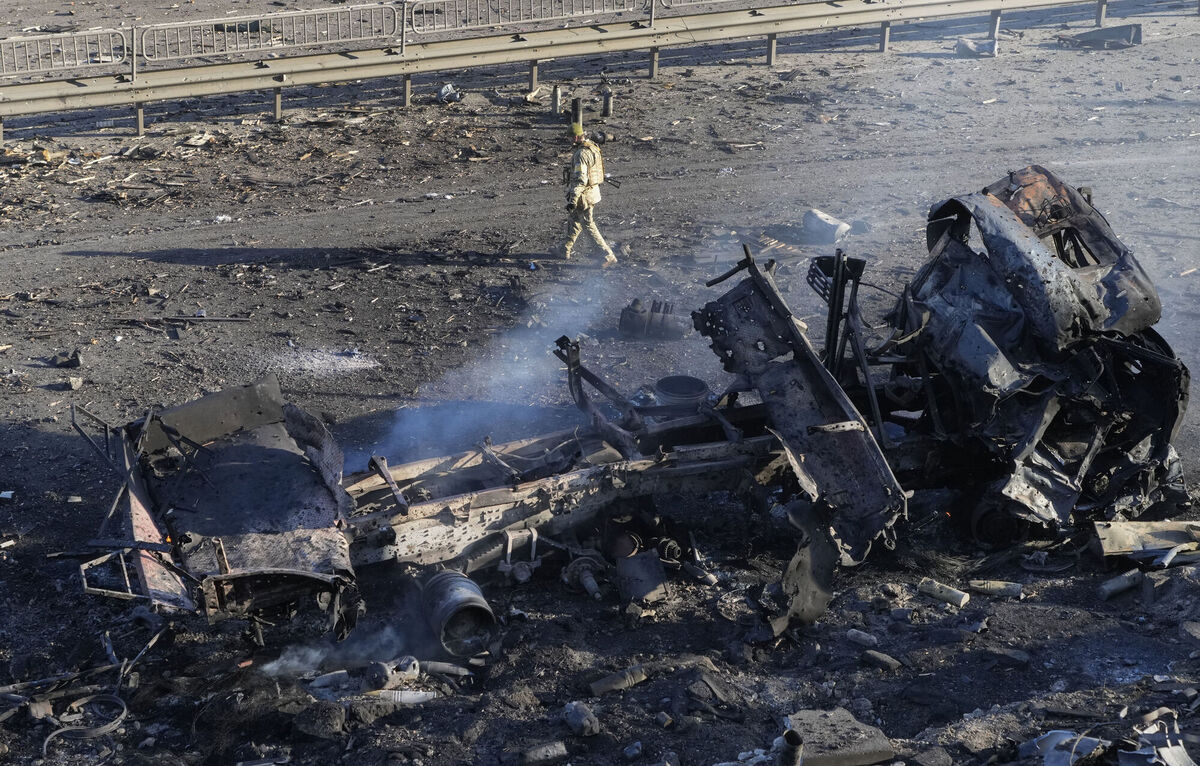
Again, the big unknown is the scale and likely military effectiveness of such Ukrainian armed resistance. The Russians may have the advantage in terms of firepower, but the Ukrainians will have the advantage in terms of morale and local support and knowledge.
Given the difficulty of maintaining an occupation of Ukraine, Russia may seek to partition the country, resulting in a Russian controlled eastern Ukraine, likely including Kyiv, and a rump Ukrainian state in the country’s west, with Lviv as its capital.
Mr Putin may hope that Russia will have support in Ukraine’s traditionally more Russian-oriented east.
Opinion polls, however, have indicated that since 2014 there has been strong support in eastern Ukraine also for a European democratic vision of the country’s future. Russia will likely, therefore, face strong opposition in Ukraine’s east too.
If Russia succeeds in occupying and pacifying Ukraine or the eastern half of the country, it will be turned into an authoritarian police state like Belarus.
As in Belarus, Russian-backed or Russian-supplied internal security forces would suppress any dissent.
If Russia does not achieve a rapid victory, the conflict could turn into a prolonged war, potentially continuing for months or even years.
In this case, Russia would face the prospect of a steady stream of body bags and the growing impact of Western economic sanctions.
Some observers suggest that a coup from within the Russian regime might occur, with those preferring to pursue peace ousting president Putin.
Anti-war protests could also grow within Russia — and since this is Putin’s war, anti-war protests will be anti-Putin protests.
Indeed, it is notable that previously silent Russian politicians and public figures have already begun to voice opposition to the war. Mr Putin will seek to double down on repression in Russia, but that may not be effective.
US president Joe Biden and other Western leaders have ruled out deploying troops to defend Ukraine. Mr Putin presumably also wants to avoid a war with the West.
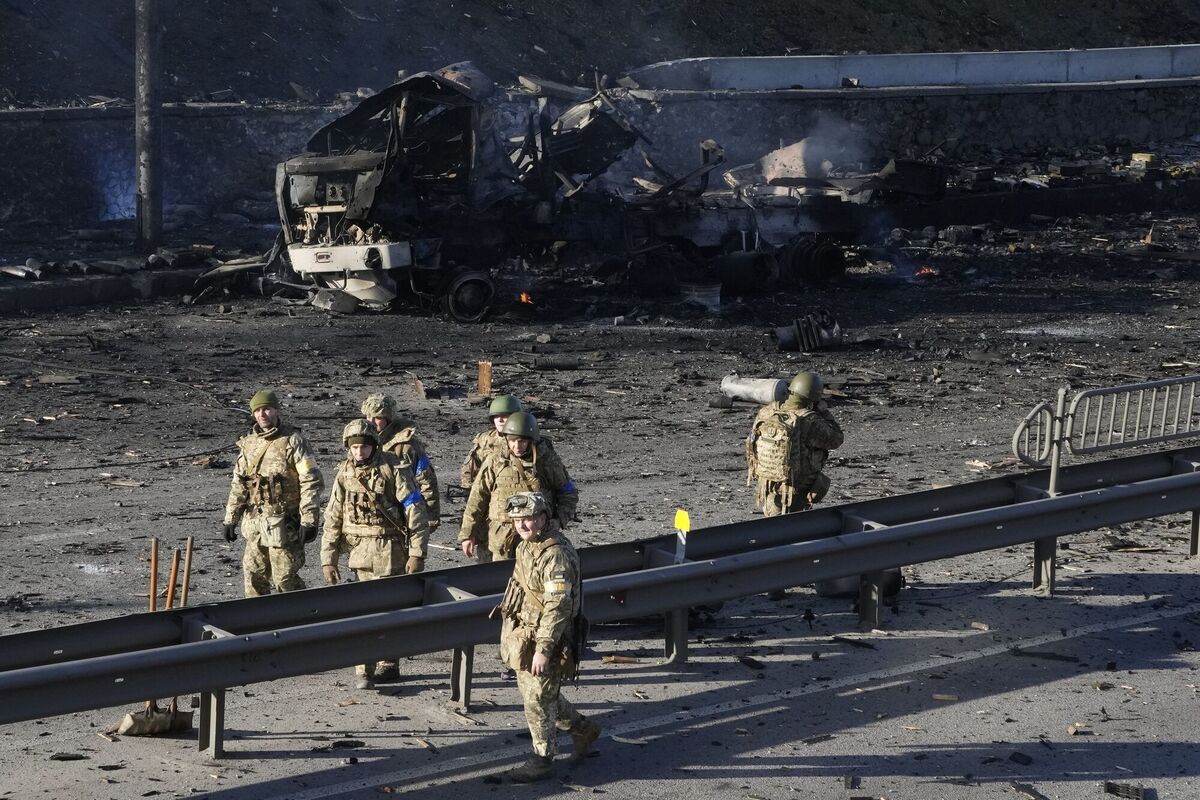
Awareness of the consequences of a war between Russia and Nato — including in the worst-case escalation to the use of nuclear weapons — makes leaders acutely aware of the need to avoid such a conflict.
Nonetheless, Ukraine shares borders with Nato members Poland, Slovakia, Hungary, and Romania. Whether intentionally or otherwise, Russian aircraft could cross into Nato airspace.
If the war becomes prolonged and the West continues to arm the Ukrainian government or resistance, Russia could try to target weapon supply routes into Ukraine.
If Russia engages in intensifying attacks on Ukrainian cities, Western leaders could face demands for a military response.
However the conflict in Ukraine plays out, the West is likely to fundamental re-think its relations with Russia.
Nato’s defences in Central and Eastern Europe will be significantly strengthened. Although it may take time, the West will seek to de-couple itself from Russia gas and oil.
Mr Putin has almost certainly over-reached and the eventual outcome may be his downfall. The people of Ukraine and Russia will pay the greatest price, but we may all live with the consequences for years, even decades, to come.
- Andrew Cottey is a Professor in the Department of Government and Politics, University College Cork and an expert on European security

CONNECT WITH US TODAY



Be the first to know the latest news and updates