Review finds quarter of people in Garda custody in 12-month period had 'poor mental health'
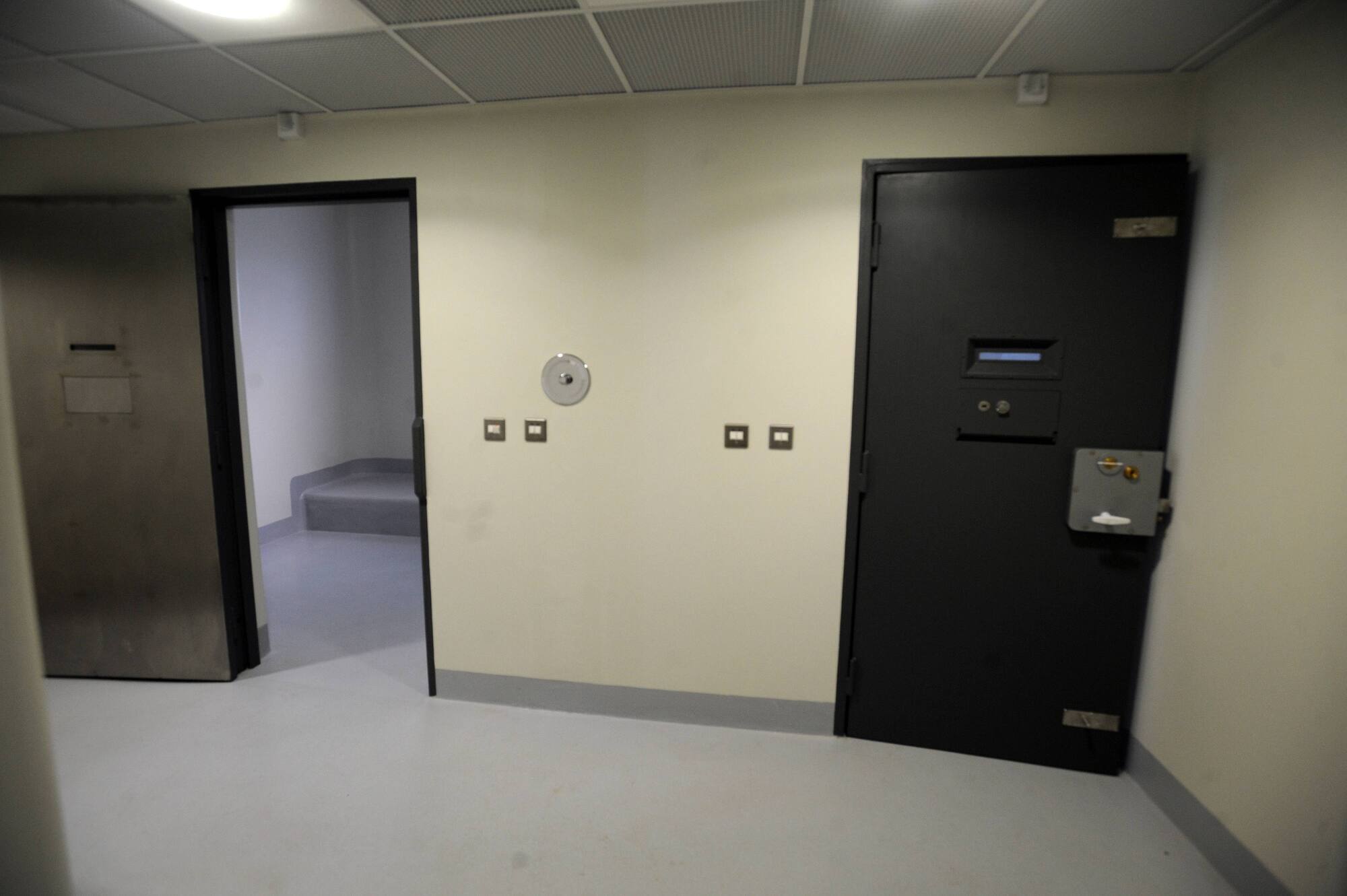
The inspectorate said the standard of facilities visited during its inspection ranged from purpose-built custody suites with all the necessary components of a modern, safe and secure facility to those that were unsafe and not secure. File photo: Eddie O'Hare
One in four people in Garda custody over a 12-month period had “poor mental health” or had engaged in self-harm, according to a new report.
Almost half had consumed alcohol or were dependent on it, or drugs, or both, custody records examined by the Garda Inspectorate found. The inspectorate said that more than 2,000 adults and 60 children were taken into garda custody under Section 12 of the Mental Health Act 2001 during the period studied.
This is where the individuals are suffering from a mental disorder and deemed likely to cause immediate and serious harm to themselves or others. Under the provision, they must be brought to a garda station first, rather than to a medical facility, even though they may not have committed a criminal offence.
The inspectorate said that a recommendation made by an expert group some seven years ago – that gardaí should be given the power to bring a child believed to be suffering from a mental disorder to a suitable medical facility for assessment - has still not been implemented.
In a 188-page review of the treatment of people in Garda custody, the watchdog found that while basic rights of people were in place, there were concerns regarding the treatment of vulnerable adults.
“The inspection found that the fundamental rights of people in custody to legal advice, medical attention and to have a third party notified of their being in custody were well understood,” the report said. It said it also identified examples of “good practice and high standards” of treatment in some of the places visited.
“Despite custody being a challenging and high-risk area of policing, the Inspectorate was concerned to find that there was no overarching custody strategy beyond adherence with the relevant legal requirements. Governance and accountability were weak and many members in charge were not adequately trained for the role,” it said.
The body said “poor record-keeping” was a recurring theme throughout the review, a problem that was “exacerbated” by the absence of an electronic custody management system. It said a number of areas of concern regarding the safety, care and treatment of people in custody were also identified.
Key findings of the inspection included:
- Gardaí were aware of the need for adult support for children in custody, but the needs of vulnerable adults were not always identified and met;
- A number of concerns were identified in relation to the searching of people in custody, in particular, the lack of specific safeguards for children and vulnerable adults;
- Although custody provides an opportunity to intervene to divert people from offending behaviour, there was little evidence of partnership working to achieve this;
- While risk assessments were completed for almost every person in custody, plans to manage identified risks were not evident and the assessments were not reviewed during their time in custody;
- Not all incidents of force used on persons prior to their arrival at a garda station were reported and recorded in accordance with garda policy;
The inspectorate said it examined risk assessments in a sample of 318 custody records.
This found:
- 25% had poor mental health or had engaged in self-harm;
- 48% had consumed or had a dependency on alcohol, drugs or both;
- 14% had drug or alcohol issues as well as poor mental health
The inspectorate also said that 5% were identified as having a learning disability.
The report added: “In addition, 20% of the people in custody spoken to by the Inspectorate disclosed that they had poor mental health or a learning difficulty.” The report said that Section 12 of the Mental Health Act, 2001, gives a member of the Garda Síochána the power to take into custody a person who is suffering from a mental disorder and as a consequence is likely to cause immediate and serious harm to themselves or others.
“Currently, people taken into garda custody for this reason must be brought to a garda station rather than a medical facility, even though they may not have committed a criminal offence,” the report said.
It said that between 1 July 2018 and 30 June 2019, 2,091 adults and 61 children were taken into garda custody under Section 12 of the 2001 act.
“In 2015, the Expert Group on the Mental Health Act recommended that gardaí should be given a specific power to remove a child believed to be suffering from a mental disorder to a place where an age-appropriate assessment can be performed," the report said.
“At the time of this inspection, the recommendation had not been implemented.” The inspectorate recommended that a cross-sectoral group be established to develop post-arrest diversion and intervention services.
“The group’s remit should include developing legislation and arrangements in order that adults to whom Section 12 of the Mental Health Act, 2001 applies can be brought directly to a suitable medical facility and ensuring that the previously mentioned recommendation of the Expert Group on the Mental Health Act is implemented,” it said.
The inspectorate said the standard of facilities visited during its inspection ranged from purpose-built custody suites with all the necessary components of a modern, safe and secure facility to those that were unsafe and not secure.
It noted that since 2011, €19.4m had been spent on cell refurbishment in 88 stations and that 47 stations were earmarked for such.
“The Inspectorate recommends that urgent action be taken to improve the overall safety and security of custody areas and that cells that do not meet the defined safety standard be immediately closed,” the report said.
It said the detention periods in custody should be standarised under new legislation and that inspectors be given a role in authorising extensions. It said extensions should be based on a “test” that it is warranted - and it recommends a “right” of the arrested people to make representations about any such extension.
Chief Inspector, Mark Toland, said: “The decision to deprive a person of their liberty is a significant interference with their rights under the Constitution of Ireland and the European Convention on Human Rights. As such, it’s important for the Garda Síochána to have an efficient and effective custody system in place that protects and upholds the rights of persons in custody and keeps them safe”.
There are 41 recommendations for An Garda Siochana and the Department of Justice. In a statement, Minister McEntee said the Garda Síochána (Powers) Bill “will address” many of the recommendations directed at the Department of Justice.
She said the report had been referred to the Garda Commissioner for detailed consideration and a full response to each recommendation. She said an implementation plan will be developed and published.
- The review can be read on the Garda Inspectorate site

CONNECT WITH US TODAY



Be the first to know the latest news and updates