Change for charities as they 'tap into' public's generosity
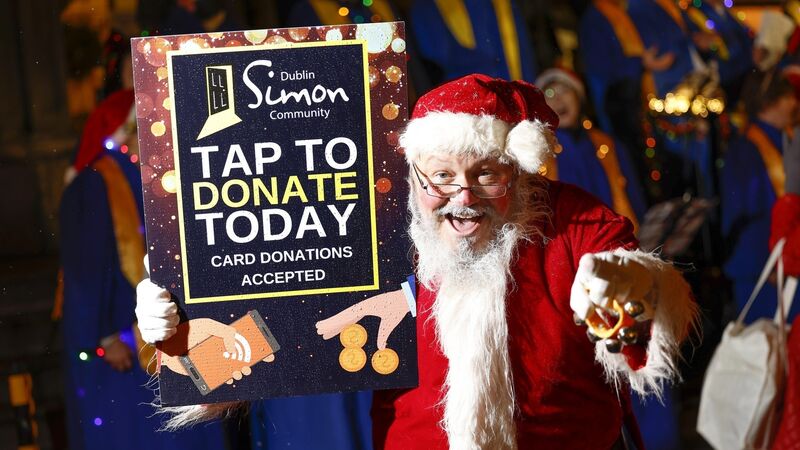
Dublin Simon volunteer Santa on South William St, Dublin 2, launching the Dublin Simon's secure tap donations through dedicated specialist machines and wristbands at volunteer collection points this festive season. Picture: Conor McCabe Photography
While the pandemic has presented more than its fair share of challenges for charities trying to fundraise, it has also accelerated the transition to a cashless society.
Fundraisers are now flocking to contactless methods of collecting donations and say it’s already revolutionised how they operate.
Declan McSweeney is the general manager of the Archdiocese of Dublin where they have already rolled out “tap to donate” machines at the doors of half of their churches, with the aim of rolling them out to all 197 parishes after Christmas.
“We’ve been aware of the change in payment patterns for two or three years now, but the lockdowns really galvanised us, as we were closed, to experiment with an online donation bump on our website and tap and go machines,” said Mr Sweeney.
Churchgoers can use the tap to donate terminals by selecting from a range of fixed amounts, or entering their own amount that they would like to donate.
Mr Sweeney said one thing they have noticed since the introduction of cashless donations is the increase in the average donation amount.
“Quite a few people donate large amounts, I suppose with the privacy of it. The average donation is also higher than we expected, between €11 and €12,” he said.
Mr Sweeney says they have the attention of other dioceses which are considering introducing similar systems.
James Phelan, Community and Events Fundraising Manager at Dublin Simon Community, says contactless collection methods have “taken off” since the pandemic.
“I don't think anyone has change in their pockets these days, everyone has everything on their phones,” he said.
“There are still people putting money in buckets, but there is now definitely more activity on our contactless options.”
As well as fixed contactless card machines, Dublin Simon are using stickers and bracelets that people can tap their phone on to bring them to a donation page — which volunteers can wear to essentially turn themselves into “tap to donate” terminals.

Mr Phelan said the contactless system streamlines their collection process and provides up to the minute data about donations.
“We obviously appreciate every single penny, but with a bucket all that coin has to be counted and brought to the bank," Mr Pheland said.
"It's an awful lot of work, and you're waiting for a report on how much it is which could take a few days.
"With the contactless option, you can check while you're on the street how much money has been brought in in the last hour, you can see live reports of what's coming in from various locations at one time. It's really brilliant for getting a sense of how successful or not your event is,” he said.
Derek Quinn runs fundraisingboxes.ie, and has been working in the fundraising sector with charities for over 30 years.
He said that the move to contactless donation is the most exciting shift in consumer behaviour he has seen in his career.
“This whole area of tap to donate has been around for five or six years, but it just hasn't been cost effective prior to the use of QR codes and mobile phones,” he said.
Mr Quinn now produces collection buckets equipped with either QR codes or Near Field Communication (NFC) technology, which allow people to tap with their phone and donate in seconds.
He is also seeing huge demand to retrofit existing charity collection boxes with the technology.
Mr Quinn said that when people use their phone to donate, it offers the opportunity to build a long-term relationship between donor and charity that isn’t possible with passers-by throwing change into a bucket.
“It broadens the traditional collection bucket from just being a one-off fundraiser to actually building a long-term relationship with your donor through their engagement with the contactless fundraising unit,” he said.
Mr Quinn has also developed smart donation cards, which fundraisers can carry with them, and which people can tap with their phones to bring them to a url such as a gofundme page.
He says that this kind of contactless method is reviving the traditional fundraising relationship.
“We’ve moved from the old days of knocking on your neighbour's door and asking them to donate a couple of quid, to just sending an email out, posting on Facebook, and hoping your friends and family will donate.
“People genuinely do want to give, but you’ve got to make it easy, and sending a url isn't easy, it gets lost in 100 other emails.
"With the smart card you're actually back in that position where you can create a one-to-one request with somebody and they are more likely to give,” he said.