European court dismisses challenge over presidential oath to ‘almighty God’

European court dismisses challenge over presidential oath to ‘almighty God’

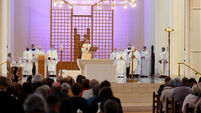
The wording of the Irish presidential oath requires the president to swear to “almighty God” when taking office.

The European Court of Human Rights has found against a number of politicians and public figures, who had challenged the wording of the Irish presidential oath that requires the president to swear to “almighty God” when taking office.

In its finding today, the court ruled that the case was “inadmissible”, and found that the applicants “had failed to provide reasonable and convincing evidence that they were at risk of being directly affected by these requirements and so could not claim to be victims of a violation of the Convention”.

The case challenging sections of Article 12 and Article 34 of the Constitution was taken by Social Democrat co-leader Róisín Shortall, former CEO of Barnardos and Irish Examiner columnist Fergus Finlay, Sinn Féin TD John Brady, Senator David Norris and Trinity College Dublin chancellor David McConnell.

When being sworn in, a president must make a declaration “in the presence of almighty God” that they will maintain the Constitution of Ireland and uphold its laws. They must also say “May God direct and sustain me”.

The group taking the case to the ECHR said that, due to their political careers and prominence in public life, they could aspire to become president or serve on the Council of State. But, they said, the religious elements of the oath they must take were contrary to their beliefs.

They said this would either prevent them from taking up these offices or require them to make a religious declaration that went against their conscience. The group took the case citing Article 9 of the European Convention on Human Rights which deals with freedom of thought, conscience and religion.

In its ruling, however, the ECHR said that under its rules an applicant who claims to be a victim of a violation must be “directly affected by the impugned measure”. It said that none of the applicants “had been invited to serve or had claimed that such an appointment was under consideration”.

Social Democrats party co-leader Roisin Shortall described the ruling as disappointing. Photo: Leah Farrell / RollingNews.ie

The court said that Mr McConnell and Mr Norris had expressed no interest in seeking the presidency in future, while the remaining applicants had expressed their interest in very general terms.

The other applicants suggested “it would be pointless for them to seek election as they could not take up the office if elected,” the court said.

The ruling added: “The Court thus considered that none of the applicants had provided reasonable and convincing evidence that they were at real risk of being directly affected by the requirements of the Constitution in relation to the taking of the oath, and rejected the complaints of all five applicants as inadmissible.”

Ms Shortall described the ruling as “disappointing”.

“In a modern republic, it is anathema that those elected to one of the highest political offices of the land, that of President, are required to swear an oath to ‘almighty God’,” she said.

She criticised the Government for what she called a “full-throated” defence of the clauses in the constitution, and added she would seek to tackle the issue now in another way.

“I will be bringing forward a Bill proposing a referendum to amend the Constitution, to remove the requirement to make a religious oath when elected President or appointed to the Council of State,” Ms Shortall said.

x

More in this section

Lunchtime News

Newsletter

Keep up with stories of the day with our lunchtime news wrap and important breaking news alerts.

Cookie Policy Privacy Policy Brand Safety FAQ Help Contact Us Terms and Conditions

© Examiner Echo Group Limited