Students take on sustainability challenges - including eating insects
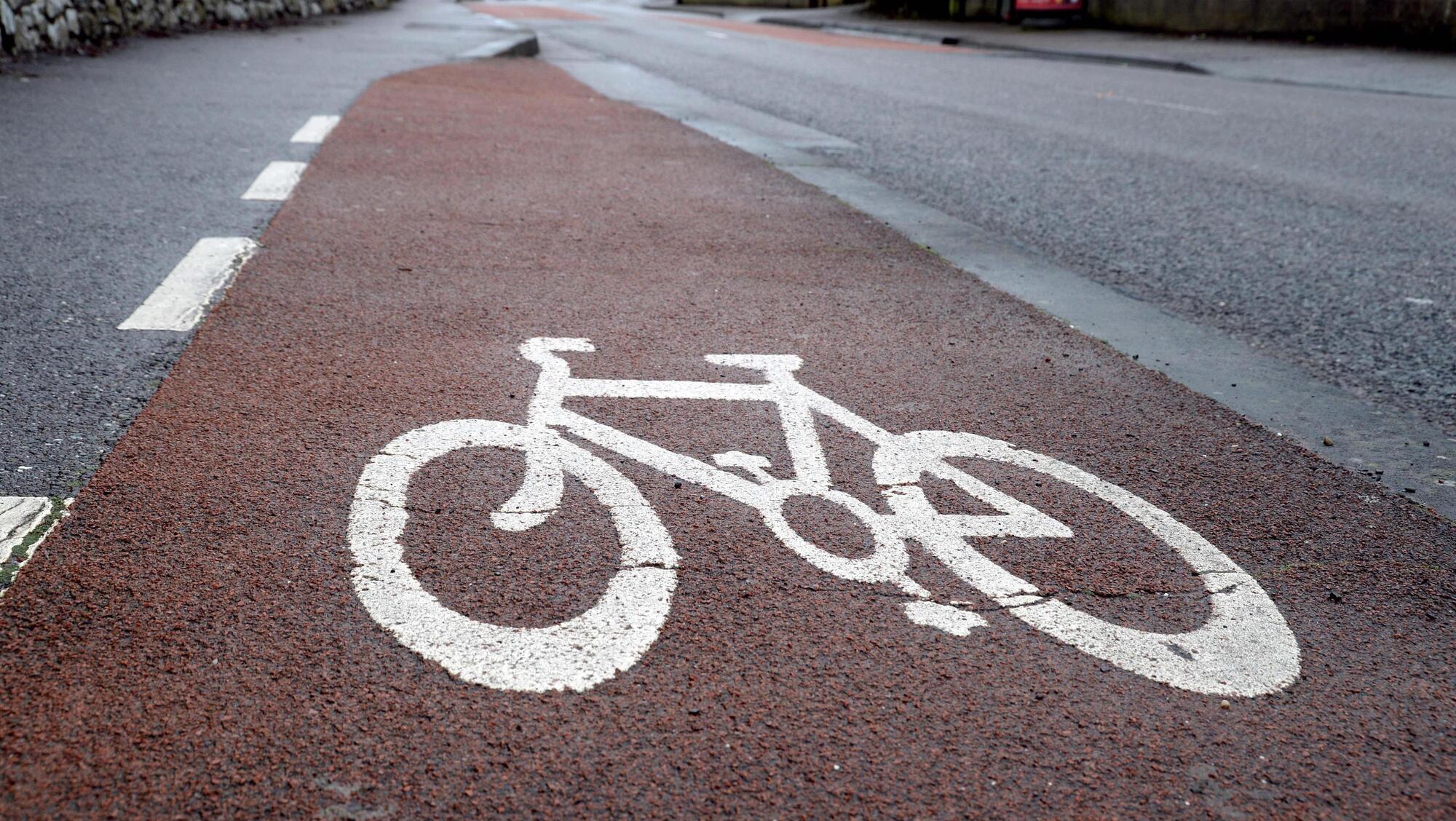
Aaron decided to swap four wheels for two, and after 30 days is seriously considering trading in his car for an electric bike. Photo: Denis Minihane
Climate and Environmental Sustainability students in DCU have been walking the walk for the past 30 days, taking on sustainability challenges such as washing clothes by hand, eating insects, and avoiding car travel, fast fashion and single-use plastic.
In the run up to Cop26, DCU lecturer Darren Clarke challenged his first-year students to set their own personal sustainability challenge for 30 days.
“By asking students to take on a sustainability challenge related to climate change and Cop26, even for 30 days, they embrace change immediately and begin to notice the opportunities that this presents for wider societal change,” said Mr Clarke.
“The experiment has been like a living lab for students, who have successfully influenced and engaged family, friends and industry on improving sustainability and addressing climate change. It has proven to be a very useful and practical tool to understand and support individuals, businesses and government to adopt pro-climate behaviours and policies,” he said.
Students who participated shared daily blogs about what they learned online.
CLIMATE & SUSTAINABILITY HUB
Katherine Molloy challenged herself to only use environmentally friendly cleaning products at home, and now sees it as a choice for her family’s health as well as the health of the planet.
“People are operating on autopilot when they go shopping and don’t put too much thought into what toilet cleaner they are using and the implications of that product on the environment.
"When you start looking at the ingredients in ‘normal’ products you start to question why you would use those chemicals in your home or on your body when more natural alternatives are available,” she said.
Both Aaron McNiffe and Samantha Uma Isselee decided to try to get from A to B in more environmentally friendly ways.
Aaron decided to swap four wheels for two, and after 30 days is seriously considering trading in his car for an electric bike.
“Initially, getting to grips with cycling around Dublin was hair-raising to say the least, as the cycling infrastructure is relatively poor on the route I take to and from college.
"With improvements to active and public transport infrastructure, I can definitely see more people leaving their cars at home,” he said.
Samantha challenged herself to steer clear of public transport for 30 days, choosing instead to walk or cycle. Although she will definitely try to walk and cycle more in future, she found that there were still significant factors that made it less attractive.
“Cycling has proven to be quite intimidating, as I was quickly met by angry drivers and lack of bike lanes,” she said. She also said she didn’t “feel safe as a young woman walking alone after 10pm as there is a lack of street lamps on the streets I take and there is not enough surveillance”.
Leo Carroll decided to switch up his diet for a month, to incorporate more insects as a sustainable source of protein. He said he enjoyed experimenting with critter cuisine.
“I’ve found the switch to the insect diet to be surprisingly doable. I will definitely continue to eat insects in the future, their unexpectedly delicious nutty flavor and satisfying crunch make them a perfect snack, either on their own or as part of a meal,” he said.
“I can definitely see some people incorporating insects into their diet in the near future, although to be honest I don’t see it catching on in Ireland quite yet, because of the ‘ick factor’ people like to place on it. My goal for now is to just make people aware that it is a much more sustainable source of protein and I hope this will make them think more about it in the future,” he added.
This is the first year of the BA in Climate and Environmental Sustainability at DCU, which educates students about climate change and its consequences, but also about how individuals and the environment itself offers solutions.
CLIMATE & SUSTAINABILITY HUB