Q&A: When should I take an antigen test?
Close contacts of a Covid case who are fully vaccinated and showing no symptoms will be given antigen tests to use.
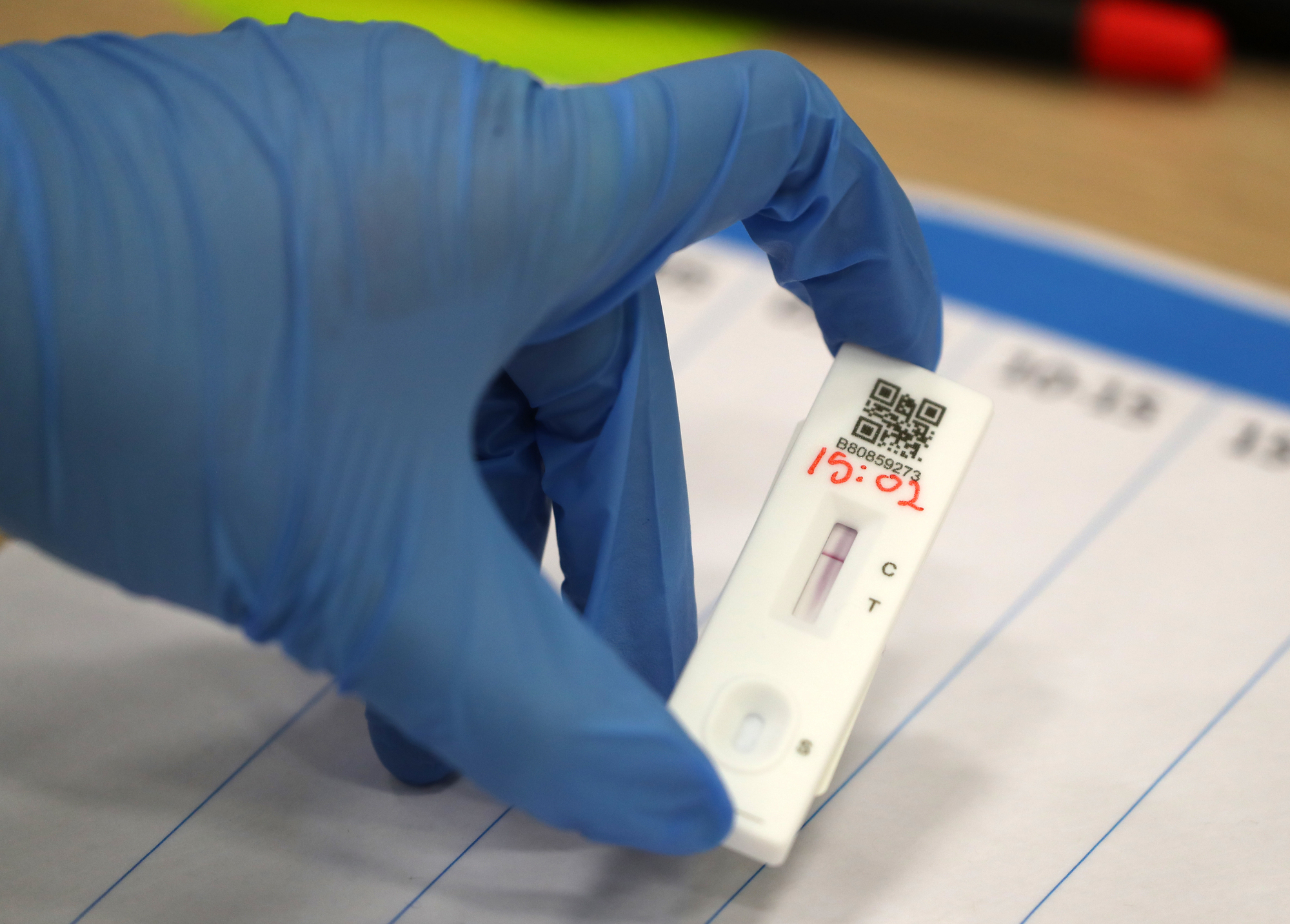
An antigen test is a quick test for Covid-19 that can be done at home, giving a result in 15 minutes.
It differs from the PCR as an antigen is less reliable; the PCR test looks at the genetic material of the virus and is done in a lab.
Close contacts of a Covid case who are fully vaccinated and showing no symptoms will be given antigen tests to use.
They are also being used in hospitals, colleges, universities, and in creche and childcare services.
If you are a close contact, a contact tracer will be in touch with you.
If you have symptoms, you will be asked to self-isolate by staying in your room and get a PCR test.
If you a member of your household is diagnosed with the virus and you are a close contact, you will have to restrict your movements, even if you are fully vaccinated and showing no symptoms.
You are not clear to stop restricting your movements until you have three negative antigen test results within five days.
Restricting your movements means staying at home as much as possible to avoid contact with other people.
If you are a close contact you will get a text message with a link to a website where you can provide your details.
When you have done that, you will get a text message with information about your antigen tests.
You should get your antigen tests through An Post in one or two business days.
You should receive a pack of five tests. You are asked to take three, while two are spares in case of an inconclusive result. The HSE has said people should do three tests in this order:
- First test on the day you get your tests;
- Second test two days after your first test;
- Third test two days after your second test.
If a test is inconclusive, a spare test should be used. If you are having ongoing difficulties securing a conclusive result on your HSE-issued antigen tests, you should contact HSELive for advice.
Open the kit and put the tube with the solution in the test kit hole. Take the swab from its packaging.
Carefully insert the absorbent end of the swab into your left nostril about 2cm and roll it around the inner edges five or six times. Repeat on the right nostril.
Take the absorbent end of the swab and dip it into the solution and roll it around, about six times.
Leave it in the tube to rest for about one minute.
Remove the swab and place the lid firmly onto the tube. Place four drops of the solution into the testing device, then wait.
After 15 minutes, you should have a result.
If two bars appear on the device the test is positive and you should self-isolate and get a PCR test.
If one bar appears at the top of the device, the test is negative. All negative antigen results should be recorded online at HSE.ie
If one bar appears at the bottom of the device, or there are no bars, the test is invalid and should be taken again.
Children aged 13 to 16 should be supervised by a parent or guardian when they are doing an antigen test.
At the moment, no. At time of writing, only people who are close contacts of a positive case and who are symptomatic are offered free tests from the HSE.
Speaking on radio on Wednesday morning, Health Minister Stephen Donnelly ruled out making the tests completely free for everyone.
Citing the UK government which, Mr Donnely said, came in for huge criticism for spending public money on antigen tests without the ability to trace their use, he said: "My advice is they shouldn't be free."
The price varies. In some locations, antigen tests have been priced at around €8 for a single test.
Other locations have seen packs of five tests at a cost of €25.
A subsidy for antigen tests is due to be rolled out.
However, Mr Donnelly has said a subsidy to make antigen tests more affordable will cost "several hundreds of million".
But the minister could not say when exactly a scheme to subsidise antigen tests will be rolled out. Instead, he said his department is still working on the measure and it will be ready "shortly".

CONNECT WITH US TODAY



Be the first to know the latest news and updates