Climate change at centre of BT Young Scientist shortlist
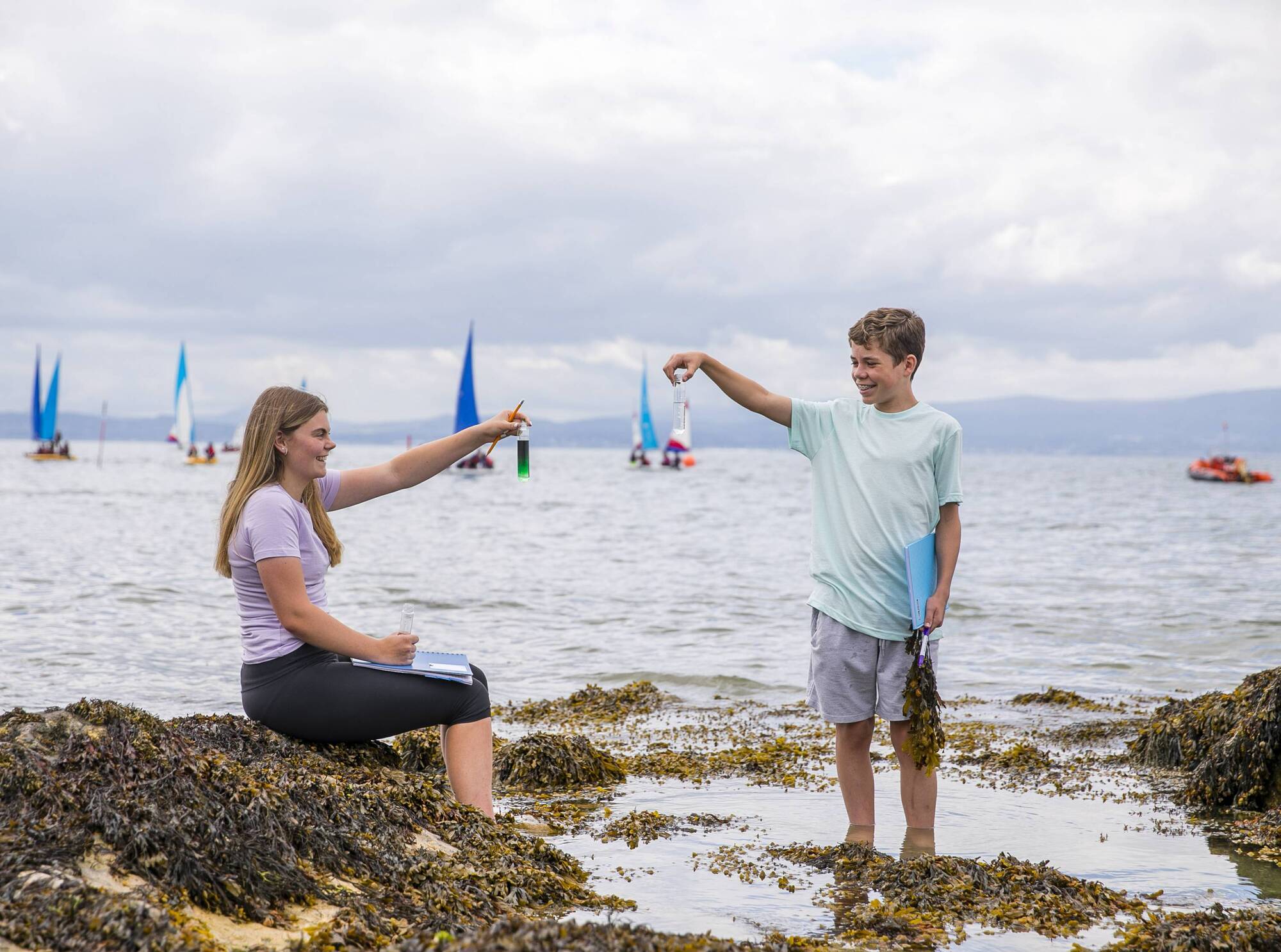
Cousins Sadhbh (aged 15) and Ultan (aged 13) from Co Dublin at Sutton Dingy Club. More than 1,000 students will showcase their talent at the virtual BTYSTE from Wednesday, January 12 to Friday, January 14. Picture: Chris Bellew /Fennell Photography
A gyro-controlled robot, Artificial Intelligence (AI) breast cancer detection, and an investigation into whether dogs can identify their owners’ emotions are some of the projects to be shortlisted for the BT Young Scientist and Technology Exhibition.
The details of the 550 shortlisted projects to be showcased at this year’s BT Young Scientist and Technology Exhibition (BTYSTE) have been revealed with new technologies, climate, and health dominating entries.
The projects see students demonstrate their curiosity for new technologies and how they can assist in our daily lives, with projects ranging from assisted living devices to apps that help us live more sustainably and a gyroscope-controlled robot.
The shortlisted entries span 219 schools from across 29 counties and are across four project categories — Social and Behavioural Science; Technology; Chemical, Physical and Mathematics Science; and Ecological Science.
This year, new and adapted technologies featured in a fifth of all project entries while climate change and the environment were featured in over 150 projects.
Some projects include ‘Fast Fashion: The Influence of Climate Change vs The Influence of Social Media’ by Coláiste Choilm in Cork and ‘Climate-Net: can AI help fight against climate change?’ by St Andrew’s College in Dublin.

Other areas with a strong focus in finalist projects this year include health, where students investigate the longer-term impact of Covid on our lives, along with the ways we look after our mental and physical health.
More than 140 projects examined either Covid-19 or other health-related issues including an investigation into how dog owners feel Covid-19 lockdowns affected their pets by Edmund Rice College in Cork.
Entries were received from more than 2,700 students with 1,440 project ideas.
Following a challenging 18 months for schools, teachers, and wider communities, Mari Cahalane, head of the BTYSTE said they are delighted to see the volume and the quality of entries coming through for this year’s exhibition.
“The BTYSTE is a hallmark of the school calendar year and alongside the projects, we will have an exciting line-up of events for everyone including teachers, schools, businesses and wider global and local communities to enjoy," she said.
Minister for Education Norma Foley TD congratulated all students who entered the competition.
“The exhibition continues to provide a real opportunity to our young people to engage in so many diverse aspects of science and technology," the education minister said.
"I look forward to learning more about the findings and exciting creative solutions that have been uncovered in our students’ work.”
In recognition of the Department of Education’s aim to contribute to the achievement of the UN’s 17 Sustainable Development Goals, for the first time, Ms Foley will provide a special award for the best Education for Sustainable Development project at the exhibition.
This year’s finalists will once again compete on a virtual stage to both a national and international audience from 12 to 14 January 2022.
For participants, the exhibition offers a chance to win one of the most coveted awards with a substantial prize fund and the BTYSTE perpetual trophy, as well as over 200 prizes for individuals, groups, and teachers.